Function
Acts as a transcriptional activator, but activates a different set of genes than isoform 1. Activates expression of CD24, unlike isoform 1.
Biological Context
Subcellular Location: Cytoplasm; Nucleus
Tissue Specificity: Undetectable in normal cells but highly expressed in cancer cells
Disease Association: Polydactyly, postaxial, A8 (PAPA8) : A form of postaxial polydactyly, a condition characterized by the occurrence of supernumerary digits in the upper and/or lower extremities. In postaxial polydactyly type A, the extra digit is well-formed and articulates with the fifth or a sixth metacarpal/metatarsal. PAPA8 is an autosomal recessive condition characterized by the presence of postaxial extra digits (hexadactyly) on the hands and/or the feet. [The disease is caused by variants affecting the gene represented in this entry] | Polydactyly, preaxial 1 (PPD1) : A form of polydactyly, a condition defined by the occurrence of supernumerary digits in the upper and/or lower extremities. Preaxial or radial polydactyly refers to the presence of extra digits on the radial side of the hand. PPD1 is an autosomal recessive form characterized by duplication of the distal phalanx of the thumb. [The disease may be caused by variants affecting the gene represented in this entry]
Product Specifications
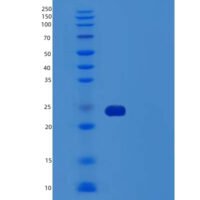
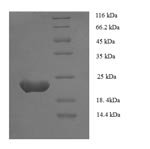
Recombinant Human Zinc finger protein GLI1 (GLI1), partial is a recombinant protein from Homo sapiens (Human), expressed in E.coli, covering amino acids 921-1106aa, with N-terminal 6xHis-tagged tag, molecular weight 23.3kDa, purity Greater than 90% as determined by SDS-PAGE.. Suitable for ELISA and Western Blot applications.