Function
Catalyzes the oxidative deamination of lysine and hydroxylysine residues in collagen and elastin, resulting in the formation of covalent cross-linkages, and the stabilization of collagen and elastin fibers. Essential for the elastic fiber homeostasis and for their maintenance at adult age.
Biological Context
Subcellular Location: Secreted, extracellular space; Secreted, extracellular space, extracellular matrix
Tissue Specificity: Expressed in ocular tissues including the iris, ciliary body, lens and optic nerve. Not detected in the retina
Disease Association: Exfoliation syndrome (XFS) : A disorder characterized by accumulation of abnormal fibrillar deposits in the anterior segment of the eye. In addition to being a cause of glaucoma and glaucomatous optic neuropathy, exfoliation syndrome has also been associated with lens zonule weakness, cataract formation, and systemic vascular complications due to deposition of exfoliation material in extraocular tissues. [Disease susceptibility is associated with variants affecting the gene represented in this entry. Susceptibility to exfoliation syndrome is conferred by a risk haplotype that includes two LOXL1 coding non-synonymous SNPs (Arg141Leu and Gly153Asp) and one intronic SNP. Arg141Leu and Gly153Asp are sufficient to confer disease susceptibility in some populations]
Product Specifications
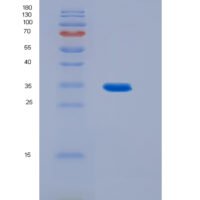
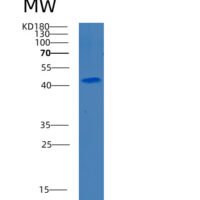
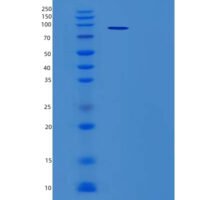
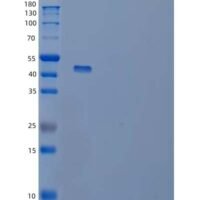
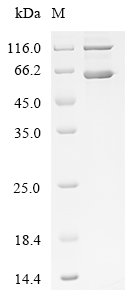
Recombinant Human Lysyl oxidase homolog 1 (LOXL1) is a recombinant protein from Homo sapiens (Human), expressed in E.coli, covering amino acids 95-574aa, with C-terminal 6xHis-tagged tag, molecular weight 59.9kDa, purity Greater than 85% as determined by SDS-PAGE.. Suitable for ELISA and Western Blot applications. Explore more Enzyme proteins →