Function
Lipid phosphatase which dephosphorylates phosphatidylinositol 3-monophosphate (PI3P) and phosphatidylinositol 3,5-bisphosphate (PI(3,5)P2). Has also been shown to dephosphorylate phosphotyrosine- and phosphoserine-containing peptides. Negatively regulates EGFR degradation through regulation of EGFR trafficking from the late endosome to the lysosome.
Biological Context
Subcellular Location: Cytoplasm; Cell membrane (Peripheral membrane protein); Cell projection, filopodium; Cell projection, ruffle; Late endosome; Cytoplasm, myofibril, sarcomere
Disease Association: Myopathy, centronuclear, X-linked (CNMX) : A congenital muscle disorder characterized by progressive muscular weakness and wasting involving mainly limb girdle, trunk, and neck muscles. It may also affect distal muscles. Weakness may be present during childhood or adolescence or may not become evident until the third decade of life. Ptosis is a frequent clinical feature. The most prominent histopathologic features include high frequency of centrally located nuclei in muscle fibers not secondary to regeneration, radial arrangement of sarcoplasmic strands around the central nuclei, and predominance and hypotrophy of type 1 fibers. [The disease is caused by variants affecting the gene represented in this entry]
Product Specifications
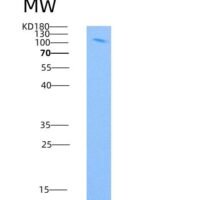
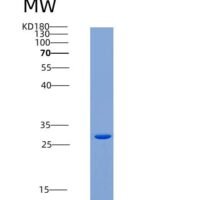
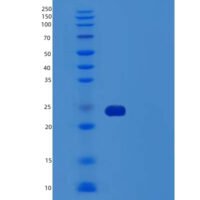
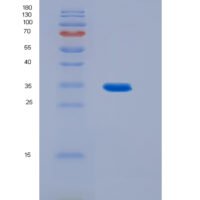
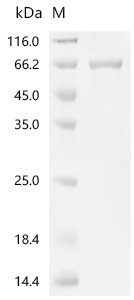
Recombinant Human Myotubularin (MTM1) is a recombinant protein from Homo sapiens (Human), expressed in Yeast, covering amino acids 1-603aa, with C-terminal 6xHis-tagged tag, molecular weight 71.4kDa, purity Greater than 95% as determined by SDS-PAGE.. Suitable for ELISA and Western Blot applications.