Function
Multifunctional protein with controversial molecular function which plays an important role in cell protection against oxidative stress and cell death acting as oxidative stress sensor and redox-sensitive chaperone and protease. It is involved in neuroprotective mechanisms like the stabilization of NFE2L2 and PINK1 proteins, male fertility as a positive regulator of androgen signaling pathway as well as cell growth and transformation through, for instance, the modulation of NF-kappa-B signaling pathway. Has been described as a protein and nucleotide deglycase that catalyzes the deglycation of the Maillard adducts formed between amino groups of proteins or nucleotides and reactive carbonyl groups of glyoxals.
Biological Context
Subcellular Location: Cell membrane (Lipid-anchor); Cytoplasm; Nucleus; Membrane raft; Mitochondrion; Endoplasmic reticulum
Tissue Specificity: Highly expressed in pancreas, kidney, skeletal muscle, liver, testis and heart. Detected at slightly lower levels in placenta and brain (at protein level). Detected in astrocytes, Sertoli cells, spermatogonia, spermatids and spermatozoa. Expressed by pancreatic islets at higher levels than surrounding exocrine tissues
Disease Association: Parkinson disease 7 (PARK7) : A neurodegenerative disorder characterized by resting tremor, postural tremor, bradykinesia, muscular rigidity, anxiety and psychotic episodes. PARK7 has onset before 40 years, slow progression and initial good response to levodopa. Some patients may show traits reminiscent of amyotrophic lateral sclerosis-parkinsonism/dementia complex (Guam disease). [The disease is caused by variants affecting the gene represented in this entry]
Product Specifications
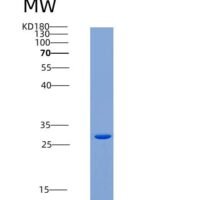
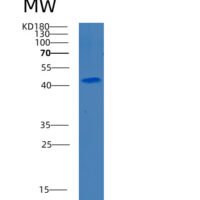
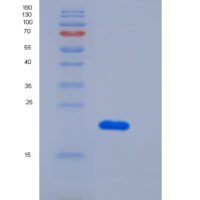
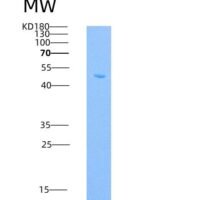
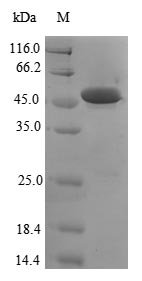
Recombinant Human Parkinson disease protein 7 (PARK7), partial is a recombinant protein from Homo sapiens (Human), expressed in E.coli, covering amino acids 1-188aa, with N-terminal GST-tagged tag, molecular weight 46.8kDa, purity Greater than 90% as determined by SDS-PAGE.. Suitable for ELISA and Western Blot applications.