Function
Multifunctional enzyme that catalyzes a series of essential post-translational modifications on Lys residues in procollagen. Plays a redundant role in catalyzing the formation of hydroxylysine residues in -Xaa-Lys-Gly- sequences in collagens. Plays a redundant role in catalyzing the transfer of galactose onto hydroxylysine groups, giving rise to galactosyl 5-hydroxylysine.
Biological Context
Subcellular Location: Rough endoplasmic reticulum; Endoplasmic reticulum lumen; Endoplasmic reticulum membrane (Peripheral membrane protein); Secreted; Secreted, extracellular space
Tissue Specificity: Ubiquitous. Detected in heart, placenta and pancreas and at lower levels in lung, liver and skeletal muscle
Disease Association: BCARD syndrome (BCARD) : An autosomal recessive connective tissue disorder, secondary to lysyl hydroxylase 3 deficiency. It is characterized by congenital malformations severely affecting multiple tissues and organs. Clinical features include growth retardation, craniofacial dysmorphism, popliteal and cerebral aneurysm, cerebral arterial hemorrhage, skin blistering and easy bruisability, and osteopenia. [The disease is caused by variants affecting the gene represented in this entry]
Product Specifications
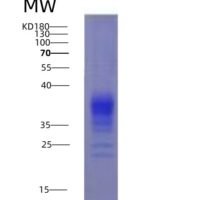
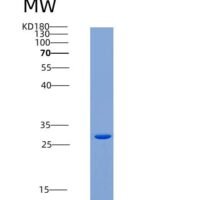
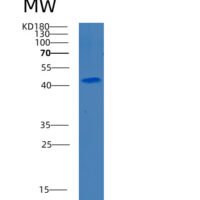
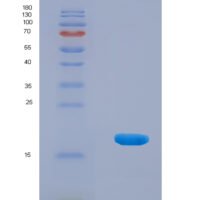
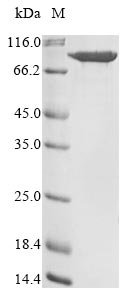
Recombinant Human Multifunctional procollagen lysine hydroxylase and glycosyltransferase LH3 (PLOD3) is a recombinant protein from Homo sapiens (Human), expressed in Mammalian cell, covering amino acids 25-738aa, with N-terminal 10xHis-tagged tag, molecular weight 85.9kDa, purity Greater than 95% as determined by SDS-PAGE.. Suitable for ELISA and Western Blot applications. Explore more Enzyme proteins →