Recombinant Human 40S ribosomal protein S3 (RPS3)

Recombinant Human 40S ribosomal protein S3 (RPS3) — Component of the small ribosomal subunit. Purity >90%.

SKU: BCRECP-001565 Category:

Product Specifications

Product SkuBCRECP-001565
Product DescriptionRecombinant Human 40S ribosomal protein S3 (RPS3) Protein is expressed from E.coli with C-terminal 6xHis-tagged. It contains 2-243aa. [Accession | P23396].
Uniprot No.P23396
Gene NamesRPS3
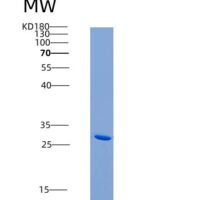
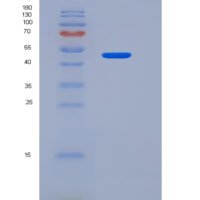
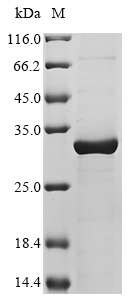
PurityGreater than 90% as determined by SDS-PAGE.
Expression SystemE.coli
Expression Region2-243aa
SpeciesHomo sapiens (Human)
Tag InfoC-terminal 6xHis-tagged
Molecular weight27.5kDa
ActivityPlease contact us to obtain bioactivity data.
BufferIf the delivery form is liquid, the default storage buffer is Tris/PBS-based buffer, 5%-50% glycerol. If the delivery form is lyophilized powder, the buffer before lyophilization is Tris/PBS-based buffer, 6% Trehalose.
StorageStore at -20°C/-80°C upon receipt, aliquoting is necessary for mutiple use. Avoid repeated freeze-thaw cycles.
Research AreasEpigenetics and Nuclear Signaling

Function

Component of the small ribosomal subunit. The ribosome is a large ribonucleoprotein complex responsible for the synthesis of proteins in the cell. Has endonuclease activity and plays a role in repair of damaged DNA.

Biological Context

Subcellular Location: Cytoplasm; Nucleus; Nucleus, nucleolus; Mitochondrion inner membrane (Peripheral membrane protein); Cytoplasm, cytoskeleton, spindle

Product Specifications

Recombinant Human 40S ribosomal protein S3 (RPS3) is a recombinant protein from Homo sapiens (Human), expressed in E.coli, covering amino acids 2-243aa, with C-terminal 6xHis-tagged tag, molecular weight 27.5kDa, purity Greater than 90% as determined by SDS-PAGE.. Suitable for ELISA and Western Blot applications.
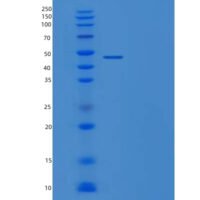
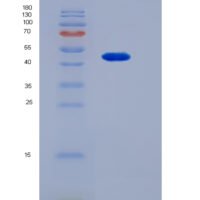
SDS-PAGE: Single band at expected molecular weight confirming purity.

ELISA: Suitable as coating antigen or detection standard.

Western Blot: Compatible with standard Western Blot protocols.

Protein Interaction: Validated for SPR (Surface Plasmon Resonance) and BLI (Bio-Layer Interferometry) studies.

Shipping: Shipped at ambient temperature. Lyophilized protein is stable during transit.

Storage: Store lyophilized protein at -20°C to -80°C. Reconstituted protein should be aliquoted and stored at -80°C. Avoid repeated freeze-thaw cycles.

Shelf Life: 12 months from date of receipt when stored as recommended.

Shipping Time: Orders placed before 2 PM EST ship same day. International orders typically deliver within 5-10 business days.

Protein Biology

Function

Component of the small ribosomal subunit (PubMed:23636399, PubMed:8706699). The ribosome is a large ribonucleoprotein complex responsible for the synthesis of proteins in the cell (PubMed:23636399, PubMed:8706699). Has endonuclease activity and plays a role in repair of damaged DNA (PubMed:7775413). Cleaves phosphodiester bonds of DNAs containing altered bases with broad specificity and cleaves supercoiled DNA more efficiently than relaxed DNA (PubMed:15707971). Displays high binding affinity for 7,8-dihydro-8-oxoguanine (8-oxoG), a common DNA lesion caused by reactive oxygen species (ROS) (PubMed:14706345). Has also been shown to bind with similar affinity to intact and damaged DNA (PubMed:18610840). Stimulates the N-glycosylase activity of the base excision protein OGG1 (PubMed:15518571). Enhances the uracil excision activity of UNG1 (PubMed:18973764). Also stimulates the cleavage of the phosphodiester backbone by APEX1 (PubMed:18973764). When located in the mitochondrion, reduces cellular ROS levels and mitochondrial DNA damage (PubMed:23911537). Has also been shown to negatively regulate DNA repair in cells exposed to hydrogen peroxide (PubMed:17049931). Plays a role in regulating transcription as part of the NF-kappa-B p65-p50 complex where it binds to the RELA/p65 subunit, enhances binding of the complex to DNA and promotes transcription of target genes (PubMed:18045535). Represses its own translation by binding to its cognate mRNA (PubMed:20217897). Binds to and protects TP53/p53 from MDM2-mediated ubiquitination (PubMed:19656744). Involved in spindle formation and chromosome movement during mitosis by regulating microtubule polymerization (PubMed:23131551). Involved in induction of apoptosis through its role in activation of CASP8 (PubMed:14988002). Induces neuronal apoptosis by interacting with the E2F1 transcription factor and acting synergistically with it to up-regulate pro-apoptotic proteins BCL2L11/BIM and HRK/Dp5 (PubMed:20605787). Interacts with TRADD following exposure to UV radiation and induces apoptosis by caspase-dependent JNK activation (PubMed:22510408)

Subcellular Location

Cytoplasm; Nucleus; Nucleus, nucleolus; Mitochondrion inner membrane (Peripheral membrane protein); Cytoplasm, cytoskeleton, spindle

Subunit

Component of the 40S small ribosomal subunit (PubMed:23636399, PubMed:8706699). Identified in a IGF2BP1-dependent mRNP granule complex containing untranslated mRNAs (PubMed:17289661). Interacts with HNRPD (PubMed:24423872). Interacts with PRMT1; the interaction methylates RPS3 (PubMed:19460357). Interacts with SUMO1; the interaction sumoylates RPS3 (PubMed:21968017). Interacts with UBC9 (PubMed:21968017). Interacts with CDK1; the interaction phosphorylates RPS3 (PubMed:21871177). Interacts with PRKCD; the interaction phosphorylates RPS3 (PubMed:19059439). Interacts with PKB/AKT; the interaction phosphorylates RPS3 (PubMed:20605787). Interacts with E2F1; the interaction occurs in the absence of nerve growth factor and increases transcription of pro-apoptotic proteins BCL2L11/BIM and HRK/Dp5 (PubMed:20605787). Interacts with the base excision repair proteins APEX1 and OGG1; interaction with OGG1 increases OGG1 N-glycosylase activity (PubMed:15518571). Interacts with UNG; the interaction increases the uracil excision activity of UNG1 (PubMed:18973764). Interacts with HSP90; the interaction prevents the ubiquitination and proteasome-dependent degradation of RPS3 and is suppressed by increased ROS levels (PubMed:16314389). Interacts with TOM70; the interaction promotes translocation of RPS3 to the mitochondrion (PubMed:23911537). Interacts (via N-terminus) with RELA (via N-terminus); the interaction enhances the DNA-binding activity of the NF-kappa-B p65-p50 complex (PubMed:18045535). Interacts with NFKBIA; the interaction is direct and may bridge the interaction between RPS3 and RELA (PubMed:24457201). Interacts with IKKB; the interaction phosphorylates RPS3 and enhances its translocation to the nucleus (PubMed:21399639). Interacts (via KH domain) with MDM2 and TP53 (PubMed:19656744). Interacts with TRADD (PubMed:22510408). Interacts (via N-terminus) with E.coli O157:H7 (strain EDL933) nleH1 and nleH2; the interaction with nleH1 inhibits phosphorylation by IKKB, reduces RPS3 nuclear abundance and inhibits transcriptional activation by the NF-kappa-B p65-p50 complex (PubMed:20041225, PubMed:21399639). Interacts with ASCC3 (PubMed:28757607). Identified in a HCV IRES-mediated translation complex, at least composed of EIF3C, IGF2BP1, RPS3 and HCV RNA-replicon (PubMed:19541769). Interacts with CRY1 (By similarity). Interacts (when monoubiquitinated at Lys-214) with RIOK3 (PubMed:39947182, PubMed:39947183)

Gene: RPS3  |  Organism: Homo sapiens  |  Synonyms: 40S ribosomal protein S3
Key Publications

Frequently Asked Questions

How do I order or inquire about this product?

Fill out the Online Inquiry form with your required quantity and specifications. You can also email sales@biocrestsci.com. Our team typically responds within 4 business hours with a quote and availability confirmation.

What is the shipping and delivery time?

Orders placed before 2 PM EST ship the same day. Domestic (US) delivery typically takes 2-3 business days. International orders deliver within 5-10 business days. All products are shipped at ambient temperature with appropriate packaging to ensure stability.

How should I store this recombinant protein?

Lyophilized proteins should be stored at -20°C to -80°C upon receipt. After reconstitution, aliquot and store at -80°C. Avoid repeated freeze-thaw cycles. Shelf life is 12 months from date of receipt when stored as recommended.

What quality controls are performed on your products?

Each product undergoes SDS-PAGE purity analysis (typically >85-95%), endotoxin testing, and bioactivity validation. Products are validated for ELISA, Western Blot, and SPR/BLI applications as specified on this product page. A Certificate of Analysis (CoA) is available upon request.

Shopping Cart
Scroll to Top