Function
Serine protease inhibitor, probably important for the anti-inflammatory and/or antimicrobial protection of mucous epithelia. Contribute to the integrity and protective barrier function of the skin by regulating the activity of defense-activating and desquamation-involved proteases. Inhibits KLK5, its major target, in a pH-dependent manner.
Biological Context
Subcellular Location: Secreted
Tissue Specificity: Highly expressed in the thymus and stratum corneum. Also found in the oral mucosa, parathyroid gland, Bartholin's glands, tonsils, and vaginal epithelium. Very low levels are detected in lung, kidney, and prostate
Disease Association: Netherton syndrome (NETH) : An autosomal recessive congenital ichthyosis associated with hair shaft abnormalities and anomalies of the immune system. Typical features are ichthyosis linearis circumflexa, ichthyosiform erythroderma, trichorrhexis invaginata (bamboo hair), atopic dermatitis, and hayfever. High postnatal mortality is due to failure to thrive, infections and hypernatremic dehydration. [The disease is caused by variants affecting the gene represented in this entry]
Product Specifications
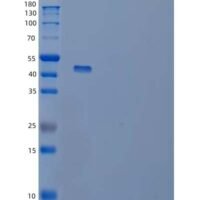
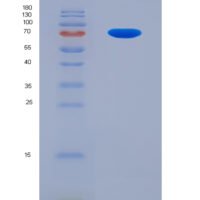
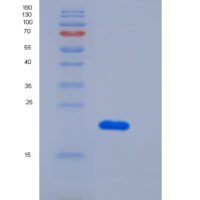
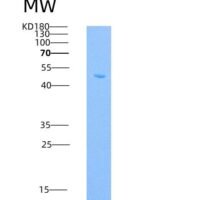
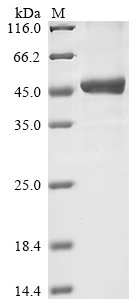
Recombinant Human Serine protease inhibitor Kazal-type 5 (SPINK5), partial is a recombinant protein from Homo sapiens (Human), expressed in E.coli, covering amino acids 722-847aa, with N-terminal 10xHis-GST-tagged and C-terminal Myc-tagged tag, molecular weight 49.5kDa, purity Greater than 85% as determined by SDS-PAGE.. Suitable for ELISA and Western Blot applications. Explore more Protease proteins →