Recombinant Rat Group 10 secretory phospholipase A2 (Pla2g10)

Recombinant Rat Group 10 secretory phospholipase A2 (Pla2g10) — Secretory calcium-dependent phospholipase A2 that primarily targets extracellular phospholipids. Purity >90%.

SKU: BCRECP-004085 Category:

Product Specifications

Product SkuBCRECP-004085
Product DescriptionRecombinant Rat Group 10 secretory phospholipase A2 (Pla2g10) Protein is expressed from E.coli with N-terminal 10xHis-tagged and C-terminal Myc-tagged. It contains 29-151aa. [Accession | Q9QZT3].
Uniprot No.Q9QZT3
Gene NamesPla2g10
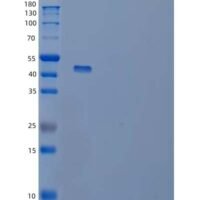
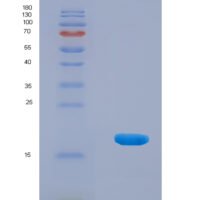
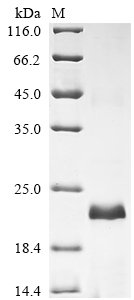
PurityGreater than 90% as determined by SDS-PAGE.
Expression SystemE.coli
Expression Region29-151aa
SpeciesRattus norvegicus (Rat)
Tag InfoN-terminal 10xHis-tagged and C-terminal Myc-tagged
Molecular weight21.4kDa
ActivityPlease contact us to obtain bioactivity data.
BufferIf the delivery form is liquid, the default storage buffer is Tris/PBS-based buffer, 5%-50% glycerol. If the delivery form is lyophilized powder, the buffer before lyophilization is Tris/PBS-based buffer, 6% Trehalose.
StorageStore at -20°C/-80°C upon receipt, aliquoting is necessary for mutiple use. Avoid repeated freeze-thaw cycles.
Research AreasOthers

Function

Secretory calcium-dependent phospholipase A2 that primarily targets extracellular phospholipids. Hydrolyzes the ester bond of the fatty acyl group attached at sn-2 position of phospholipids with preference for phosphatidylcholines and phosphatidylglycerols over phosphatidylethanolamines. Preferentially releases sn-2 omega-6 and omega-3 polyunsaturated fatty acyl (PUFA) chains over saturated fatty acyls.

Biological Context

Subcellular Location: Secreted; Lysosome; Cytoplasmic vesicle, secretory vesicle, acrosome

Product Specifications

Recombinant Rat Group 10 secretory phospholipase A2 (Pla2g10) is a recombinant protein from Rattus norvegicus (Rat), expressed in E.coli, covering amino acids 29-151aa, with N-terminal 10xHis-tagged and C-terminal Myc-tagged tag, molecular weight 21.4kDa, purity Greater than 90% as determined by SDS-PAGE.. Suitable for ELISA and Western Blot applications.
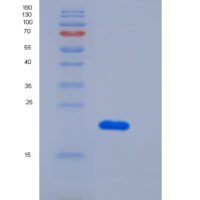
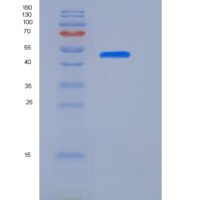
SDS-PAGE: Single band at expected molecular weight confirming purity.

ELISA: Suitable as coating antigen or detection standard.

Western Blot: Compatible with standard Western Blot protocols.

Protein Interaction: Validated for SPR (Surface Plasmon Resonance) and BLI (Bio-Layer Interferometry) studies.

Shipping: Shipped at ambient temperature. Lyophilized protein is stable during transit.

Storage: Store lyophilized protein at -20°C to -80°C. Reconstituted protein should be aliquoted and stored at -80°C. Avoid repeated freeze-thaw cycles.

Shelf Life: 12 months from date of receipt when stored as recommended.

Shipping Time: Orders placed before 2 PM EST ship same day. International orders typically deliver within 5-10 business days.

Protein Biology

Function

Secretory calcium-dependent phospholipase A2 that primarily targets extracellular phospholipids. Hydrolyzes the ester bond of the fatty acyl group attached at sn-2 position of phospholipids with preference for phosphatidylcholines and phosphatidylglycerols over phosphatidylethanolamines. Preferentially releases sn-2 omega-6 and omega-3 polyunsaturated fatty acyl (PUFA) chains over saturated fatty acyls. Contributes to phospholipid remodeling of very low-density lipoprotein (VLDL), low-density lipoprotein (LDL) and high-density lipoprotein (HDL) particles. Hydrolyzes LDL phospholipids releasing unsaturated fatty acids that regulate macrophage differentiation toward foam cells. Efficiently hydrolyzes and inactivates platelet activating factor (PAF), a potent lipid mediator present in oxidized LDL (By similarity). May act in an autocrine and paracrine manner. Secreted by lung epithelium, targets membrane phospholipids of infiltrating eosinophils, releasing arachidonate and boosting eicosanoid and cysteinyl leukotriene synthesis involved in airway inflammatory response. Secreted by gut epithelium, hydrolyzes dietary and biliary phosphatidylcholines in the gastrointestinal lumen. Plays a stem cell regulator role in colon epithelium. Within intracellular compartment, mediates Paneth-like cell differentiation and its stem cell supporting functions by inhibiting the Wnt signaling pathway in intestinal stem cell (ISC). Secreted in the intestinal lumen upon inflammation, acts in an autocrine way and promotes prostaglandin E2 synthesis that stimulates Wnt signaling pathway in ISCs and tissue regeneration. May participate in hair follicle morphogenesis by regulating phosphatidylethanolamines metabolism at the outermost epithelial layer and facilitating melanin synthesis. By releasing lysophosphatidylcholines (LPCs) at sperm acrosome, controls sperm cell capacitation, acrosome reaction and overall fertility. May promote neurite outgrowth in neuron fibers involved in nociception (By similarity). Contributes to lipid remodeling of cellular membranes and generation of lipid mediators involved in pathogen clearance. Cleaves sn-2 fatty acyl chains of phosphatidylglycerols and phosphatidylethanolamines, which are major components of membrane phospholipids in bacteria. Displays bactericidal activity against Gram-positive bacteria by directly hydrolyzing phospholipids of the bacterial membrane. In pulmonary epithelium, may contribute to host defense response against adenoviral infection. Prevents adenovirus entry into host cells by hydrolyzing host cell plasma membrane, releasing C16:0 LPCs that inhibit virus-mediated membrane fusion and viral infection. Likely prevents adenoviral entry into the endosomes of host cells (By similarity). May play a role in maturation and activation of innate immune cells including macrophages, group 2 innate lymphoid cells and mast cells (By similarity)

Subcellular Location

Secreted; Lysosome; Cytoplasmic vesicle, secretory vesicle, acrosome

Subunit

Interacts with PLA2R1; this interaction mediates PLA2G10 clearance and inactivation

Gene: Pla2g10  |  Organism: Rattus norvegicus  |  Synonyms: Group X secretory phospholipase A2; Phosphatidylcholine 2-acylhydrolase 10

Frequently Asked Questions

How do I order or inquire about this product?

Fill out the Online Inquiry form with your required quantity and specifications. You can also email sales@biocrestsci.com. Our team typically responds within 4 business hours with a quote and availability confirmation.

What is the shipping and delivery time?

Orders placed before 2 PM EST ship the same day. Domestic (US) delivery typically takes 2-3 business days. International orders deliver within 5-10 business days. All products are shipped at ambient temperature with appropriate packaging to ensure stability.

How should I store this recombinant protein?

Lyophilized proteins should be stored at -20°C to -80°C upon receipt. After reconstitution, aliquot and store at -80°C. Avoid repeated freeze-thaw cycles. Shelf life is 12 months from date of receipt when stored as recommended.

What quality controls are performed on your products?

Each product undergoes SDS-PAGE purity analysis (typically >85-95%), endotoxin testing, and bioactivity validation. Products are validated for ELISA, Western Blot, and SPR/BLI applications as specified on this product page. A Certificate of Analysis (CoA) is available upon request.

Shopping Cart
Scroll to Top