,

Recombinant Neosartorya fumigata Probable pectate lyase C (plyC)

Recombinant Neosartorya fumigata Probable pectate lyase C (plyC) — Pectinolytic enzyme consist of four classes of enzymes: pectin lyase, polygalacturonase, pectin methylesterase and rhamnogalacturonase. Purity >90%.

SKU: BCRECP-004116 Categories: ,

Product Specifications

Product SkuBCRECP-004116
Product DescriptionRecombinant Neosartorya fumigata Probable pectate lyase C (plyC) Protein is expressed from E.coli with N-terminal 10xHis-tagged and C-terminal Myc-tagged. It contains 21-420aa. [Accession | B0XMA2].
Uniprot No.B0XMA2
Gene NamesplyC
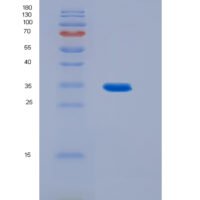
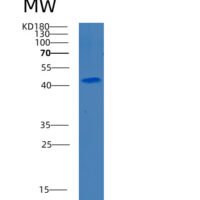
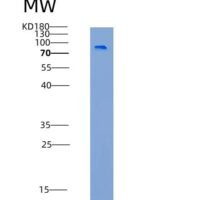
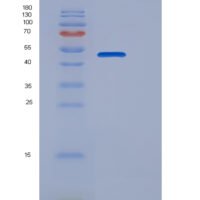
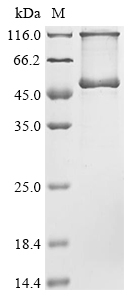
PurityGreater than 90% as determined by SDS-PAGE.
Expression SystemE.coli
Expression Region21-420aa
SpeciesNeosartorya fumigata (strain CEA10 / CBS 144.89 / FGSC A1163) (Aspergillus fumigatus)
Tag InfoN-terminal 10xHis-tagged and C-terminal Myc-tagged
Molecular weight49.5kDa
ActivityPlease contact us to obtain bioactivity data.
BufferIf the delivery form is liquid, the default storage buffer is Tris/PBS-based buffer, 5%-50% glycerol. If the delivery form is lyophilized powder, the buffer before lyophilization is Tris/PBS-based buffer, 6% Trehalose.
StorageStore at -20°C/-80°C upon receipt, aliquoting is necessary for mutiple use. Avoid repeated freeze-thaw cycles.
Research AreasOthers

Function

Pectinolytic enzyme consist of four classes of enzymes: pectin lyase, polygalacturonase, pectin methylesterase and rhamnogalacturonase. Among pectinolytic enzymes, pectin lyase is the most important in depolymerization of pectin, since it cleaves internal glycosidic bonds of highly methylated pectins. Favors pectate, the anion, over pectin, the methyl ester.

Biological Context

Subcellular Location: Secreted

Product Specifications

Recombinant Neosartorya fumigata Probable pectate lyase C (plyC) is a recombinant protein from Neosartorya fumigata (strain CEA10 / CBS 144.89 / FGSC A1163) (Aspergillus fumigatus), expressed in E.coli, covering amino acids 21-420aa, with N-terminal 10xHis-tagged and C-terminal Myc-tagged tag, molecular weight 49.5kDa, purity Greater than 90% as determined by SDS-PAGE.. Suitable for ELISA and Western Blot applications.

SDS-PAGE: Single band at expected molecular weight confirming purity.

ELISA: Suitable as coating antigen or detection standard.

Western Blot: Compatible with standard Western Blot protocols.

Protein Interaction: Validated for SPR (Surface Plasmon Resonance) and BLI (Bio-Layer Interferometry) studies.

Shipping: Shipped at ambient temperature. Lyophilized protein is stable during transit.

Storage: Store lyophilized protein at -20°C to -80°C. Reconstituted protein should be aliquoted and stored at -80°C. Avoid repeated freeze-thaw cycles.

Shelf Life: 12 months from date of receipt when stored as recommended.

Shipping Time: Orders placed before 2 PM EST ship same day. International orders typically deliver within 5-10 business days.

Protein Biology

Function

Pectinolytic enzyme consist of four classes of enzymes: pectin lyase, polygalacturonase, pectin methylesterase and rhamnogalacturonase. Among pectinolytic enzymes, pectin lyase is the most important in depolymerization of pectin, since it cleaves internal glycosidic bonds of highly methylated pectins. Favors pectate, the anion, over pectin, the methyl ester (By similarity)

Subcellular Location

Secreted

Gene: plyC  |  Organism: Aspergillus fumigatus (strain CBS 144.89 / FGSC A1163 / CEA10)

Frequently Asked Questions

How do I order or inquire about this product?

Fill out the Online Inquiry form with your required quantity and specifications. You can also email sales@biocrestsci.com. Our team typically responds within 4 business hours with a quote and availability confirmation.

What is the shipping and delivery time?

Orders placed before 2 PM EST ship the same day. Domestic (US) delivery typically takes 2-3 business days. International orders deliver within 5-10 business days. All products are shipped at ambient temperature with appropriate packaging to ensure stability.

How should I store this recombinant protein?

Lyophilized proteins should be stored at -20°C to -80°C upon receipt. After reconstitution, aliquot and store at -80°C. Avoid repeated freeze-thaw cycles. Shelf life is 12 months from date of receipt when stored as recommended.

What quality controls are performed on your products?

Each product undergoes SDS-PAGE purity analysis (typically >85-95%), endotoxin testing, and bioactivity validation. Products are validated for ELISA, Western Blot, and SPR/BLI applications as specified on this product page. A Certificate of Analysis (CoA) is available upon request.

Shopping Cart
Scroll to Top