Recombinant Mouse Apoptosis-associated speck-like protein containing a CARD (Pycard)

Recombinant Mouse Apoptosis-associated speck-like protein containing a CARD (Pycard) — Functions as a key mediator in apoptosis and inflammation. Purity >85%.

SKU: BCRECP-004219 Category:

Product Specifications

Product SkuBCRECP-004219
Product DescriptionRecombinant Mouse Apoptosis-associated speck-like protein containing a CARD (Pycard) Protein is expressed from E.coli with N-terminal 10xHis-tagged and C-terminal Myc-tagged. It contains 1-193aa. [Accession | Q9EPB4].
Uniprot No.Q9EPB4
Gene NamesPycard
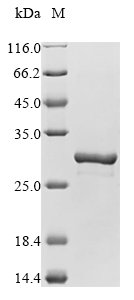
PurityGreater than 85% as determined by SDS-PAGE.
Expression SystemE.coli
Expression Region1-193aa
SpeciesMus musculus (Mouse)
Tag InfoN-terminal 10xHis-tagged and C-terminal Myc-tagged
Molecular weight28.9kDa
ActivityPlease contact us to obtain bioactivity data.
BufferIf the delivery form is liquid, the default storage buffer is Tris/PBS-based buffer, 5%-50% glycerol. If the delivery form is lyophilized powder, the buffer before lyophilization is Tris/PBS-based buffer, 6% Trehalose.
StorageStore at -20°C/-80°C upon receipt, aliquoting is necessary for mutiple use. Avoid repeated freeze-thaw cycles.
Research AreasCancer

Function

Functions as a key mediator in apoptosis and inflammation. Promotes caspase-mediated apoptosis involving predominantly caspase-8 and also caspase-9 in a probable cell type-specific manner. Involved in activation of the mitochondrial apoptotic pathway, promotes caspase-8-dependent proteolytic maturation of BID independently of FADD in certain cell types and also mediates mitochondrial translocation of BAX and activates BAX-dependent apoptosis coupled to activation of caspase-9, -2 and -3.

Biological Context

Subcellular Location: Cytoplasm; Inflammasome; Endoplasmic reticulum; Mitochondrion; Nucleus
Tissue Specificity: Expressed in small intestine, colon, thymus, spleen, brain, heart, skeletal muscle, kidney, lung and liver

Product Specifications

Recombinant Mouse Apoptosis-associated speck-like protein containing a CARD (Pycard) is a recombinant protein from Mus musculus (Mouse), expressed in E.coli, covering amino acids 1-193aa, with N-terminal 10xHis-tagged and C-terminal Myc-tagged tag, molecular weight 28.9kDa, purity Greater than 85% as determined by SDS-PAGE.. Suitable for ELISA and Western Blot applications.
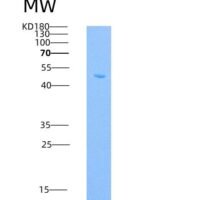
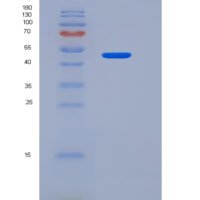
SDS-PAGE: Single band at expected molecular weight confirming purity.

ELISA: Suitable as coating antigen or detection standard.

Western Blot: Compatible with standard Western Blot protocols.

Protein Interaction: Validated for SPR (Surface Plasmon Resonance) and BLI (Bio-Layer Interferometry) studies.

Shipping: Shipped at ambient temperature. Lyophilized protein is stable during transit.

Storage: Store lyophilized protein at -20°C to -80°C. Reconstituted protein should be aliquoted and stored at -80°C. Avoid repeated freeze-thaw cycles.

Shelf Life: 12 months from date of receipt when stored as recommended.

Shipping Time: Orders placed before 2 PM EST ship same day. International orders typically deliver within 5-10 business days.

Protein Biology

Function

Functions as a key mediator in apoptosis and inflammation (PubMed:32424362, PubMed:34678144). Promotes caspase-mediated apoptosis involving predominantly caspase-8 and also caspase-9 in a probable cell type-specific manner (By similarity). Involved in activation of the mitochondrial apoptotic pathway, promotes caspase-8-dependent proteolytic maturation of BID independently of FADD in certain cell types and also mediates mitochondrial translocation of BAX and activates BAX-dependent apoptosis coupled to activation of caspase-9, -2 and -3 (By similarity). Involved in innate immune response by acting as an integral adapter in the assembly of various inflammasomes (NLRP2, NLRP3, NLRP6 and AIM2) which recruit and activate caspase-1 leading to processing and secretion of pro-inflammatory cytokines (PubMed:15190255, PubMed:15507117, PubMed:21892172, PubMed:22555457, PubMed:32424362, PubMed:34678144). Caspase-1-dependent inflammation leads to macrophage pyroptosis, a form of cell death (By similarity). The function as activating adapter in different types of inflammasomes is mediated by the pyrin and CARD domains and their homotypic interactions (By similarity). Clustered PYCARD nucleates the formation of caspase-1 filaments through the interaction of their respective CARD domains, acting as a platform for of caspase-1 polymerization (By similarity). In the NLRC4 inflammasomes seems not be required but facilitates the processing of procaspase-1 (By similarity). In cooperation with NOD2 involved in an inflammasome activated by bacterial muramyl dipeptide leading to caspase-1 activation (By similarity). May be involved in RIGI-triggered pro-inflammatory responses and inflammasome activation (By similarity). In collaboration with AIM2 which detects cytosolic double-stranded DNA may also be involved in a caspase-1-independent cell death that involves caspase-8 (PubMed:22555457). In adaptive immunity may be involved in maturation of dendritic cells to stimulate T-cell immunity and in cytoskeletal rearrangements coupled to chemotaxis and antigen uptake may be involved in post-transcriptional regulation of the guanine nucleotide exchange factor DOCK2; the latter function is proposed to involve the nuclear form (By similarity). Also involved in transcriptional activation of cytokines and chemokines independent of the inflammasome; this function may involve AP-1, NF-kappa-B, MAPK and caspase-8 signaling pathways (By similarity). For regulation of NF-kappa-B activating and inhibiting functions have been reported (By similarity). Modulates NF-kappa-B induction at the level of the IKK complex by inhibiting kinase activity of CHUK and IKBK (By similarity). Proposed to compete with RIPK2 for association with CASP1 thereby down-regulating CASP1-mediated RIPK2-dependent NF-kappa-B activation and activating interleukin-1 beta processing (By similarity). Modulates host resistance to DNA virus infection, probably by inducing the cleavage of and inactivating CGAS in presence of cytoplasmic double-stranded DNA (PubMed:28314590)

Subcellular Location

Cytoplasm; Inflammasome; Endoplasmic reticulum; Mitochondrion; Nucleus

Tissue Specificity

Expressed in small intestine, colon, thymus, spleen, brain, heart, skeletal muscle, kidney, lung and liver

Subunit

Self-associates; enforced oligomerization induces apoptosis, NF-kappa-B regulation and interleukin-1 beta secretion (By similarity). Homooligomers can form disk-like particles of approximately 12 nm diameter and approximately 1 nm height (By similarity). Component of several inflammasomes containing one pattern recognition receptor/sensor, such as NLRP2, NLRP3, NLRP6, NLRC4, AIM2, MEFV or NOD2, and probably NLRC4 or NLRP12 (PubMed:32424362, PubMed:34678144). Major component of the ASC pyroptosome, a 1-2 um supramolecular assembly (one per macrophage cell) which consists of oligomerized PYCARD dimers and CASP1 (By similarity). Interacts with CASP1 (precursor form); the interaction induces activation of CASP1 leading to the processing of interleukin-1 beta; PYCARD competes with RIPK2 for binding to CASP1 (By similarity). Interacts with NLRP3; the interaction requires the homooligomerization of NLRP3 (PubMed:30487600). Interacts with NLRP2, NLRC4, MEFV, CARD16, AIM2, NOD2, RIGI, RIPK2, PYDC1, PYDC2, NLRP10, CHUK, IKBKB and BAX (By similarity). Interacts with CASP8 (PubMed:22555457). Component of the AIM2 PANoptosome complex, a multiprotein complex that drives inflammatory cell death (PANoptosis) (PubMed:34471287). Interacts with FAM120A; this interaction inhibits inflammasome activation (By similarity)

Gene: Pycard  |  Organism: Mus musculus  |  Synonyms: PYD and CARD domain-containing protein
Key Publications

Frequently Asked Questions

How do I order or inquire about this product?

Fill out the Online Inquiry form with your required quantity and specifications. You can also email sales@biocrestsci.com. Our team typically responds within 4 business hours with a quote and availability confirmation.

What is the shipping and delivery time?

Orders placed before 2 PM EST ship the same day. Domestic (US) delivery typically takes 2-3 business days. International orders deliver within 5-10 business days. All products are shipped at ambient temperature with appropriate packaging to ensure stability.

How should I store this recombinant protein?

Lyophilized proteins should be stored at -20°C to -80°C upon receipt. After reconstitution, aliquot and store at -80°C. Avoid repeated freeze-thaw cycles. Shelf life is 12 months from date of receipt when stored as recommended.

What quality controls are performed on your products?

Each product undergoes SDS-PAGE purity analysis (typically >85-95%), endotoxin testing, and bioactivity validation. Products are validated for ELISA, Western Blot, and SPR/BLI applications as specified on this product page. A Certificate of Analysis (CoA) is available upon request.

Shopping Cart
Scroll to Top