Recombinant Mouse Endoribonuclease ZC3H12A (Zc3h12a)

Recombinant Mouse Endoribonuclease ZC3H12A (Zc3h12a) — Endoribonuclease involved in various biological functions such as cellular inflammatory response and immune homeostasis, glial differentiation of neuroprogenitor cells, cell death of cardiomyocytes… Purity >85%.

SKU: BCRECP-004782 Category:

Product Specifications

Product SkuBCRECP-004782
Product DescriptionRecombinant Mouse Endoribonuclease ZC3H12A (Zc3h12a) Protein is expressed from E.coli with N-terminal 10xHis-tagged and C-terminal Myc-tagged. It contains 1-596aa. [Accession | Q5D1E7].
Uniprot No.Q5D1E7
Gene NamesZc3h12a
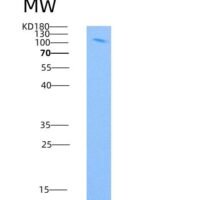
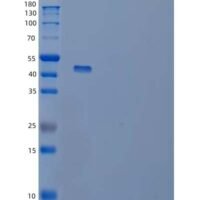
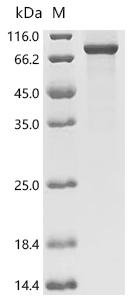
PurityGreater than 85% as determined by SDS-PAGE.
Expression SystemE.coli
Expression Region1-596aa
SpeciesMus musculus (Mouse)
Tag InfoN-terminal 10xHis-tagged and C-terminal Myc-tagged
Molecular weight73.0kDa
ActivityPlease contact us to obtain bioactivity data.
BufferIf the delivery form is liquid, the default storage buffer is Tris/PBS-based buffer, 5%-50% glycerol. If the delivery form is lyophilized powder, the buffer before lyophilization is Tris/PBS-based buffer, 6% Trehalose.
StorageStore at -20°C/-80°C upon receipt, aliquoting is necessary for mutiple use. Avoid repeated freeze-thaw cycles.
Research AreasCancer

Function

Endoribonuclease involved in various biological functions such as cellular inflammatory response and immune homeostasis, glial differentiation of neuroprogenitor cells, cell death of cardiomyocytes, adipogenesis and angiogenesis. Functions as an endoribonuclease involved in mRNA decay. Modulates the inflammatory response by promoting the degradation of a set of translationally active cytokine-induced inflammation-related mRNAs, such as IL6 and IL12B, during the early phase of inflammation.

Biological Context

Subcellular Location: Nucleus; Cytoplasm; Rough endoplasmic reticulum membrane (Peripheral membrane protein); Cytoplasmic granule; Cytoplasm, P-body
Tissue Specificity: Expressed in CD4(+) helper T-cells (at protein level). Highly expressed in macrophages. Expressed in lung, lymph nodes, spleen and thymus. Expressed weakly in heart. Expressed weakly in cardiomyocytes (at protein level). Expressed in spleen, lung, intestine, brown adipose tissue and thymus. Weakly expressed in the heart. Weakly expressed in cardiomyocytes
Disease Association: [Increased expression of ZC3H12A is associated with ischemic heart disease ]

Product Specifications

Recombinant Mouse Endoribonuclease ZC3H12A (Zc3h12a) is a recombinant protein from Mus musculus (Mouse), expressed in E.coli, covering amino acids 1-596aa, with N-terminal 10xHis-tagged and C-terminal Myc-tagged tag, molecular weight 73.0kDa, purity Greater than 85% as determined by SDS-PAGE.. Suitable for ELISA and Western Blot applications.
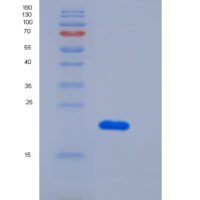
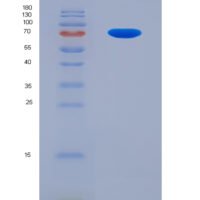
SDS-PAGE: Single band at expected molecular weight confirming purity.

ELISA: Suitable as coating antigen or detection standard.

Western Blot: Compatible with standard Western Blot protocols.

Protein Interaction: Validated for SPR (Surface Plasmon Resonance) and BLI (Bio-Layer Interferometry) studies.

Shipping: Shipped at ambient temperature. Lyophilized protein is stable during transit.

Storage: Store lyophilized protein at -20°C to -80°C. Reconstituted protein should be aliquoted and stored at -80°C. Avoid repeated freeze-thaw cycles.

Shelf Life: 12 months from date of receipt when stored as recommended.

Shipping Time: Orders placed before 2 PM EST ship same day. International orders typically deliver within 5-10 business days.

Protein Biology

Function

Endoribonuclease involved in various biological functions such as cellular inflammatory response and immune homeostasis, glial differentiation of neuroprogenitor cells, cell death of cardiomyocytes, adipogenesis and angiogenesis. Functions as an endoribonuclease involved in mRNA decay (PubMed:26000482). Modulates the inflammatory response by promoting the degradation of a set of translationally active cytokine-induced inflammation-related mRNAs, such as IL6 and IL12B, during the early phase of inflammation (PubMed:19322177, PubMed:21115689, PubMed:23185455, PubMed:26000482). Prevents aberrant T-cell-mediated immune reaction by degradation of multiple mRNAs controlling T-cell activation, such as those encoding cytokines (IL6 and IL2), cell surface receptors (ICOS, TNFRSF4 and TNFR2) and transcription factor (REL) (PubMed:19322177, PubMed:21115689, PubMed:23185455, PubMed:23706741, PubMed:26000482). Inhibits cooperatively with ZC3H12A the differentiation of helper T cells Th17 in lungs. They repress target mRNA encoding the Th17 cell-promoting factors IL6, ICOS, REL, IRF4, NFKBID and NFKBIZ. The cooperation requires RNA-binding by RC3H1 and the nuclease activity of ZC3H12A (PubMed:25282160). Together with RC3H1, destabilizes TNFRSF4/OX40 mRNA by binding to the conserved stem loop structure in its 3'UTR (PubMed:29244194, PubMed:35819231). Self regulates by destabilizing its own mRNA (PubMed:22037600). Cleaves mRNA harboring a stem-loop (SL), often located in their 3'-UTRs, during the early phase of inflammation in a helicase UPF1-dependent manner (PubMed:19322177, PubMed:23185455, PubMed:23706741, PubMed:26000482, PubMed:26134560). Plays a role in the inhibition of microRNAs (miRNAs) biogenesis (By similarity). Cleaves the terminal loop of a set of precursor miRNAs (pre-miRNAs) important for the regulation of the inflammatory response leading to their degradation, and thus preventing the biosynthesis of mature miRNAs (By similarity). Also plays a role in promoting angiogenesis in response to inflammatory cytokines by inhibiting the production of antiangiogenic microRNAs via its anti-dicer RNase activity (By similarity). Affects the overall ubiquitination of cellular proteins (PubMed:21115689). Positively regulates deubiquitinase activity promoting the cleavage at 'Lys-48'- and 'Lys-63'-linked polyubiquitin chains on TNF receptor-associated factors (TRAFs), preventing JNK and NF-kappa-B signaling pathway activation, and hence negatively regulating macrophage-mediated inflammatory response and immune homeostasis (PubMed:21115689). Induces also deubiquitination of the transcription factor HIF1A, probably leading to its stabilization and nuclear import, thereby positively regulating the expression of proangiogenic HIF1A-targeted genes. Involved in a TANK-dependent negative feedback response to attenuate NF-kappaB activation through the deubiquitination of IKBKG or TRAF6 in response to interleukin-1-beta (IL1B) stimulation or upon DNA damage (By similarity). Prevents stress granules (SGs) formation and promotes macrophage apoptosis under stress conditions, including arsenite-induced oxidative stress, heat shock, and energy deprivation (PubMed:21971051). Plays a role in the regulation of macrophage polarization; promotes IL4-induced polarization of macrophages M1 into anti-inflammatory M2 state (PubMed:25934862). May also act as a transcription factor that regulates the expression of multiple genes involved in inflammatory response, angiogenesis, adipogenesis and apoptosis (PubMed:18178554, PubMed:19666473, PubMed:22739135). Functions as a positive regulator of glial differentiation of neuroprogenitor cells through an amyloid precursor protein (APP)-dependent signaling pathway (By similarity). Attenuates septic myocardial contractile dysfunction in response to lipopolysaccharide (LPS) by reducing I-kappa-B-kinase (IKK)-mediated NF-kappa-B activation, and hence myocardial pro-inflammatory cytokine production (PubMed:21616078)

Subcellular Location

Nucleus; Cytoplasm; Rough endoplasmic reticulum membrane (Peripheral membrane protein); Cytoplasmic granule; Cytoplasm, P-body

Disease Association

[Increased expression of ZC3H12A is associated with ischemic heart disease (PubMed:16574901)]

Tissue Specificity

Expressed in CD4(+) helper T-cells (at protein level) (PubMed:29244194). Highly expressed in macrophages (PubMed:18178554). Expressed in lung, lymph nodes, spleen and thymus (PubMed:22037600). Expressed weakly in heart (PubMed:21616078). Expressed weakly in cardiomyocytes (at protein level) (PubMed:16574901). Expressed in spleen, lung, intestine, brown adipose tissue and thymus (PubMed:18682727). Weakly expressed in the heart (PubMed:16574901). Weakly expressed in cardiomyocytes (PubMed:16574901)

Subunit

Oligomer (By similarity). Found in a deubiquitination complex with TANK, USP10 and ZC3H12A; this complex inhibits genotoxic stress- or interleukin-1-beta-mediated NF-kappaB activation by promoting IKBKG or TRAF6 deubiquitination. Interacts with IKBKG; this interaction increases in response to DNA damage. Interacts with TANK; this interaction increases in response to DNA damage and serves as a bridge to anchor both TANK and USP10 into a deubiquitinating complex. Interacts with TRAF6; this interaction increases in response to DNA damage and is stimulated by TANK. Interacts with USP10; this interaction increases in response to DNA damage and serves as a bridge to anchor both TANK and USP10 into a deubiquitinating complex. Interacts with ZC3H12D. Interacts with TNRC6A. Interacts with IKBKB/IKKB. Interacts with IKBKB/IKKB (By similarity). Interacts with IKBKB/IKKB (PubMed:22037600). Interacts with BTRC; the interaction occurs when ZC3H12A is phosphorylated in a IKBKB/IKKB-dependent manner (PubMed:22037600). Interacts with IRAK1; this interaction increases the interaction between ZC3H12A and IKBKB/IKKB (PubMed:22037600). Interacts with UPF1; this interaction occurs in a mRNA translationally active- and termination-dependent manner and is essential for ZC3H12A-mediated degradation of target mRNAs (PubMed:26000482). Associates with ribosomes (PubMed:26000482). Interacts with ubiquitin (PubMed:21115689)

Gene: Zc3h12a  |  Organism: Mus musculus  |  Synonyms: Monocyte chemotactic protein-induced protein 1; Regnase-1; Zinc finger CCCH domain-containing protein 12A
Key Publications

Frequently Asked Questions

How do I order or inquire about this product?

Fill out the Online Inquiry form with your required quantity and specifications. You can also email sales@biocrestsci.com. Our team typically responds within 4 business hours with a quote and availability confirmation.

What is the shipping and delivery time?

Orders placed before 2 PM EST ship the same day. Domestic (US) delivery typically takes 2-3 business days. International orders deliver within 5-10 business days. All products are shipped at ambient temperature with appropriate packaging to ensure stability.

How should I store this recombinant protein?

Lyophilized proteins should be stored at -20°C to -80°C upon receipt. After reconstitution, aliquot and store at -80°C. Avoid repeated freeze-thaw cycles. Shelf life is 12 months from date of receipt when stored as recommended.

What quality controls are performed on your products?

Each product undergoes SDS-PAGE purity analysis (typically >85-95%), endotoxin testing, and bioactivity validation. Products are validated for ELISA, Western Blot, and SPR/BLI applications as specified on this product page. A Certificate of Analysis (CoA) is available upon request.

Shopping Cart
Scroll to Top