Mouse anti-Human/Mouse/Rat sapiens (Human) AKT3 Monoclonal Antibody

Mouse anti-Human/Mouse/Rat sapiens (Human) AKT3 Monoclonal Antibody — AKT3 is one of 3 closely related serine/threonine-protein kinases (AKT1, AKT2 and AKT3) called the AKT kinase, and which regulate many processes including metabolism, proliferation, cell survival, …

SKU: BCREC-000804MA Category:

Product Specifications

Uniprot No.Q9Y243
Target NamesAKT3
Species ReactivityMouse
ImmunogenRecombinant Human AKT3 protein
Immunogen SpeciesHomo sapiens (Human)
ConjugateNon-conjugated
IsotypeMouse IgG3
ClonalityMonoclonal
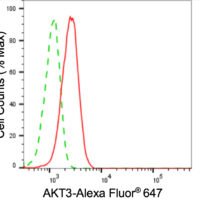
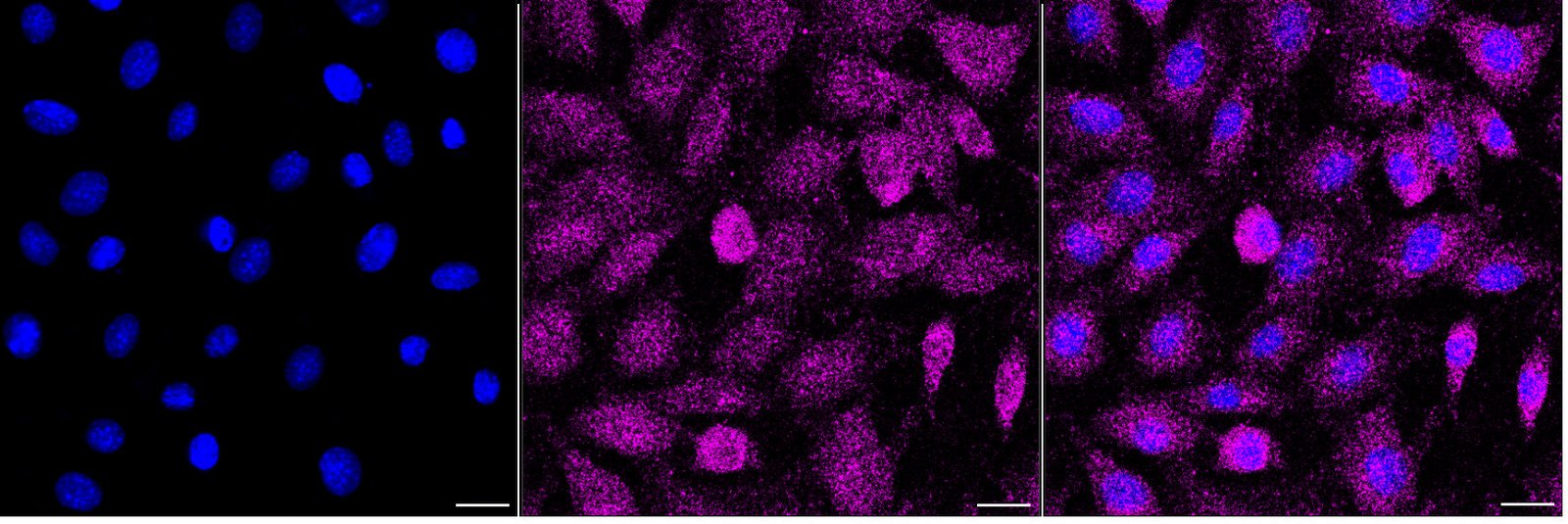
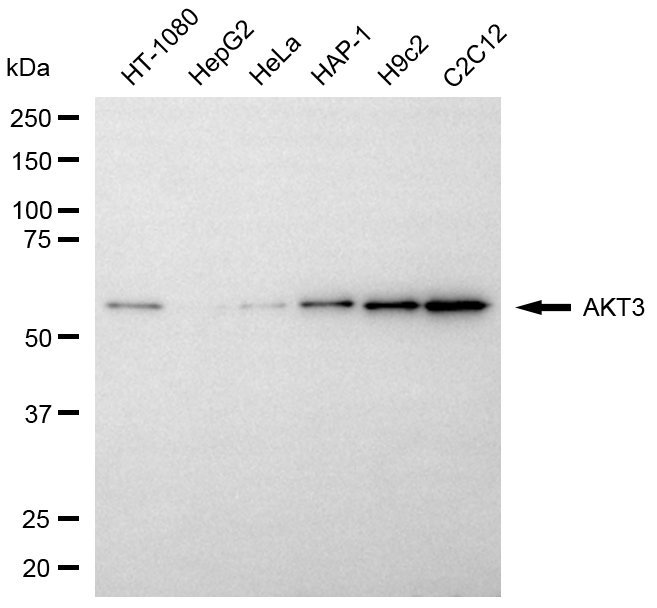
ApplicationsELISA, WB, FC, ICC
BufferPBS, 50% glycerol, 0.05% Proclin 300, 0.05%BSA
StorageUpon receipt, store at -20°C or -80°C. Avoid repeated freeze.

Function

AKT3 is one of 3 closely related serine/threonine-protein kinases (AKT1, AKT2 and AKT3) called the AKT kinase, and which regulate many processes including metabolism, proliferation, cell survival, growth and angiogenesis. This is mediated through serine and/or threonine phosphorylation of a range of downstream substrates. Over 100 substrate candidates have been reported so far, but for most of them, no isoform specificity has been reported.

Biological Context

Subcellular Location: Nucleus; Cytoplasm; Membrane (Peripheral membrane protein)
Tissue Specificity: In adult tissues, it is highly expressed in brain, lung and kidney, but weakly in heart, testis and liver. In fetal tissues, it is highly expressed in heart, liver and brain and not at all in kidney
Disease Association: [AKT3 is a key modulator of several tumors like melanoma, glioma and ovarian cancer. Active AKT3 increases progressively during melanoma tumor progression with highest levels present in advanced-stage metastatic melanomas. Promotes melanoma tumorigenesis by decreasing apoptosis. Plays a key role in the genesis of ovarian cancers through modulation of G2/M phase transition. With AKT2, plays a pivotal role in the biology of glioblastoma] | Megalencephaly-polymicrogyria-polydactyly-hydrocephalus syndrome 2 (MPPH2) : A syndrome characterized by megalencephaly, hydrocephalus, and polymicrogyria; polydactyly may also be seen. There is considerable phenotypic similarity between this disorder and the megalencephaly-capillary malformation syndrome. [The disease is caused by variants affecting the gene represented in this entry]

Product Specifications

Mouse anti-Human/Mouse/Rat sapiens (Human) AKT3 Monoclonal Antibody is a recombinant protein. Suitable for ELISA and Western Blot applications.

Catalog number: BCREC-000804MA.

SDS-PAGE: Single band at expected molecular weight confirming purity.

ELISA: Suitable as coating antigen or detection standard.

Western Blot: Compatible with standard Western Blot protocols.

Protein Interaction: Validated for SPR (Surface Plasmon Resonance) and BLI (Bio-Layer Interferometry) studies.

Shipping: Shipped at ambient temperature. Lyophilized protein is stable during transit.

Storage: Store lyophilized protein at -20°C to -80°C. Reconstituted protein should be aliquoted and stored at -80°C. Avoid repeated freeze-thaw cycles.

Shelf Life: 12 months from date of receipt when stored as recommended.

Shipping Time: Orders placed before 2 PM EST ship same day. International orders typically deliver within 5-10 business days.

Protein Biology

Function

AKT3 is one of 3 closely related serine/threonine-protein kinases (AKT1, AKT2 and AKT3) called the AKT kinase, and which regulate many processes including metabolism, proliferation, cell survival, growth and angiogenesis. This is mediated through serine and/or threonine phosphorylation of a range of downstream substrates. Over 100 substrate candidates have been reported so far, but for most of them, no isoform specificity has been reported. AKT3 is the least studied AKT isoform. It plays an important role in brain development and is crucial for the viability of malignant glioma cells. AKT3 isoform may also be the key molecule in up-regulation and down-regulation of MMP13 via IL13. Required for the coordination of mitochondrial biogenesis with growth factor-induced increases in cellular energy demands. Down-regulation by RNA interference reduces the expression of the phosphorylated form of BAD, resulting in the induction of caspase-dependent apoptosis

Subcellular Location

Nucleus; Cytoplasm; Membrane (Peripheral membrane protein)

Disease Association

[AKT3 is a key modulator of several tumors like melanoma, glioma and ovarian cancer. Active AKT3 increases progressively during melanoma tumor progression with highest levels present in advanced-stage metastatic melanomas. Promotes melanoma tumorigenesis by decreasing apoptosis. Plays a key role in the genesis of ovarian cancers through modulation of G2/M phase transition. With AKT2, plays a pivotal role in the biology of glioblastoma] | Megalencephaly-polymicrogyria-polydactyly-hydrocephalus syndrome 2 (MPPH2) : A syndrome characterized by megalencephaly, hydrocephalus, and polymicrogyria; polydactyly may also be seen. There is considerable phenotypic similarity between this disorder and the megalencephaly-capillary malformation syndrome. [The disease is caused by variants affecting the gene represented in this entry]

Tissue Specificity

In adult tissues, it is highly expressed in brain, lung and kidney, but weakly in heart, testis and liver. In fetal tissues, it is highly expressed in heart, liver and brain and not at all in kidney

Subunit

Interacts (via PH domain) with TCL1A; this enhances AKT3 phosphorylation and activation. Interacts with TRAF6. Interacts with KCTD20 (By similarity). Interacts with BTBD10 (By similarity)

Gene: AKT3  |  Organism: Homo sapiens  |  Synonyms: Protein kinase Akt-3; Protein kinase B gamma; RAC-PK-gamma; STK-2
Key Publications

Frequently Asked Questions

How do I order or inquire about this product?

Fill out the Online Inquiry form with your required quantity and specifications. You can also email sales@biocrestsci.com. Our team typically responds within 4 business hours with a quote and availability confirmation.

What is the shipping and delivery time?

Orders placed before 2 PM EST ship the same day. Domestic (US) delivery typically takes 2-3 business days. International orders deliver within 5-10 business days. All products are shipped at ambient temperature with appropriate packaging to ensure stability.

How should I store this recombinant protein?

Lyophilized proteins should be stored at -20°C to -80°C upon receipt. After reconstitution, aliquot and store at -80°C. Avoid repeated freeze-thaw cycles. Shelf life is 12 months from date of receipt when stored as recommended.

What quality controls are performed on your products?

Each product undergoes SDS-PAGE purity analysis (typically >85-95%), endotoxin testing, and bioactivity validation. Products are validated for ELISA, Western Blot, and SPR/BLI applications as specified on this product page. A Certificate of Analysis (CoA) is available upon request.

Shopping Cart
Scroll to Top