Function
Key downstream component of the canonical Wnt signaling pathway. In the absence of Wnt, forms a complex with AXIN1, AXIN2, APC, CSNK1A1 and GSK3B that promotes phosphorylation on N-terminal Ser and Thr residues and ubiquitination of CTNNB1 via BTRC and its subsequent degradation by the proteasome. In the presence of Wnt ligand, CTNNB1 is not ubiquitinated and accumulates in the nucleus, where it acts as a coactivator for transcription factors of the TCF/LEF family, leading to activate Wnt responsive genes.
Biological Context
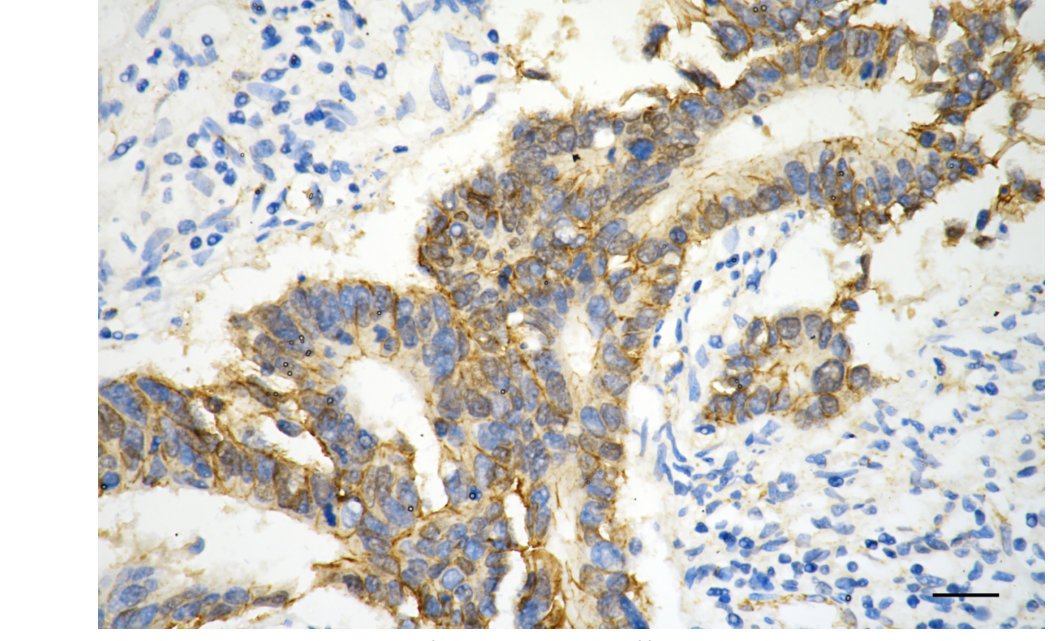
Subcellular Location: Cytoplasm; Nucleus; Cytoplasm, cytoskeleton; Cell junction, adherens junction; Cell junction; Cell membrane; Cytoplasm, cytoskeleton, microtubule organizing center, centrosome; Cytoplasm, cytoskeleton, spindle pole; Synapse; Cytoplasm, cytoskeleton, cilium basal body
Tissue Specificity: Expressed in several hair follicle cell types: basal and peripheral matrix cells, and cells of the outer and inner root sheaths. Expressed in colon. Present in cortical neurons (at protein level). Expressed in breast cancer tissues (at protein level)
Disease Association: Colorectal cancer (CRC) : A complex disease characterized by malignant lesions arising from the inner wall of the large intestine (the colon) and the rectum. Genetic alterations are often associated with progression from premalignant lesion (adenoma) to invasive adenocarcinoma. Risk factors for cancer of the colon and rectum include colon polyps, long-standing ulcerative colitis, and genetic family history. [The gene represented in this entry may be involved in disease pathogenesis] | [Activating mutations in CTNNB1 have oncogenic activity resulting in tumor development. Somatic mutations are found in various tumor types, including colon cancers, ovarian and prostate carcinomas, hepatoblastoma (HB), hepatocellular carcinoma (HCC). HBs are malignant embryonal tumors mainly affecting young children in the first three years of life] | Pilomatrixoma (PTR) : Common benign skin tumor. [The gene represented in this entry is involved in disease pathogenesis] | Medulloblastoma (MDB) : Malignant, invasive embryonal tumor of the cerebellum with a preferential manifestation in children. [The gene represented in this entry may be involved in disease pathogenesis] | Ovarian cancer (OC) : The term ovarian cancer defines malignancies originating from ovarian tissue. Although many histologic types of ovarian tumors have been described, epithelial ovarian carcinoma is the most common form. Ovarian cancers are often asymptomatic and the recognized signs and symptoms, even of late-stage disease, are vague. Consequently, most patients are diagnosed with advanced disease. [Disease susceptibility is associated with variants affecting the gene represented in this entry] | [A chromosomal aberration involving CTNNB1 is found in salivary gland pleiomorphic adenomas, the most common benign epithelial tumors of the salivary gland. Translocation t(3;8)(p21;q12) with PLAG1] | Mesothelioma, malignant (MESOM) : An aggressive neoplasm of the serosal lining of the chest. It appears as broad sheets of cells, with some regions containing spindle-shaped, sarcoma-like cells and other regions showing adenomatous patterns. Pleural mesotheliomas have been linked to exposure to asbestos. [The gene represented in this entry may be involved in disease pathogenesis] | Neurodevelopmental disorder with spastic diplegia and visual defects (NEDSDV) : An autosomal dominant disorder characterized by global developmental delay, severe intellectual disability with absent or very limited speech, microcephaly, spasticity, and visual abnormalities. [The disease is caused by variants affecting the gene represented in this entry] | Vitreoretinopathy, exudative 7 (EVR7) : An autosomal dominant form of exudative vitreoretinopathy, a disorder of the retinal vasculature characterized by an abrupt cessation of growth of peripheral capillaries, leading to an avascular peripheral retina. This may lead to compensatory retinal neovascularization, which is thought to be induced by hypoxia from the initial avascular insult. New vessels are prone to leakage and rupture causing exudates and bleeding, followed by scarring, retinal detachment and blindness. Clinical features can be highly variable, even within the same family. Patients with mild forms of the disease are asymptomatic, and their only disease related abnormality is an arc of avascular retina in the extreme temporal periphery. [The disease is caused by variants affecting the gene represented in this entry]
Product Specifications
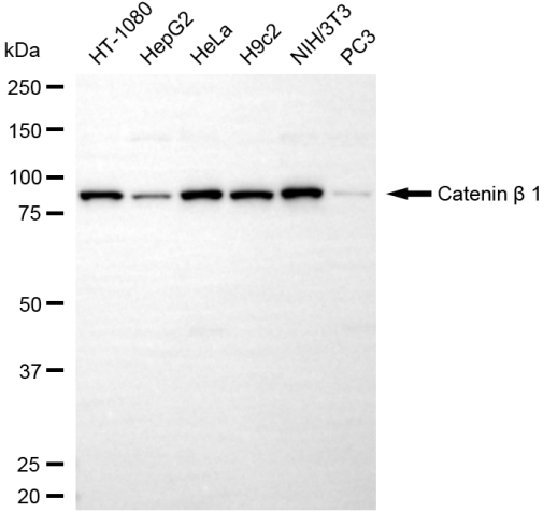
Mouse anti-Human/Mouse/Rat sapiens (Human) CTNNB1 Monoclonal Antibody is a recombinant protein. Suitable for ELISA and Western Blot applications. Explore more Antibody products →
Catalog number: BCREC-000773MA.