,

Recombinant Epstein-Barr virus Lytic switch protein BZLF1 (BZLF1)

Recombinant Epstein-Barr virus Lytic switch protein BZLF1 (BZLF1) — Transcription factor that acts as a molecular switch to induce the transition from the latent to the lytic or productive phase of the virus cycle. Purity >85%.

SKU: BCRECP-002243 Categories: ,

Product Specifications

Product SkuBCRECP-002243
Product DescriptionRecombinant Epstein-Barr virus Lytic switch protein BZLF1 (BZLF1) Protein is expressed from E.coli with N-terminal 10xHis-tagged and C-terminal Myc-tagged. It contains 1-245aa. [Accession | Q3KSS8].
Uniprot No.Q3KSS8
Gene NamesBZLF1
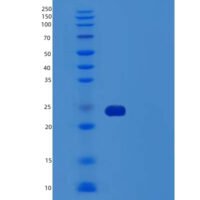
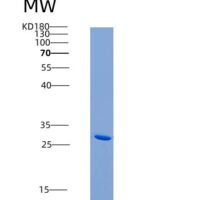
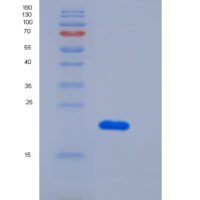
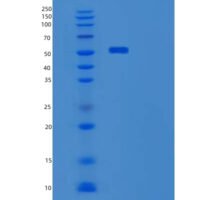
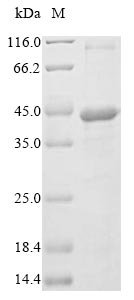
PurityGreater than 85% as determined by SDS-PAGE.
Expression SystemE.coli
Expression Region1-245aa
SpeciesEpstein-Barr virus (strain GD1) (HHV-4) (Human herpesvirus 4)
Tag InfoN-terminal 10xHis-tagged and C-terminal Myc-tagged
Molecular weight33.8kDa
ActivityPlease contact us to obtain bioactivity data.
BufferIf the delivery form is liquid, the default storage buffer is Tris/PBS-based buffer, 5%-50% glycerol. If the delivery form is lyophilized powder, the buffer before lyophilization is Tris/PBS-based buffer, 6% Trehalose.
StorageStore at -20°C/-80°C upon receipt, aliquoting is necessary for mutiple use. Avoid repeated freeze-thaw cycles.
Research AreasOthers

Function

Transcription factor that acts as a molecular switch to induce the transition from the latent to the lytic or productive phase of the virus cycle. Mediates the switch from the latent to the lytic cycle of infection in cells containing a highly methylated viral genome. Probably binds to silenced chromatin and recruits host chromatin-remodeling enzymes.

Biological Context

Subcellular Location: Host nucleus

Product Specifications

Recombinant Epstein-Barr virus Lytic switch protein BZLF1 (BZLF1) is a recombinant protein from Epstein-Barr virus (strain GD1) (HHV-4) (Human herpesvirus 4), expressed in E.coli, covering amino acids 1-245aa, with N-terminal 10xHis-tagged and C-terminal Myc-tagged tag, molecular weight 33.8kDa, purity Greater than 85% as determined by SDS-PAGE.. Suitable for ELISA and Western Blot applications.

SDS-PAGE: Single band at expected molecular weight confirming purity.

ELISA: Suitable as coating antigen or detection standard.

Western Blot: Compatible with standard Western Blot protocols.

Protein Interaction: Validated for SPR (Surface Plasmon Resonance) and BLI (Bio-Layer Interferometry) studies.

Shipping: Shipped at ambient temperature. Lyophilized protein is stable during transit.

Storage: Store lyophilized protein at -20°C to -80°C. Reconstituted protein should be aliquoted and stored at -80°C. Avoid repeated freeze-thaw cycles.

Shelf Life: 12 months from date of receipt when stored as recommended.

Shipping Time: Orders placed before 2 PM EST ship same day. International orders typically deliver within 5-10 business days.

Protein Biology

Function

Transcription factor that acts as a molecular switch to induce the transition from the latent to the lytic or productive phase of the virus cycle. Mediates the switch from the latent to the lytic cycle of infection in cells containing a highly methylated viral genome. Probably binds to silenced chromatin and recruits host chromatin-remodeling enzymes. Regulates this switch by binding to 2 types of ZEBRA response elements (ZREs): the CpG-free AP-1 like elements (latency) and the methylated CpG-containing elements (lytic replication). Activates preferentially the methylated forms of the viral lytic R (BRLF1) and Na (BRRF1) gene promoters, the latters being the first genes activated during Z-mediated reactivation in latently infected cells. BZLF1 and BRLF1 act together to trigger lytic replication. Also binds the lytic origin of replication, oriLyt. Induces G1 cell cycle arrest by stabilizing the host CCAAT/enhancer binding protein CEBPA. This function is important because the lytic cycle preferentially takes place in host cells arrested in G1

Subcellular Location

Host nucleus

Subunit

Homodimer. Interacts (via b-ZIP domain) with the DNA polymerase processivity factor BMRF1 (via N-terminus); this interaction may inhibit BZLF1-induced transcription of the BMRF1 promoter. Interacts with human UBN1, CRTC2 and RACK1. Interacts (via N-terminus) with human PAX5 (via N-terminus); this interaction inhibits BZLF1-mediated lytic viral reactivation. Interacts (via leucine-zipper domain) with host CEBPA; this interaction induces G1 host cell cycle arrest. Interacts (via C-terminus) with host TP53BP1 (via C-terminus); this interaction is involved in the activation of the viral lytic cycle. Interacts with host chromatin-remodeling ATPase INO80; this interaction participates to the activation of early lytic viral genes by BZLF1. Interacts with host regulator of chromatin SMARCA5/hSNF2H; this interaction participates to the activation of early lytic viral genes by BZLF1. Interacts with host PLSCR1/Phospholipid scramblase 1; this interaction negatively regulates the transcriptional regulatory activity of BZLF1 by preventing the formation of the BZLF1-CBP complex

Organism: Human herpesvirus 4 (strain GD1)  |  Synonyms: Protein Z; Trans-activator protein BZLF1; Zebra; Zta; bZIP transcription factor ZEBRA

Frequently Asked Questions

How do I order or inquire about this product?

Fill out the Online Inquiry form with your required quantity and specifications. You can also email sales@biocrestsci.com. Our team typically responds within 4 business hours with a quote and availability confirmation.

What is the shipping and delivery time?

Orders placed before 2 PM EST ship the same day. Domestic (US) delivery typically takes 2-3 business days. International orders deliver within 5-10 business days. All products are shipped at ambient temperature with appropriate packaging to ensure stability.

How should I store this recombinant protein?

Lyophilized proteins should be stored at -20°C to -80°C upon receipt. After reconstitution, aliquot and store at -80°C. Avoid repeated freeze-thaw cycles. Shelf life is 12 months from date of receipt when stored as recommended.

What quality controls are performed on your products?

Each product undergoes SDS-PAGE purity analysis (typically >85-95%), endotoxin testing, and bioactivity validation. Products are validated for ELISA, Western Blot, and SPR/BLI applications as specified on this product page. A Certificate of Analysis (CoA) is available upon request.

Shopping Cart
Scroll to Top