Function
3-beta-HSD is a bifunctional enzyme, that catalyzes the oxidative conversion of Delta(5)-ene-3-beta-hydroxy steroid, and the oxidative conversion of ketosteroids. The 3-beta-HSD enzymatic system plays a crucial role in the biosynthesis of all classes of hormonal steroids.
Biological Context
Subcellular Location: Endoplasmic reticulum membrane (Single-pass membrane protein); Mitochondrion membrane (Single-pass membrane protein)
Tissue Specificity: Expressed in adrenal gland, testis and ovary
Disease Association: Adrenal hyperplasia 2 (AH2) : A form of congenital adrenal hyperplasia, a common recessive disease due to defective synthesis of cortisol. Congenital adrenal hyperplasia is characterized by androgen excess leading to ambiguous genitalia in affected females, rapid somatic growth during childhood in both sexes with premature closure of the epiphyses and short adult stature. Four clinical types: 'salt wasting' (SW, the most severe type), 'simple virilizing' (SV, less severely affected patients), with normal aldosterone biosynthesis, 'non-classic form' or late-onset (NC or LOAH) and 'cryptic' (asymptomatic). In AH2, virilization is much less marked or does not occur. AH2 is frequently lethal in early life. [The disease is caused by variants affecting the gene represented in this entry] | [Mild HSD3B2 deficiency in hyperandrogenic females is associated with characteristic traits of polycystic ovary syndrome, such as insulin resistance and luteinizing hormone hypersecretion]
Pathway: Lipid metabolism; steroid biosynthesis
Product Specifications
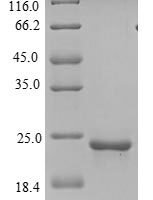
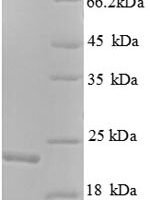
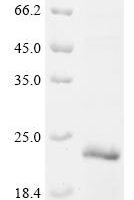
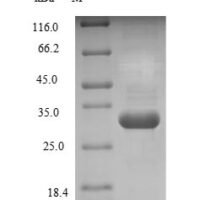
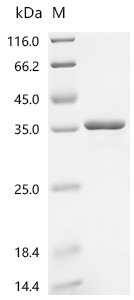
Recombinant Human 3 beta-hydroxysteroid dehydrogenase/Delta 5–>4-isomerase type 2 (HSD3B2), partial is a recombinant protein from Homo sapiens (Human), expressed in E.coli, covering amino acids 1-286aa, with N-terminal 6xHis-tagged tag, molecular weight 37.9kDa, purity Greater than 85% as determined by SDS-PAGE.. Suitable for ELISA and Western Blot applications. Explore more Enzyme proteins →