Function
Subunit of clathrin-associated adaptor protein complex 1 that plays a role in protein sorting in the late-Golgi/trans-Golgi network (TGN) and/or endosomes. The AP complexes mediate both the recruitment of clathrin to membranes and the recognition of sorting signals within the cytosolic tails of transmembrane cargo molecules.
Biological Context
Subcellular Location: Golgi apparatus; Cytoplasmic vesicle, clathrin-coated vesicle membrane (Peripheral membrane protein)
Tissue Specificity: Widely expressed
Disease Association: Keratitis-ichthyosis-deafness syndrome, autosomal recessive (KIDAR) : An autosomal recessive form of keratitis-ichthyosis-deafness syndrome, a disease characterized by the association of hyperkeratotic skin lesions with vascularizing keratitis and profound sensorineural hearing loss. KIDAR patients manifest ichthyosis, failure to thrive and developmental delay in childhood, thrombocytopenia, photophobia, and progressive hearing loss. Low plasma copper and ceruloplasmin levels have been reported in some patients. [The disease is caused by variants affecting the gene represented in this entry]
Product Specifications
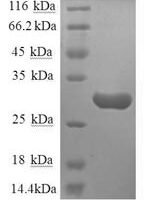
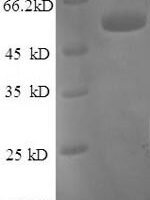
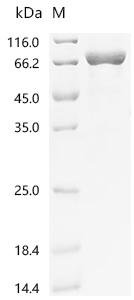
Recombinant Human AP-1 complex subunit beta-1 (AP1B1), partial is a recombinant protein from Homo sapiens (Human), expressed in E.coli, covering amino acids 1-584aa, with N-terminal 6xHis-tagged and C-terminal Myc-tagged tag, molecular weight 73.3kDa, purity Greater than 85% as determined by SDS-PAGE.. Suitable for ELISA and Western Blot applications.
![Human Succinate dehydrogenase [ubiquinone] flavoprotein subunit, mitochondrial (SDHA), partial Recombinant Protein, N-GST - BioCrest Sci](https://www.biocrestsci.com/wp-content/uploads/protein/1/BCACP-838381-SDS-150x200.jpg)