Recombinant Human Arginase-1 (ARG1) (Active)

Recombinant Human Arginase-1 (ARG1) (Active) — Functions in L-arginine homeostasis in nonhepatic tissues characterized by the competition between nitric oxide synthase (NOS) and arginase for the available intracellular substrate arginine. Purity >90%.

SKU: BCACP-001092 Category:
Product SKUBCACP-001092
Product DescriptionRecombinant Human Arginase-1 (ARG1) protein is expressed from Mammalian cell with C-terminal 6xHis-tagged. It contains 1-322aa. [Accession | P05089].
Uniprot No.P05089
Gene NamesARG1
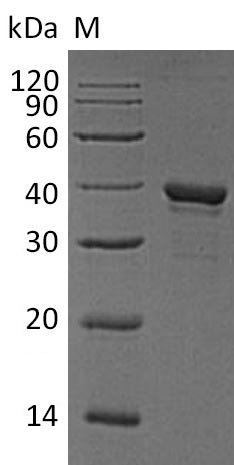
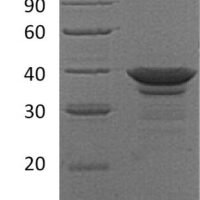
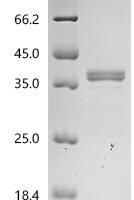
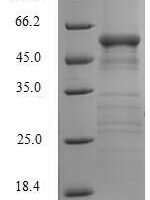
PurityGreater than 90% as determined by SDS-PAGE.
Expression SystemMammalian cell
Expression Region1-322aa
SpeciesHomo sapiens (Human)
Tag InfoC-terminal 6xHis-tagged
Molecular weight35.6 kDa
ActivityThe esterase activity is determined to be 233 pmol/min/μg as measured under the described conditions.
BufferLyophilized from a 0.2 μm filtered 20 mM Tris-HCl, 0.5 M NaCl, 6% Trehalose, pH 8.0
StorageStore at -20°C/-80°C upon receipt, aliquoting is necessary for mutiple use. Avoid repeated freeze-thaw cycles.
Alternative NamesA I; Al; ARG 1; arg1; ARGI1_HUMAN; Arginase 1; Arginase liver; Arginase type I; Arginase; liver; Arginase-1; Arginase1; Liver type arginase; Liver-type arginase; Type I arginase

Function

Functions in L-arginine homeostasis in nonhepatic tissues characterized by the competition between nitric oxide synthase (NOS) and arginase for the available intracellular substrate arginine. Arginine metabolism is a critical regulator of innate and adaptive immune responses.

Product Specifications

Recombinant Human Arginase-1 (ARG1) (Active) — Functions in L-arginine homeostasis in nonhepatic tissues characterized by the competition between nitric oxide synthase (NOS) and arginase for the available intracellular substrate arginine. Purity >90%. Suitable for ELISA and Western Blot applications.

SDS-PAGE: Single band at expected molecular weight confirming purity.

ELISA: Suitable as coating antigen or detection standard.

Western Blot: Compatible with standard Western Blot protocols.

Protein Interaction: Validated for SPR (Surface Plasmon Resonance) and BLI (Bio-Layer Interferometry) studies.

Shipping: Shipped at ambient temperature. Lyophilized protein is stable during transit.

Storage: Store lyophilized protein at -20°C to -80°C. Reconstituted protein should be aliquoted and stored at -80°C. Avoid repeated freeze-thaw cycles.

Shelf Life: 12 months from date of receipt when stored as recommended.

Shipping Time: Orders placed before 2 PM EST ship same day. International orders typically deliver within 5-10 business days.

Protein Biology

Function

Functions in L-arginine homeostasis in nonhepatic tissues characterized by the competition between nitric oxide synthase (NOS) and arginase for the available intracellular substrate arginine. Arginine metabolism is a critical regulator of innate and adaptive immune responses. Involved in an antimicrobial effector pathway in polymorphonuclear granulocytes (PMN). Upon PMN cell death is liberated from the phagolysosome and depletes arginine in the microenvironment leading to suppressed T cell and natural killer (NK) cell proliferation and cytokine secretion (PubMed:15546957, PubMed:16709924, PubMed:19380772). In group 2 innate lymphoid cells (ILC2s) promotes acute type 2 inflammation in the lung and is involved in optimal ILC2 proliferation but not survival (By similarity). In humans, the immunological role in the monocytic/macrophage/dendritic cell (DC) lineage is unsure

Subcellular Location

Cytoplasm; Cytoplasmic granule

Disease Association

Argininemia (ARGIN) : A rare autosomal recessive disorder of the urea cycle. Arginine is elevated in the blood and cerebrospinal fluid, and periodic hyperammonemia occurs. Clinical manifestations include developmental delay, seizures, intellectual disability, hypotonia, ataxia and progressive spastic quadriplegia. [The disease is caused by variants affecting the gene represented in this entry]

Tissue Specificity

Within the immune system initially reported to be selectively expressed in granulocytes (polymorphonuclear leukocytes [PMNs]) (PubMed:15546957). Also detected in macrophages mycobacterial granulomas (PubMed:23749634). Expressed in group2 innate lymphoid cells (ILC2s) during lung disease (PubMed:27043409)

Subunit

Homotrimer (PubMed:16141327, PubMed:17469833, PubMed:17562323, PubMed:18802628, PubMed:2241902). Interacts with CMTM6 (PubMed:28813417)

Pathway

Nitrogen metabolism; urea cycle; L-ornithine and urea from L-arginine: step 1/1

Gene: ARG1  |  Organism: Homo sapiens  |  Synonyms: Liver-type arginase; Type I arginase
Key Publications

Frequently Asked Questions

How do I order or inquire about this product?

Fill out the Online Inquiry form with your required quantity and specifications. You can also email sales@biocrestsci.com. Our team typically responds within 4 business hours with a quote and availability confirmation.

What is the shipping and delivery time?

Orders placed before 2 PM EST ship the same day. Domestic (US) delivery typically takes 2-3 business days. International orders deliver within 5-10 business days. All products are shipped at ambient temperature with appropriate packaging to ensure stability.

How should I store this recombinant protein?

Lyophilized proteins should be stored at -20°C to -80°C upon receipt. After reconstitution, aliquot and store at -80°C. Avoid repeated freeze-thaw cycles. Shelf life is 12 months from date of receipt when stored as recommended.

What quality controls are performed on your products?

Each product undergoes SDS-PAGE purity analysis (typically >85-95%), endotoxin testing, and bioactivity validation. Products are validated for ELISA, Western Blot, and SPR/BLI applications as specified on this product page. A Certificate of Analysis (CoA) is available upon request.

Shopping Cart
Scroll to Top