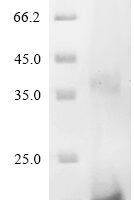
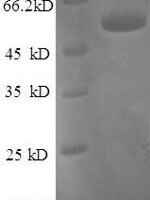
Recombinant Human ATP-dependent translocase ABCB1 (ABCB1), partial

Recombinant Human ATP-dependent translocase ABCB1 (ABCB1), partial — Translocates drugs and phospholipids across the membrane. Purity >85%.

SKU: BCRECP-000004 Category:

Product Specifications

Product SkuBCRECP-000004
Product DescriptionRecombinant Human ATP-dependent translocase ABCB1 (ABCB1) Protein is expressed from E.coli with N-terminal 6xHis-tagged. It contains 350-710aa. [Accession | P08183].
Uniprot No.P08183
Gene NamesABCB1
PurityGreater than 85% as determined by SDS-PAGE.
Expression SystemE.coli
Expression Region350-710aa
SpeciesHomo sapiens (Human)
Tag InfoN-terminal 6xHis-tagged
Molecular weight44.2kDa
ActivityPlease contact us to obtain bioactivity data.
BufferIf the delivery form is liquid, the default storage buffer is Tris/PBS-based buffer, 5%-50% glycerol. If the delivery form is lyophilized powder, the buffer before lyophilization is Tris/PBS-based buffer, 6% Trehalose.
StorageStore at -20°C/-80°C upon receipt, aliquoting is necessary for mutiple use. Avoid repeated freeze-thaw cycles.
Research AreasTransport

Function

Translocates drugs and phospholipids across the membrane. Catalyzes the flop of phospholipids from the cytoplasmic to the exoplasmic leaflet of the apical membrane. Participates mainly to the flop of phosphatidylcholine, phosphatidylethanolamine, beta-D-glucosylceramides and sphingomyelins.

Biological Context

Subcellular Location: Cell membrane (Multi-pass membrane protein); Apical cell membrane; Cytoplasm
Tissue Specificity: Expressed in small intestine. Expressed in liver, kidney and brain
Disease Association: Inflammatory bowel disease 13 (IBD13) : A chronic, relapsing inflammation of the gastrointestinal tract with a complex etiology. It is subdivided into Crohn disease and ulcerative colitis phenotypes. Crohn disease may affect any part of the gastrointestinal tract from the mouth to the anus, but most frequently it involves the terminal ileum and colon. Bowel inflammation is transmural and discontinuous; it may contain granulomas or be associated with intestinal or perianal fistulas. In contrast, in ulcerative colitis, the inflammation is continuous and limited to rectal and colonic mucosal layers; fistulas and granulomas are not observed. Both diseases include extraintestinal inflammation of the skin, eyes, or joints. [Disease susceptibility is associated with variants affecting the gene represented in this entry] | Encephalopathy, acute transient (ENPAT) : An autosomal recessive neurologic disorder triggered by specific drugs, or acute febrile or afebrile illness. Clinical features include encephalopathy, ataxia, spasticity, pyramidal signs, diplopia, vomiting, and coma. Symptoms fully resolve within few days. [The disease is caused by variants affecting the gene represented in this entry]

Product Specifications

Recombinant Human ATP-dependent translocase ABCB1 (ABCB1), partial is a recombinant protein from Homo sapiens (Human), expressed in E.coli, covering amino acids 350-710aa, with N-terminal 6xHis-tagged tag, molecular weight 44.2kDa, purity Greater than 85% as determined by SDS-PAGE.. Suitable for ELISA and Western Blot applications.
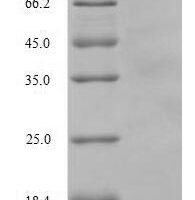
Recommended applications depend on the target, product format, and product-specific validation data. Refer to the product datasheet or Certificate of Analysis (CoA), or contact BioCrest Sci for application guidance.

Biological Activity: Please contact us to obtain bioactivity data.

Storage: Store at -20°C/-80°C upon receipt, aliquoting is necessary for mutiple use. Avoid repeated freeze-thaw cycles.

Shipping & Lead Time: Availability, shipping conditions, and estimated lead time are confirmed in the formal quotation or order confirmation based on the product format, destination, and order requirements.

Protein Biology

Function

Translocates drugs and phospholipids across the membrane (PubMed:2897240, PubMed:35970996, PubMed:8898203, PubMed:9038218, PubMed:35507548). Catalyzes the flop of phospholipids from the cytoplasmic to the exoplasmic leaflet of the apical membrane. Participates mainly to the flop of phosphatidylcholine, phosphatidylethanolamine, beta-D-glucosylceramides and sphingomyelins (PubMed:8898203). Energy-dependent efflux pump responsible for decreased drug accumulation in multidrug-resistant cells (PubMed:2897240, PubMed:35970996, PubMed:9038218)

Subcellular Location

Cell membrane (Multi-pass membrane protein); Apical cell membrane; Cytoplasm

Disease Association

Inflammatory bowel disease 13 (IBD13) : A chronic, relapsing inflammation of the gastrointestinal tract with a complex etiology. It is subdivided into Crohn disease and ulcerative colitis phenotypes. Crohn disease may affect any part of the gastrointestinal tract from the mouth to the anus, but most frequently it involves the terminal ileum and colon. Bowel inflammation is transmural and discontinuous; it may contain granulomas or be associated with intestinal or perianal fistulas. In contrast, in ulcerative colitis, the inflammation is continuous and limited to rectal and colonic mucosal layers; fistulas and granulomas are not observed. Both diseases include extraintestinal inflammation of the skin, eyes, or joints. [Disease susceptibility is associated with variants affecting the gene represented in this entry] | Encephalopathy, acute transient (ENPAT) : An autosomal recessive neurologic disorder triggered by specific drugs, or acute febrile or afebrile illness. Clinical features include encephalopathy, ataxia, spasticity, pyramidal signs, diplopia, vomiting, and coma. Symptoms fully resolve within few days. [The disease is caused by variants affecting the gene represented in this entry]

Tissue Specificity

Expressed in small intestine (PubMed:28408210). Expressed in liver, kidney and brain

Subunit

Interacts with PSMB5. Finds in a complex with ABCB1, TFPI2 and PPP2R3C; leading to the dephosphorylation of ABCB1

Gene: ABCB1  |  Organism: Homo sapiens  |  Synonyms: ATP-binding cassette sub-family B member 1; Multidrug resistance protein 1; P-glycoprotein 1; Phospholipid transporter ABCB1
Key Publications

Frequently Asked Questions

How do I order or inquire about this product?

Submit the Online Inquiry form with your required quantity and specifications, or email sales@biocrestsci.com. Available sizes, pricing, stock status, documentation, and estimated lead time are confirmed in the formal quotation.

What is the shipping and delivery time?

Availability, dispatch timing, shipping conditions, and delivery estimates depend on the product format, destination, and order requirements. These details are confirmed in the formal quotation or order confirmation.

How should this product be stored?

Follow the storage and handling instructions in the product-specific datasheet and Certificate of Analysis (CoA). Requirements may vary by product form and formulation; contact BioCrest Sci if product-specific guidance is needed.

What quality controls are performed on your products?

Quality-control data such as identity, purity, endotoxin level, or biological activity are provided only when specified on this product page, the datasheet, or Certificate of Analysis (CoA). Biological activity is not implied unless explicitly stated.

Shopping Cart
Scroll to Top