,

Recombinant Human Atypical chemokine receptor 2 (ACKR2) (Active)

Recombinant Human Atypical chemokine receptor 2 (ACKR2) (Active) — Atypical chemokine receptor that controls chemokine levels and localization via high-affinity chemokine binding that is uncoupled from classic ligand-driven signal transduction cascades, resulting … Purity >85%.

SKU: BCACP-000045 Categories: ,
Product SKUBCACP-000045
Product DescriptionRecombinant Human Atypical chemokine receptor 2 (ACKR2) protein is expressed from in vitro E.coli expression system with N-terminal 10xHis-tagged. It contains 1-384aa. [Accession | O00590].
Uniprot No.O00590
Gene NamesACKR2
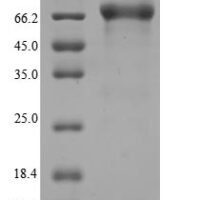
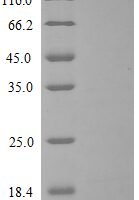
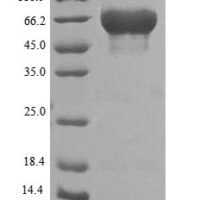
PurityGreater than 85% as determined by SDS-PAGE.
Expression Systemin vitro E.coli expression system
Expression Region1-384aa
SpeciesHomo sapiens (Human)
Tag InfoN-terminal 10xHis-tagged
Molecular weight46.9 kDa
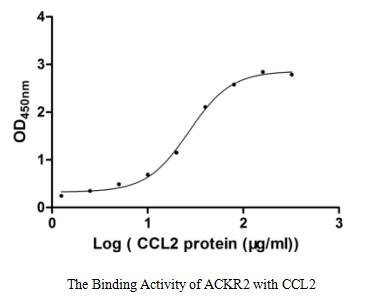
ActivityMeasured by its binding ability in a functional ELISA. Immobilized CLEC4C protein at 1 μg/ml can bind human CLEC4C antibody, the EC50 of human CLEC4C antibody is 31.43-43.52 μg/ml.
BufferLyophilized from a 0.2 μm filtered 20 mM Tris-HCl, 0.5 M NaCl, 6% Trehalose, pH 8.0
StorageStore at -20°C/-80°C upon receipt, aliquoting is necessary for mutiple use. Avoid repeated freeze-thaw cycles.
Alternative NamesACKR2; CCBP2; CCR10; CMKBR9; D6; Atypical chemokine receptor 2; C-C chemokine receptor D6; Chemokine receptor CCR-10; Chemokine receptor CCR-9; Chemokine-binding protein 2; Chemokine-binding protein D6

Function

Atypical chemokine receptor that controls chemokine levels and localization via high-affinity chemokine binding that is uncoupled from classic ligand-driven signal transduction cascades, resulting instead in chemokine sequestration, degradation, or transcytosis. Also known as interceptor (internalizing receptor) or chemokine-scavenging receptor or chemokine decoy receptor. Acts as a receptor for chemokines including CCL2, CCL3, CCL3L1, CCL4, CCL5, CCL7, CCL8, CCL11, CCL13, CCL17, CCL22, CCL23, CCL24, SCYA2/MCP-1, SCY3/MIP-1-alpha, SCYA5/RANTES and SCYA7/MCP-3.

Biological Context

Subcellular Location: Early endosome; Recycling endosome; Cell membrane (Multi-pass membrane protein)
Tissue Specificity: Found in endothelial cells lining afferent lymphatics in dermis and lymph nodes. Also found in lymph nodes subcapsular and medullary sinuses, tonsillar lymphatic sinuses and lymphatics in mucosa and submucosa of small and large intestine and appendix. Also found in some malignant vascular tumors. Expressed at high levels in Kaposi sarcoma-related pathologies. Expressed on apoptotic neutrophils (at protein level). Expressed primarily in placenta and fetal liver, and found at very low levels in the lung and lymph node

Product Specifications

Recombinant Human Atypical chemokine receptor 2 (ACKR2) (Active) is a recombinant protein from Homo sapiens (Human), expressed in in vitro E.coli expression system, covering amino acids 1-384aa, with N-terminal 10xHis-tagged tag, molecular weight 46.9 kDa, purity Greater than 85% as determined by SDS-PAGE.. Suitable for ELISA and Western Blot applications.

SDS-PAGE: Single band at expected molecular weight confirming purity.

ELISA: Suitable as coating antigen or detection standard.

Western Blot: Compatible with standard Western Blot protocols.

Protein Interaction: Validated for SPR (Surface Plasmon Resonance) and BLI (Bio-Layer Interferometry) studies.

Shipping: Shipped at ambient temperature. Lyophilized protein is stable during transit.

Storage: Store lyophilized protein at -20°C to -80°C. Reconstituted protein should be aliquoted and stored at -80°C. Avoid repeated freeze-thaw cycles.

Shelf Life: 12 months from date of receipt when stored as recommended.

Shipping Time: Orders placed before 2 PM EST ship same day. International orders typically deliver within 5-10 business days.

Protein Biology

Function

Atypical chemokine receptor that controls chemokine levels and localization via high-affinity chemokine binding that is uncoupled from classic ligand-driven signal transduction cascades, resulting instead in chemokine sequestration, degradation, or transcytosis (PubMed:18201974, PubMed:20373092, PubMed:23479571). Also known as interceptor (internalizing receptor) or chemokine-scavenging receptor or chemokine decoy receptor (PubMed:18201974, PubMed:20373092, PubMed:23479571). Acts as a receptor for chemokines including CCL2, CCL3, CCL3L1, CCL4, CCL5, CCL7, CCL8, CCL11, CCL13, CCL17, CCL22, CCL23, CCL24, SCYA2/MCP-1, SCY3/MIP-1-alpha, SCYA5/RANTES and SCYA7/MCP-3 (PubMed:18201974, PubMed:20373092, PubMed:23479571). Upon active ligand stimulation, activates a beta-arrestin 1 (ARRB1)-dependent, G protein-independent signaling pathway that results in the phosphorylation of the actin-binding protein cofilin (CFL1) through a RAC1-PAK1-LIMK1 signaling pathway (PubMed:23633677). Activation of this pathway results in up-regulation of ACKR2 from endosomal compartment to cell membrane, increasing its efficiency in chemokine uptake and degradation (PubMed:23633677). By scavenging chemokines in tissues, on the surfaces of lymphatic vessels, and in placenta, plays an essential role in the resolution (termination) of the inflammatory response and in the regulation of adaptive immune responses (PubMed:23479571). Plays a major role in the immune silencing of macrophages during the resolution of inflammation (By similarity). Acts as a regulator of inflammatory leukocyte interactions with lymphatic endothelial cells (LECs) and is required for immature/mature dendritic cells discrimination by LECs (PubMed:23479571)

Subcellular Location

Early endosome; Recycling endosome; Cell membrane (Multi-pass membrane protein)

Tissue Specificity

Found in endothelial cells lining afferent lymphatics in dermis and lymph nodes. Also found in lymph nodes subcapsular and medullary sinuses, tonsillar lymphatic sinuses and lymphatics in mucosa and submucosa of small and large intestine and appendix. Also found in some malignant vascular tumors. Expressed at high levels in Kaposi sarcoma-related pathologies. Expressed on apoptotic neutrophils (at protein level). Expressed primarily in placenta and fetal liver, and found at very low levels in the lung and lymph node

Gene: ACKR2  |  Organism: Homo sapiens  |  Synonyms: C-C chemokine receptor D6; Chemokine receptor CCR-10; Chemokine receptor CCR-9; Chemokine-binding protein 2; Chemokine-binding protein D6
Key Publications

Frequently Asked Questions

How do I order or inquire about this product?

Fill out the Online Inquiry form with your required quantity and specifications. You can also email sales@biocrestsci.com. Our team typically responds within 4 business hours with a quote and availability confirmation.

What is the shipping and delivery time?

Orders placed before 2 PM EST ship the same day. Domestic (US) delivery typically takes 2-3 business days. International orders deliver within 5-10 business days. All products are shipped at ambient temperature with appropriate packaging to ensure stability.

How should I store this recombinant protein?

Lyophilized proteins should be stored at -20°C to -80°C upon receipt. After reconstitution, aliquot and store at -80°C. Avoid repeated freeze-thaw cycles. Shelf life is 12 months from date of receipt when stored as recommended.

What quality controls are performed on your products?

Each product undergoes SDS-PAGE purity analysis (typically >85-95%), endotoxin testing, and bioactivity validation. Products are validated for ELISA, Western Blot, and SPR/BLI applications as specified on this product page. A Certificate of Analysis (CoA) is available upon request.

Shopping Cart
Scroll to Top