, ,

Recombinant Human C-C chemokine receptor type 1 (CCR1)-VLPs (Active)

Recombinant Human C-C chemokine receptor type 1 (CCR1)-VLPs (Active) — Chemokine receptor that plays a crucial role in regulating immune cell migration, inflammation, and immune responses. Purity >90%.

SKU: BCACP-000510 Categories: , ,
Product SKUBCACP-000510
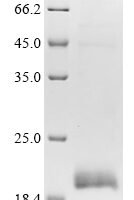
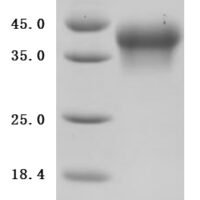
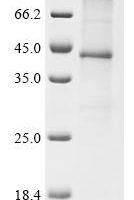
Product DescriptionRecombinant Human C-C chemokine receptor type 1 (CCR1)-VLPs protein is expressed from Mammalian cell with C-terminal 10xHis-tagged. It contains 1-355aa. [Accession | P32246].
Uniprot No.P32246
Gene NamesCCR1
PurityGreater than 90% as determined by SEC-HPLC.
Expression SystemMammalian cell
Expression Region1-355aa
SpeciesHomo sapiens (Human)
Tag InfoC-terminal 10xHis-tagged
Molecular weight42.5 kDa
ActivityMeasured by its binding ability in a functional ELISA. Immobilized Macaca fascicularis IL6R at 2 μg/mL can bind Anti-IL6R recombinant antibody . The EC50 is 26.59-31.72 ng/mL.;IL6R Recombinant Monoclonal Antibody captured on Protein A Chip can bind Recombinant Macaca fascicularis IL6R with an affinity constant of 0.381 nM as detected by MetaSPR Assay (WeSPRTM 200).
BufferLyophilized from a 0.2 μm filtered 20 mM Tris-HCl, 0.5 M NaCl, 6% Trehalose, pH 8.0
StorageStore at -20°C/-80°C upon receipt, aliquoting is necessary for mutiple use. Avoid repeated freeze-thaw cycles.
Alternative NamesC-C chemokine receptor type 1; C-C CKR-1; CC-CKR-1; CCR-1; CCR1; HM145; LD78 receptor; Macrophage inflammatory protein 1-alpha receptor (MIP-1alpha-R); RANTES-R; CD191; CCR1; CMKBR1, CMKR1, SCYAR1

Function

Chemokine receptor that plays a crucial role in regulating immune cell migration, inflammation, and immune responses. Contributes to the inflammatory response by recruiting immune cells, such as monocytes, macrophages, T-cells, and dendritic cells, to sites of inflammation for the clearance of pathogens and the resolution of tissue damage. When activated by its ligands including CCL3, CCL5-9, CCL13-16 and CCL23, triggers a signaling cascade within immune cells, leading to their migration towards the source of the chemokine.

Product Specifications

Recombinant Human C-C chemokine receptor type 1 (CCR1)-VLPs (Active) is a recombinant protein, expressed in Mammalian cell, covering amino acids 1-355aa, with C-terminal 10xHis-tagged tag, molecular weight 42.5 kDa, purity Greater than 90% as determined by SEC-HPLC.. Suitable for ELISA and Western Blot applications.

Recommended applications depend on the target, product format, and product-specific validation data. Refer to the product datasheet or Certificate of Analysis (CoA), or contact BioCrest Sci for application guidance.

Biological Activity: Measured by its binding ability in a functional ELISA. Immobilized Macaca fascicularis IL6R at 2 μg/mL can bind Anti-IL6R recombinant antibody . The EC50 is 26.59-31.72 ng/mL.;IL6R Recombinant Monoclonal Antibody captured on Protein A Chip can bind Recombinant Macaca fascicularis IL6R with an affinity constant of 0.381 nM as detected by MetaSPR Assay (WeSPRTM 200).

Storage: Store at -20°C/-80°C upon receipt, aliquoting is necessary for mutiple use. Avoid repeated freeze-thaw cycles.

Shipping & Lead Time: Availability, shipping conditions, and estimated lead time are confirmed in the formal quotation or order confirmation based on the product format, destination, and order requirements.

Protein Biology

Function

Chemokine receptor that plays a crucial role in regulating immune cell migration, inflammation, and immune responses (PubMed:14991608). Contributes to the inflammatory response by recruiting immune cells, such as monocytes, macrophages, T-cells, and dendritic cells, to sites of inflammation for the clearance of pathogens and the resolution of tissue damage. When activated by its ligands including CCL3, CCL5-9, CCL13-16 and CCL23, triggers a signaling cascade within immune cells, leading to their migration towards the source of the chemokine (PubMed:15905581, PubMed:38417634). For example, mediates neutrophil migration after activation by CCL3 leading to the sequential release of TNF and leukotriene B4 (By similarity). Also mediates monocyte migration upon CXCL4 binding (PubMed:29930254). Activation by CCL5 results in neuroinflammation through the ERK1/2 signaling pathway (By similarity)

Gene: CCR1  |  Organism: Homo sapiens

Frequently Asked Questions

How do I order or inquire about this product?

Submit the Online Inquiry form with your required quantity and specifications, or email sales@biocrestsci.com. Available sizes, pricing, stock status, documentation, and estimated lead time are confirmed in the formal quotation.

What is the shipping and delivery time?

Availability, dispatch timing, shipping conditions, and delivery estimates depend on the product format, destination, and order requirements. These details are confirmed in the formal quotation or order confirmation.
How should this product be stored?

Follow the storage and handling instructions in the product-specific datasheet and Certificate of Analysis (CoA). Requirements may vary by product form and formulation; contact BioCrest Sci if product-specific guidance is needed.

What quality controls are performed on your products?

Quality-control data such as identity, purity, endotoxin level, or biological activity are provided only when specified on this product page, the datasheet, or Certificate of Analysis (CoA). Biological activity is not implied unless explicitly stated.

Shopping Cart
Scroll to Top