, ,

Recombinant Human C-C chemokine receptor type 6(CCR6)-VLPs (Active)

Recombinant Human C-C chemokine receptor type 6(CCR6)-VLPs (Active) — Receptor for the C-C type chemokine CCL20. Purity >90%.

SKU: BCACP-000167 Categories: , ,
Product SKUBCACP-000167
Product DescriptionRecombinant Human C-C chemokine receptor type 6(CCR6)-VLPs protein is expressed from Mammalian cell with C-terminal 10xHis-tagged (This tag can be tested only under denaturing conditions). It contains 1-374aa. [Accession | P51684].
Uniprot No.P51684
Gene NamesCCR6
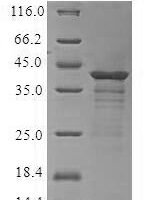
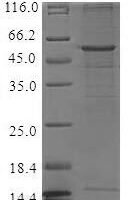
PurityGreater than 90% as determined by SEC-HPLC.
Expression SystemMammalian cell
Expression Region1-374aa
SpeciesHomo sapiens (Human)
Tag InfoC-terminal 10xHis-tagged (This tag can be tested only under denaturing conditions)
Molecular weight42.5 kDa
ActivityMeasured by its binding ability in a functional ELISA. Immobilized Human GPRC5D at 5 μg/mL can bind Anti-GPRC5D recombinant antibody , the EC50 is 8.847-10.38 ng/mL.
BufferLyophilized from a 0.2 μm filtered 20 mM Tris-HCl, 0.5 M NaCl, 6% Trehalose, pH 8.0
StorageStore at -20°C/-80°C upon receipt, aliquoting is necessary for mutiple use. Avoid repeated freeze-thaw cycles.
Alternative NamesCKRL3;CMKBR6;GPR29;STRL22

Function

Receptor for the C-C type chemokine CCL20. Binds to CCL20 and subsequently transduces a signal by increasing the intracellular calcium ion levels. Although CCL20 is its major ligand it can also act as a receptor for non-chemokine ligands such as beta-defensins.

Biological Context

Subcellular Location: Cell membrane (Multi-pass membrane protein); Cell surface
Tissue Specificity: Sperm. Mainly localized in the tail and in the postacrosomal region but is also found in the midpiece and basal region in a small percentage of sperm cells. Reduced levels found in the sperms of asthenozoospermia and leukocytospermia patients (at protein level). Spleen, lymph nodes, appendix, and fetal liver. Expressed in lymphocytes, T-cells and B-cells but not in natural killer cells, monocytes or granulocytes

Product Specifications

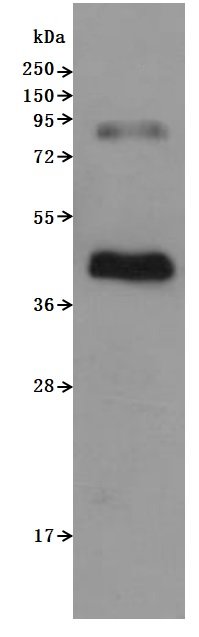
Recombinant Human C-C chemokine receptor type 6(CCR6)-VLPs (Active) is a recombinant protein from Homo sapiens (Human), expressed in Mammalian cell, covering amino acids 1-374aa, with C-terminal 10xHis-tagged (This tag can be tested only under denaturing conditions) tag, molecular weight 42.5 kDa, purity Greater than 90% as determined by SEC-HPLC.. Suitable for ELISA and Western Blot applications.

Recommended applications depend on the target, product format, and product-specific validation data. Refer to the product datasheet or Certificate of Analysis (CoA), or contact BioCrest Sci for application guidance.

Biological Activity: Measured by its binding ability in a functional ELISA. Immobilized Human GPRC5D at 5 μg/mL can bind Anti-GPRC5D recombinant antibody , the EC50 is 8.847-10.38 ng/mL.

Storage: Store at -20°C/-80°C upon receipt, aliquoting is necessary for mutiple use. Avoid repeated freeze-thaw cycles.

Shipping & Lead Time: Availability, shipping conditions, and estimated lead time are confirmed in the formal quotation or order confirmation based on the product format, destination, and order requirements.

Protein Biology

Function

Receptor for the C-C type chemokine CCL20 (PubMed:9169459). Binds to CCL20 and subsequently transduces a signal by increasing the intracellular calcium ion levels (PubMed:20068036). Although CCL20 is its major ligand it can also act as a receptor for non-chemokine ligands such as beta-defensins (PubMed:25585877). Binds to defensin DEFB1 leading to increase in intracellular calcium ions and cAMP levels. Its binding to DEFB1 is essential for the function of DEFB1 in regulating sperm motility and bactericidal activity (PubMed:25122636). Binds to defensins DEFB4 and DEFB4A/B and mediates their chemotactic effects (PubMed:20068036). The ligand-receptor pair CCL20-CCR6 is responsible for the chemotaxis of dendritic cells (DC), effector/ memory T-cells and B-cells and plays an important role at skin and mucosal surfaces under homeostatic and inflammatory conditions, as well as in pathology, including cancer and various autoimmune diseases. CCR6-mediated signals are essential for immune responses to microbes in the intestinal mucosa and in the modulation of inflammatory responses initiated by tissue insult and trauma (PubMed:21376174). CCR6 is essential for the recruitment of both the pro-inflammatory IL17 producing helper T-cells (Th17) and the regulatory T-cells (Treg) to sites of inflammation. Required for the normal migration of Th17 cells in Peyers-patches and other related tissue sites of the intestine and plays a role in regulating effector T-cell balance and distribution in inflamed intestine. Plays an important role in the coordination of early thymocyte precursor migration events important for normal subsequent thymocyte precursor development, but is not required for the formation of normal thymic natural regulatory T-cells (nTregs). Required for optimal differentiation of DN2 and DN3 thymocyte precursors. Essential for B-cell localization in the subepithelial dome of Peyers-patches and for efficient B-cell isotype switching to IgA in the Peyers-patches. Essential for appropriate anatomical distribution of memory B-cells in the spleen and for the secondary recall response of memory B-cells (By similarity). Positively regulates sperm motility and chemotaxis via its binding to CCL20 (PubMed:23765988)

Subcellular Location

Cell membrane (Multi-pass membrane protein); Cell surface

Tissue Specificity

Sperm. Mainly localized in the tail and in the postacrosomal region but is also found in the midpiece and basal region in a small percentage of sperm cells. Reduced levels found in the sperms of asthenozoospermia and leukocytospermia patients (at protein level). Spleen, lymph nodes, appendix, and fetal liver. Expressed in lymphocytes, T-cells and B-cells but not in natural killer cells, monocytes or granulocytes

Gene: CCR6  |  Organism: Homo sapiens  |  Synonyms: Chemokine receptor-like 3; DRY6; G protein-coupled receptor 29; GPR-CY4; LARC receptor
Key Publications

Frequently Asked Questions

How do I order or inquire about this product?

Submit the Online Inquiry form with your required quantity and specifications, or email sales@biocrestsci.com. Available sizes, pricing, stock status, documentation, and estimated lead time are confirmed in the formal quotation.

What is the shipping and delivery time?

Availability, dispatch timing, shipping conditions, and delivery estimates depend on the product format, destination, and order requirements. These details are confirmed in the formal quotation or order confirmation.

How should this product be stored?

Follow the storage and handling instructions in the product-specific datasheet and Certificate of Analysis (CoA). Requirements may vary by product form and formulation; contact BioCrest Sci if product-specific guidance is needed.

What quality controls are performed on your products?

Quality-control data such as identity, purity, endotoxin level, or biological activity are provided only when specified on this product page, the datasheet, or Certificate of Analysis (CoA). Biological activity is not implied unless explicitly stated.

Shopping Cart
Scroll to Top