,

Recombinant Human C-C motif chemokine 20 protein (CCL20)

Recombinant Human C-C motif chemokine 20 protein (CCL20) — Acts as a ligand for C-C chemokine receptor CCR6. Purity >97%.

SKU: BCACP-000769 Categories: ,
Product SKUBCACP-000769
Product DescriptionRecombinant Human C-C motif chemokine 20 protein (CCL20) protein is expressed from E.Coli with Tag-Free. It contains 27-96aa. [Accession | P78556].
Uniprot No.P78556
Gene NamesCCL20
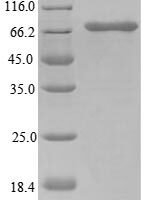
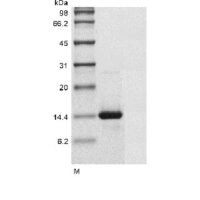
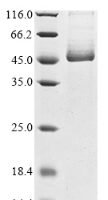
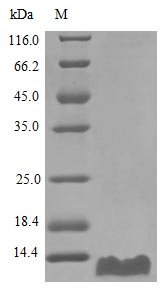
Purity>97% as determined by SDS-PAGE.
Expression SystemE.Coli
Expression Region27-96aa
SpeciesHomo sapiens (Human)
Tag InfoTag-Free
Molecular weight8.0 kDa
ActivityFully biologically active when compared to standard. The biological activity determined by a chemotaxis bioassay using human T-lymphocytes is in a concentration of 10-50 ng/ml.
BufferLyophilized from a 0.2 μm filtered 20 mM Tris-HCl, 0.5 M NaCl, 6% Trehalose, pH 8.0
StorageStore at -20°C/-80°C upon receipt, aliquoting is necessary for mutiple use. Avoid repeated freeze-thaw cycles.
Alternative NamesBeta chemokine exodus 1; Beta-chemokine exodus-1; C C motif chemokine ligand 20; C-C motif chemokine 20; CC chemokine LARC; Ccl20; CCL20(2-70); CCL20_HUMAN; Chemokine (C C motif) ligand 20; Chemokine C-C motif chemokine 20; Chemokine CC motif ligand 20; CKb4; Exodus 1; Exodus; LARC; Liver and activation regulated chemokine; Liver and activation-regulated chemokine; Macrophage inflammatory protein 3 alpha; MIP 3 alpha; MIP 3A; MIP-3-alpha; MIP-3a; MIP3 alpha; MIP3A; SCYA20; Small inducible cytokine A20 ; Small inducible cytokine subfamily A (Cys Cys) member 20; Small-inducible cytokine A20; ST38

Function

Acts as a ligand for C-C chemokine receptor CCR6. Signals through binding and activation of CCR6 and induces a strong chemotactic response and mobilization of intracellular calcium ions. The ligand-receptor pair CCL20-CCR6 is responsible for the chemotaxis of dendritic cells (DC), effector/memory T-cells and B-cells and plays an important role at skin and mucosal surfaces under homeostatic and inflammatory conditions, as well as in pathology, including cancer and various autoimmune diseases.

Biological Context

Subcellular Location: Secreted
Tissue Specificity: Expressed in the seminal plasma, endometrial fluid and follicular fluid (at protein level). Expressed predominantly in the liver, lymph nodes, appendix, peripheral blood lymphocytes, and fetal lung. Low levels seen in thymus, prostate, testis, small intestine and colon

Product Specifications

Recombinant Human C-C motif chemokine 20 protein (CCL20) is a recombinant protein from Homo sapiens (Human), expressed in E.Coli, covering amino acids 27-96aa, with Tag-Free tag, molecular weight 8.0 kDa, purity >97% as determined by SDS-PAGE.. Suitable for ELISA and Western Blot applications.

SDS-PAGE: Single band at expected molecular weight confirming purity.

ELISA: Suitable as coating antigen or detection standard.

Western Blot: Compatible with standard Western Blot protocols.

Protein Interaction: Validated for SPR (Surface Plasmon Resonance) and BLI (Bio-Layer Interferometry) studies.

Shipping: Shipped at ambient temperature. Lyophilized protein is stable during transit.

Storage: Store lyophilized protein at -20°C to -80°C. Reconstituted protein should be aliquoted and stored at -80°C. Avoid repeated freeze-thaw cycles.

Shelf Life: 12 months from date of receipt when stored as recommended.

Shipping Time: Orders placed before 2 PM EST ship same day. International orders typically deliver within 5-10 business days.

Protein Biology

Function

Acts as a ligand for C-C chemokine receptor CCR6. Signals through binding and activation of CCR6 and induces a strong chemotactic response and mobilization of intracellular calcium ions (PubMed:11035086, PubMed:11352563, PubMed:20068036). The ligand-receptor pair CCL20-CCR6 is responsible for the chemotaxis of dendritic cells (DC), effector/memory T-cells and B-cells and plays an important role at skin and mucosal surfaces under homeostatic and inflammatory conditions, as well as in pathology, including cancer and various autoimmune diseases (PubMed:21376174). CCL20 acts as a chemotactic factor that attracts lymphocytes and, slightly, neutrophils, but not monocytes (PubMed:11352563, PubMed:9038201). Involved in the recruitment of both the pro-inflammatory IL17 producing helper T-cells (Th17) and the regulatory T-cells (Treg) to sites of inflammation. Required for optimal migration of thymic natural regulatory T cells (nTregs) and DN1 early thymocyte progenitor cells (By similarity). C-terminal processed forms have been shown to be equally chemotactically active for leukocytes (PubMed:11035086). Positively regulates sperm motility and chemotaxis via its binding to CCR6 which triggers Ca2+ mobilization in the sperm which is important for its motility (PubMed:23765988, PubMed:25122636). Inhibits proliferation of myeloid progenitors in colony formation assays (PubMed:9129037). May be involved in formation and function of the mucosal lymphoid tissues by attracting lymphocytes and dendritic cells towards epithelial cells (By similarity). Possesses antibacterial activity towards E.coli ATCC 25922 and S.aureus ATCC 29213 (PubMed:12149255)

Subcellular Location

Secreted

Tissue Specificity

Expressed in the seminal plasma, endometrial fluid and follicular fluid (at protein level). Expressed predominantly in the liver, lymph nodes, appendix, peripheral blood lymphocytes, and fetal lung. Low levels seen in thymus, prostate, testis, small intestine and colon

Gene: CCL20  |  Organism: Homo sapiens  |  Synonyms: Beta-chemokine exodus-1; CC chemokine LARC; Liver and activation-regulated chemokine; Macrophage inflammatory protein 3 alpha; Small-inducible cytokine A20
Key Publications

Frequently Asked Questions

How do I order or inquire about this product?

Fill out the Online Inquiry form with your required quantity and specifications. You can also email sales@biocrestsci.com. Our team typically responds within 4 business hours with a quote and availability confirmation.

What is the shipping and delivery time?

Orders placed before 2 PM EST ship the same day. Domestic (US) delivery typically takes 2-3 business days. International orders deliver within 5-10 business days. All products are shipped at ambient temperature with appropriate packaging to ensure stability.

How should I store this recombinant protein?

Lyophilized proteins should be stored at -20°C to -80°C upon receipt. After reconstitution, aliquot and store at -80°C. Avoid repeated freeze-thaw cycles. Shelf life is 12 months from date of receipt when stored as recommended.

What quality controls are performed on your products?

Each product undergoes SDS-PAGE purity analysis (typically >85-95%), endotoxin testing, and bioactivity validation. Products are validated for ELISA, Western Blot, and SPR/BLI applications as specified on this product page. A Certificate of Analysis (CoA) is available upon request.

Shopping Cart
Scroll to Top