,

Recombinant Human C-C motif chemokine 21 protein (CCL21)

Recombinant Human C-C motif chemokine 21 protein (CCL21) — Binds to atypical chemokine receptor ACKR4 and mediates the recruitment of beta-arrestin (ARRB1/2) to ACKR4. Purity >95%.

SKU: BCACP-000770 Categories: ,
Product SKUBCACP-000770
Product DescriptionRecombinant Human C-C motif chemokine 21 protein (CCL21) protein is expressed from E.Coli with Tag-Free. It contains 24-134aa. [Accession | O00585].
Uniprot No.O00585
Gene NamesCCL21
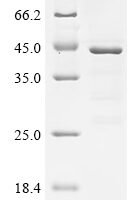
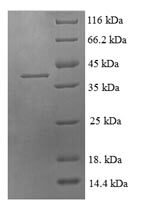
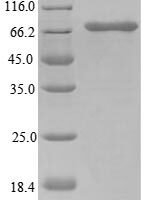
Purity>95% as determined by SDS-PAGE.
Expression SystemE.Coli
Expression Region24-134aa
SpeciesHomo sapiens (Human)
Tag InfoTag-Free
Molecular weight12.2 kDa
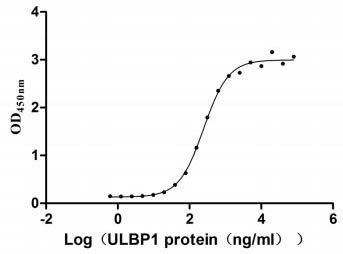
ActivityFully biologically active when compared to standard. The biological activity determined by a chemotaxis bioassay using human peripheral blood eosinophils is in a concentration of 50-100 ng/ml.
BufferLyophilized from a 0.2 μm filtered 20 mM Tris-HCl, 0.5 M NaCl, 6% Trehalose, pH 8.0
StorageStore at -20°C/-80°C upon receipt, aliquoting is necessary for mutiple use. Avoid repeated freeze-thaw cycles.
Alternative Names6Ckine; Beta chemokine exodus 2; Beta-chemokine exodus-2; C C motif chemokine ligand 21; C-C motif chemokine 21; CCL21; CCL21_HUMAN; Chemokine (C-C motif) ligand 21; Chemokine CC motif ligand 21; CKb9; ECL; Efficient Chemoattractant for Lymphocytes; SCYA21; Secondary lymphoid tissue chemokine; Secondary lymphoid-tissue chemokine; SLC; Small inducible cytokine A21 ; Small inducible cytokine subfamily A (Cys-Cys); member 21; Small-inducible cytokine A21; TCA4; UNQ784/PRO1600

Function

Binds to atypical chemokine receptor ACKR4 and mediates the recruitment of beta-arrestin (ARRB1/2) to ACKR4. Binds to chemokine receptor CCR7. Does not bind to chemokine receptor CXCR3.

Biological Context

Subcellular Location: Secreted
Tissue Specificity: Highly expressed in high endothelial venules of lymph nodes, spleen and appendix. Intermediate levels found in small intestine, thyroid gland and trachea. Low level expression in thymus, bone marrow, liver, and pancreas. Also found in tonsil, fetal heart and fetal spleen

Product Specifications

Recombinant Human C-C motif chemokine 21 protein (CCL21) is a recombinant protein from Homo sapiens (Human), expressed in E.Coli, covering amino acids 24-134aa, with Tag-Free tag, molecular weight 12.2 kDa, purity >95% as determined by SDS-PAGE.. Suitable for ELISA and Western Blot applications.

SDS-PAGE: Single band at expected molecular weight confirming purity.

ELISA: Suitable as coating antigen or detection standard.

Western Blot: Compatible with standard Western Blot protocols.

Protein Interaction: Validated for SPR (Surface Plasmon Resonance) and BLI (Bio-Layer Interferometry) studies.

Shipping: Shipped at ambient temperature. Lyophilized protein is stable during transit.

Storage: Store lyophilized protein at -20°C to -80°C. Reconstituted protein should be aliquoted and stored at -80°C. Avoid repeated freeze-thaw cycles.

Shelf Life: 12 months from date of receipt when stored as recommended.

Shipping Time: Orders placed before 2 PM EST ship same day. International orders typically deliver within 5-10 business days.

Protein Biology

Function

Binds to atypical chemokine receptor ACKR4 and mediates the recruitment of beta-arrestin (ARRB1/2) to ACKR4 (PubMed:23341447). Binds to chemokine receptor CCR7 (PubMed:9507024). Does not bind to chemokine receptor CXCR3 (PubMed:10201891). Binds to G protein-coupled receptor GPR174 (By similarity). Inhibits hemopoiesis and stimulates chemotaxis. Chemotactic in vitro for thymocytes and activated T-cells, but not for B-cells, macrophages, or neutrophils. Shows preferential activity towards naive T-cells. May play a role in mediating homing of lymphocytes to secondary lymphoid organs

Subcellular Location

Secreted

Tissue Specificity

Highly expressed in high endothelial venules of lymph nodes, spleen and appendix. Intermediate levels found in small intestine, thyroid gland and trachea. Low level expression in thymus, bone marrow, liver, and pancreas. Also found in tonsil, fetal heart and fetal spleen

Subunit

Monomer PubMed:22221265. Interacts with PDPN; relocalizes PDPN to the basolateral membrane (PubMed:14978162). Interacts with TNFAIP6 (via Link domain) PubMed:27044744

Gene: CCL21  |  Organism: Homo sapiens  |  Synonyms: 6Ckine; Beta-chemokine exodus-2; Secondary lymphoid-tissue chemokine; Small-inducible cytokine A21
Key Publications

Frequently Asked Questions

How do I order or inquire about this product?

Fill out the Online Inquiry form with your required quantity and specifications. You can also email sales@biocrestsci.com. Our team typically responds within 4 business hours with a quote and availability confirmation.

What is the shipping and delivery time?

Orders placed before 2 PM EST ship the same day. Domestic (US) delivery typically takes 2-3 business days. International orders deliver within 5-10 business days. All products are shipped at ambient temperature with appropriate packaging to ensure stability.

How should I store this recombinant protein?

Lyophilized proteins should be stored at -20°C to -80°C upon receipt. After reconstitution, aliquot and store at -80°C. Avoid repeated freeze-thaw cycles. Shelf life is 12 months from date of receipt when stored as recommended.

What quality controls are performed on your products?

Each product undergoes SDS-PAGE purity analysis (typically >85-95%), endotoxin testing, and bioactivity validation. Products are validated for ELISA, Western Blot, and SPR/BLI applications as specified on this product page. A Certificate of Analysis (CoA) is available upon request.

Shopping Cart
Scroll to Top