Recombinant Human Cadherin-1 (CDH1), partial (Active)

Recombinant Human Cadherin-1 (CDH1), partial (Active) — recombinant protein from Homo sapiens (Human), expressed in Mammalian cell. Purity >90%.

SKU: BCRECP-000325 Category:

Product Specifications

Product SkuBCRECP-000325
Product DescriptionRecombinant Human Cadherin-1 (CDH1) Protein is expressed from Mammalian cell with C-terminal 10xHis-tagged. It contains 155-709aa. [Accession | P12830].
Uniprot No.P12830
Gene NamesCDH1
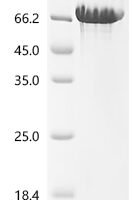
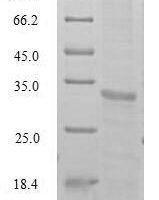
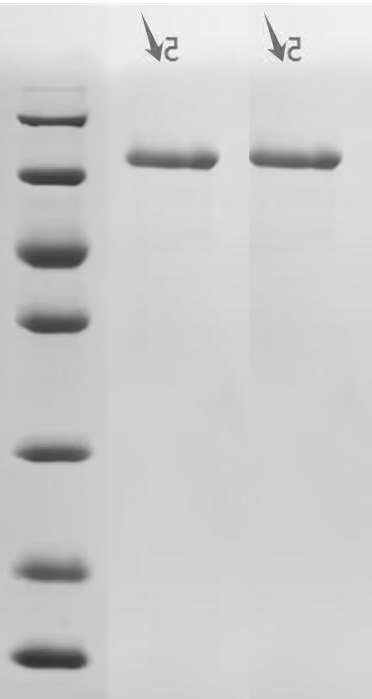
PurityGreater than 90% as determined by SDS-PAGE.
Expression SystemMammalian cell
Expression Region155-709aa
SpeciesHomo sapiens (Human)
Tag InfoC-terminal 10xHis-tagged
Molecular weight61.9kDa
ActivityPlease contact us to obtain bioactivity data.
BufferIf the delivery form is liquid, the default storage buffer is Tris/PBS-based buffer, 5%-50% glycerol. If the delivery form is lyophilized powder, the buffer before lyophilization is Tris/PBS-based buffer, 6% Trehalose.
StorageStore at -20°C/-80°C upon receipt, aliquoting is necessary for mutiple use. Avoid repeated freeze-thaw cycles.
Research AreasCancer

Function

(Microbial infection) Serves as a receptor for Listeria monocytogenes; internalin A (InlA) binds to this protein and promotes uptake of the bacteria.

Biological Context

Subcellular Location: Secreted
Tissue Specificity: Expressed in granuloma macrophages (at protein level). Expressed in the skin (at protein level). Expressed in the basal epithelial layer of the esophageal epithelium (at protein level). Expressed in the liver
Disease Association: Diffuse gastric and lobular breast cancer syndrome (DGLBC) : A cancer predisposition syndrome with increased susceptibility to diffuse gastric cancer. Diffuse gastric cancer is a malignant disease characterized by poorly differentiated infiltrating lesions resulting in thickening of the stomach. Malignant tumors start in the stomach, can spread to the esophagus or the small intestine, and can extend through the stomach wall to nearby lymph nodes and organs. It also can metastasize to other parts of the body. In addition to gastric cancer, most female mutation carriers develop lobular carcinoma of the breast. [Disease susceptibility is associated with variants affecting the gene represented in this entry. Heterozygous CDH1 germline mutations are responsible for familial cases of diffuse gastric cancer. Somatic mutations has also been found in patients with sporadic diffuse gastric cancer and lobular breast cancer] | Endometrial cancer (ENDMC) : A malignancy of endometrium, the mucous lining of the uterus. Most endometrial cancers are adenocarcinomas, cancers that begin in cells that make and release mucus and other fluids. [Disease susceptibility is associated with variants affecting the gene represented in this entry] | Ovarian cancer (OC) : The term ovarian cancer defines malignancies originating from ovarian tissue. Although many histologic types of ovarian tumors have been described, epithelial ovarian carcinoma is the most common form. Ovarian cancers are often asymptomatic and the recognized signs and symptoms, even of late-stage disease, are vague. Consequently, most patients are diagnosed with advanced disease. [Disease susceptibility is associated with variants affecting the gene represented in this entry] | Breast cancer, lobular (LBC) : A type of breast cancer that begins in the milk-producing glands (lobules) of the breast. [The gene represented in this entry may be involved in disease pathogenesis] | Blepharocheilodontic syndrome 1 (BCDS1) : A form of blepharocheilodontic syndrome, a rare autosomal dominant disorder. It is characterized by lower eyelid ectropion, upper eyelid distichiasis, euryblepharon, bilateral cleft lip and palate, and features of ectodermal dysplasia, including hair anomalies, conical teeth and tooth agenesis. An additional rare manifestation is imperforate anus. There is considerable phenotypic variability among affected individuals. [The disease is caused by variants affecting the gene represented in this entry]

Product Specifications

Recombinant Human Cadherin-1 (CDH1), partial (Active) is a recombinant protein from Homo sapiens (Human), expressed in Mammalian cell, covering amino acids 155-709aa, with C-terminal 10xHis-tagged tag, molecular weight 61.9kDa, purity Greater than 90% as determined by SDS-PAGE.. Suitable for ELISA and Western Blot applications.
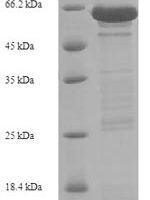
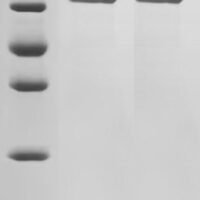
SDS-PAGE: Single band at expected molecular weight confirming purity.

ELISA: Suitable as coating antigen or detection standard.

Western Blot: Compatible with standard Western Blot protocols.

Protein Interaction: Validated for SPR (Surface Plasmon Resonance) and BLI (Bio-Layer Interferometry) studies.

Shipping: Shipped at ambient temperature. Lyophilized protein is stable during transit.

Storage: Store lyophilized protein at -20°C to -80°C. Reconstituted protein should be aliquoted and stored at -80°C. Avoid repeated freeze-thaw cycles.

Shelf Life: 12 months from date of receipt when stored as recommended.

Shipping Time: Orders placed before 2 PM EST ship same day. International orders typically deliver within 5-10 business days.

Protein Biology

Function

(Microbial infection) Serves as a receptor for Listeria monocytogenes; internalin A (InlA) binds to this protein and promotes uptake of the bacteria

Subcellular Location

Secreted

Disease Association

Diffuse gastric and lobular breast cancer syndrome (DGLBC) : A cancer predisposition syndrome with increased susceptibility to diffuse gastric cancer. Diffuse gastric cancer is a malignant disease characterized by poorly differentiated infiltrating lesions resulting in thickening of the stomach. Malignant tumors start in the stomach, can spread to the esophagus or the small intestine, and can extend through the stomach wall to nearby lymph nodes and organs. It also can metastasize to other parts of the body. In addition to gastric cancer, most female mutation carriers develop lobular carcinoma of the breast. [Disease susceptibility is associated with variants affecting the gene represented in this entry. Heterozygous CDH1 germline mutations are responsible for familial cases of diffuse gastric cancer. Somatic mutations has also been found in patients with sporadic diffuse gastric cancer and lobular breast cancer] | Endometrial cancer (ENDMC) : A malignancy of endometrium, the mucous lining of the uterus. Most endometrial cancers are adenocarcinomas, cancers that begin in cells that make and release mucus and other fluids. [Disease susceptibility is associated with variants affecting the gene represented in this entry] | Ovarian cancer (OC) : The term ovarian cancer defines malignancies originating from ovarian tissue. Although many histologic types of ovarian tumors have been described, epithelial ovarian carcinoma is the most common form. Ovarian cancers are often asymptomatic and the recognized signs and symptoms, even of late-stage disease, are vague. Consequently, most patients are diagnosed with advanced disease. [Disease susceptibility is associated with variants affecting the gene represented in this entry] | Breast cancer, lobular (LBC) : A type of breast cancer that begins in the milk-producing glands (lobules) of the breast. [The gene represented in this entry may be involved in disease pathogenesis] | Blepharocheilodontic syndrome 1 (BCDS1) : A form of blepharocheilodontic syndrome, a rare autosomal dominant disorder. It is characterized by lower eyelid ectropion, upper eyelid distichiasis, euryblepharon, bilateral cleft lip and palate, and features of ectodermal dysplasia, including hair anomalies, conical teeth and tooth agenesis. An additional rare manifestation is imperforate anus. There is considerable phenotypic variability among affected individuals. [The disease is caused by variants affecting the gene represented in this entry]

Tissue Specificity

Expressed in granuloma macrophages (at protein level) (PubMed:27760340). Expressed in the skin (at protein level) (PubMed:22294297). Expressed in the basal epithelial layer of the esophageal epithelium (at protein level) (PubMed:24220297). Expressed in the liver (PubMed:3263290)

Subunit

(Microbial infection) Interacts with L.monocytogenes InlA (PubMed:12526809, PubMed:17540170, PubMed:17715295). The formation of the complex between InlA and cadherin-1 is calcium-dependent (PubMed:12526809)

Gene: CDH1  |  Organism: Homo sapiens  |  Synonyms: CAM 120/80; Epithelial cadherin; Uvomorulin
Key Publications

Frequently Asked Questions

How do I order or inquire about this product?

Fill out the Online Inquiry form with your required quantity and specifications. You can also email sales@biocrestsci.com. Our team typically responds within 4 business hours with a quote and availability confirmation.

What is the shipping and delivery time?

Orders placed before 2 PM EST ship the same day. Domestic (US) delivery typically takes 2-3 business days. International orders deliver within 5-10 business days. All products are shipped at ambient temperature with appropriate packaging to ensure stability.

How should I store this recombinant protein?

Lyophilized proteins should be stored at -20°C to -80°C upon receipt. After reconstitution, aliquot and store at -80°C. Avoid repeated freeze-thaw cycles. Shelf life is 12 months from date of receipt when stored as recommended.

What quality controls are performed on your products?

Each product undergoes SDS-PAGE purity analysis (typically >85-95%), endotoxin testing, and bioactivity validation. Products are validated for ELISA, Western Blot, and SPR/BLI applications as specified on this product page. A Certificate of Analysis (CoA) is available upon request.

Shopping Cart
Scroll to Top