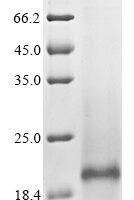
![Recombinant Human Carbamoyl-phosphate synthase [ammonia], mitochondrial (CPS1), partial, Homo sapiens (Human), Yeast, N-terminal 6xHis-tagged, 18.4kDa, purity >90% as determined by SDS-PAGE.](https://www.biocrestsci.com/wp-content/uploads/protein/1/BCRECP-000422_SDS.jpg)
Function
Involved in the urea cycle of ureotelic animals where the enzyme plays an important role in removing excess ammonia from the cell.
Biological Context
Subcellular Location: Mitochondrion; Nucleus, nucleolus; Cell membrane (Peripheral membrane protein)
Tissue Specificity: Primarily in the liver and small intestine
Disease Association: Carbamoyl phosphate synthetase 1 deficiency (CPS1D) : An autosomal recessive disorder of the urea cycle causing hyperammonemia. It can present as a devastating metabolic disease dominated by severe hyperammonemia in neonates or as a more insidious late-onset condition, generally manifesting as life-threatening hyperammonemic crises under catabolic situations. Clinical features include protein intolerance, intermittent ataxia, seizures, lethargy, developmental delay and intellectual disability. [The disease is caused by variants affecting the gene represented in this entry] | [CPS1 protein variants might influence the availability of precursors for nitric oxide (NO) synthesis and play a role in clinical situations where endogenous NO production is critically important, such as neonatal pulmonary hypertension, increased pulmonary artery pressure following surgical repair of congenital heart defects or hepatovenocclusive disease following bone marrow transplantation ]
Product Specifications
Recombinant Human Carbamoyl-phosphate synthase [ammonia], mitochondrial (CPS1), partial is a recombinant protein from Homo sapiens (Human), expressed in Yeast, covering amino acids 1354-1500aa, with N-terminal 6xHis-tagged tag, molecular weight 18.4kDa, purity Greater than 90% as determined by SDS-PAGE.. Suitable for ELISA and Western Blot applications. Explore more Enzyme proteins →
![Recombinant Human Carbamoyl-phosphate synthase [ammonia], mitochondrial (CPS1), partial - BioCrest Sci](https://www.biocrestsci.com/wp-content/uploads/protein/1/BCRECP-000421_SDS-134x200.jpg)
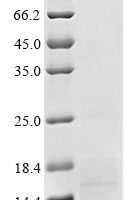
![Recombinant Mouse Carbamoyl-phosphate synthase [ammonia], mitochondrial (Cps1), partial - BioCrest Sci](https://www.biocrestsci.com/wp-content/uploads/protein/1/BCRECP-002424_SDS-134x200.jpg)