Function
May act as a scaffolding protein within caveolar membranes. Forms a stable heterooligomeric complex with CAV2 that targets to lipid rafts and drives caveolae formation. Mediates the recruitment of CAVIN proteins (CAVIN1/2/3/4) to the caveolae.
Biological Context
Subcellular Location: Golgi apparatus membrane (Peripheral membrane protein); Cell membrane (Peripheral membrane protein); Membrane, caveola (Peripheral membrane protein); Membrane raft; Golgi apparatus, trans-Golgi network; Cytoplasm
Tissue Specificity: Skeletal muscle, liver, stomach, lung, kidney and heart (at protein level). Expressed in the brain
Disease Association: Lipodystrophy, congenital generalized, 3 (CGL3) : A form of congenital generalized lipodystrophy, a metabolic disorder characterized by a near complete absence of adipose tissue, extreme insulin resistance, hypertriglyceridemia, hepatic steatosis and diabetes mellitus. CGL3 inheritance is autosomal recessive. [The disease is caused by variants affecting the gene represented in this entry] | Pulmonary hypertension, primary, 3 (PPH3) : A rare disorder characterized by plexiform lesions of proliferating endothelial cells in pulmonary arterioles. The lesions lead to elevated pulmonary arterial pression, right ventricular failure, and death. The disease can occur from infancy throughout life and it has a mean age at onset of 36 years. Penetrance is reduced. Although familial pulmonary hypertension is rare, cases secondary to known etiologies are more common and include those associated with the appetite-suppressant drugs. [The disease is caused by variants affecting the gene represented in this entry] | Lipodystrophy, familial partial, 7 (FPLD7) : A form of partial lipodystrophy, a disorder characterized by abnormal subcutaneous fat distribution. Affected individuals manifest a gradual loss of subcutaneous adipose tissue in various parts of the body, accompanied by an accumulation of adipose tissue in the face and neck in some cases causing a double chin, fat neck, or cushingoid appearance. FPLD7 is an autosomal dominant form with a variable phenotype. Some patients manifest congenital cataracts and neurodegeneration leading to cerebellar and spinal cord dysfunction. [The disease is caused by variants affecting the gene represented in this entry]
Product Specifications
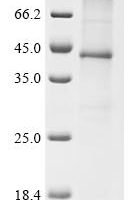
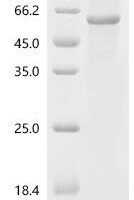
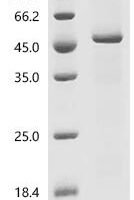
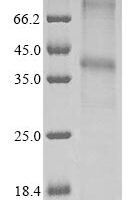
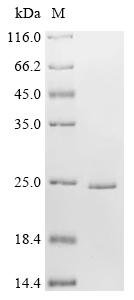
Recombinant Human Caveolin-1 (CAV1) Protein is a recombinant protein from Homo sapiens (Human), expressed in in vitro E.coli expression system, covering amino acids 1-178aa, with N-terminal 10xHis-tagged tag, molecular weight 22kDa, purity Greater than 90% as determined by SDS-PAGE.. Suitable for ELISA and Western Blot applications.