Function
Scaffolding component of the CCR4-NOT complex which is one of the major cellular mRNA deadenylases and is linked to various cellular processes including bulk mRNA degradation, miRNA-mediated repression, translational repression during translational initiation and general transcription regulation. Additional complex functions may be a consequence of its influence on mRNA expression. Its scaffolding function implies its interaction with the catalytic complex module and diverse RNA-binding proteins mediating the complex recruitment to selected mRNA 3'UTRs.
Biological Context
Subcellular Location: Cytoplasm, P-body; Nucleus
Tissue Specificity: Strongly expressed in brain, heart, thymus, spleen, kidney, liver, placenta and lung. Weakly expressed in skeletal muscle and colon
Disease Association: Holoprosencephaly 12 with or without pancreatic agenesis (HPE12) : A form of holoprosencephaly, a structural anomaly of the brain in which the developing forebrain fails to correctly separate into right and left hemispheres. It is a genetically and clinically heterogeneous disorder with a wide spectrum of severity, ranging from alobar holoprosencephaly with severe facial abnormalities, such as cyclopia and proboscis, to mild forms that include lobar or microform holoprosencephaly, without cerebral malformations and with mild craniofacial defects. HPE12 clinical features include abnormal forebrain development, dysmorphic features, global developmental delay, learning difficulties, and congenital absence of the pancreas in most patients, resulting in early-onset insulin-dependent diabetes mellitus. Other features may include hearing loss and absence of the gallbladder. HPE12 inheritance is autosomal dominant. [The disease may be caused by variants affecting the gene represented in this entry] | Vissers-Bodmer syndrome (VIBOS) : An autosomal dominant disorder characterized by global developmental delay, intellectual disability of varying degree, speech delay, motor delay, and hypotonia. Abnormal growth, and cerebral, skeletal, muscle and soft tissue abnormalities are frequently observed. Many patients have behavioral problems, including anxiety, obsessive compulsive disorder, autism spectrum disorder and attention deficit-hyperactivity disorder. [The disease may be caused by variants affecting the gene represented in this entry]
Product Specifications
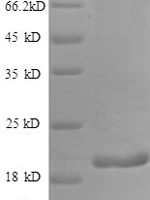
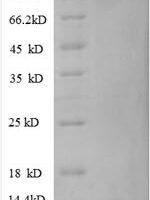
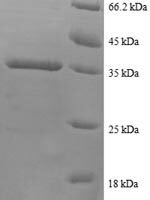
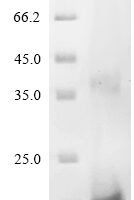
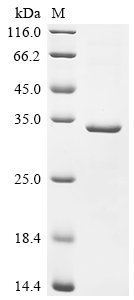
Recombinant Human CCR4-NOT transcription complex subunit 1 (CNOT1), partial is a recombinant protein from Homo sapiens (Human), expressed in E.coli, covering amino acids 604-867aa, with N-terminal 6xHis-tagged tag, molecular weight 33.8kDa, purity Greater than 85% as determined by SDS-PAGE.. Suitable for ELISA and Western Blot applications.