Recombinant Human Cystine/glutamate transporter (SLC7A11) (Active)

Recombinant Human Cystine/glutamate transporter (SLC7A11) (Active) — Heterodimer with SLC3A2, that functions as an antiporter by mediating the exchange of extracellular anionic L-cystine and intracellular L-glutamate across the cellular plasma membrane. Purity >90%.

SKU: BCACP-000124 Category:
Product SKUBCACP-000124
Product DescriptionRecombinant Human Cystine/glutamate transporter (SLC7A11) protein is expressed from in vitro E.coli expression system with N-terminal 10xHis-tagged. It contains 1-501aa. [Accession | Q9UPY5].
Uniprot No.Q9UPY5
Gene NamesSLC7A11
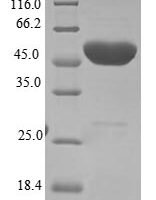
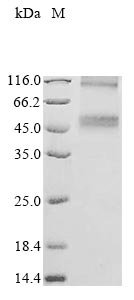
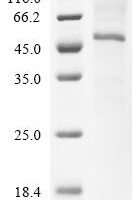
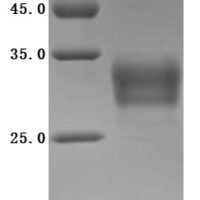
PurityGreater than 90% as determined by SDS-PAGE.
Expression Systemin vitro E.coli expression system
Expression Region1-501aa
SpeciesHomo sapiens (Human)
Tag InfoN-terminal 10xHis-tagged
Molecular weight58.2 kDa
ActivityMeasured by its binding ability in a functional ELISA. Immobilized human SEMA4D at 2 μg/mL can bind biotinylated Pepinemab, the EC50 is 1.005-1.776 ng/mL.;Measured by its binding ability in a functional ELISA. Immobilized human SEMA4D at 5 μg/mL can bind human PLXNB1 , the EC50 is 0.8179-1.357 μg/mL.
BufferLyophilized from a 0.2 μm filtered 20 mM Tris-HCl, 0.5 M NaCl, 6% Trehalose, pH 8.0
StorageStore at -20°C/-80°C upon receipt, aliquoting is necessary for mutiple use. Avoid repeated freeze-thaw cycles.
Alternative Names(Amino acid transport system xc-)(Calcium channel blocker resistance protein CCBR1)(Solute carrier family 7 member 11)(xCT)

Function

Heterodimer with SLC3A2, that functions as an antiporter by mediating the exchange of extracellular anionic L-cystine and intracellular L-glutamate across the cellular plasma membrane. Provides L-cystine for the maintenance of the redox balance between extracellular L-cystine and L-cysteine and for the maintenance of the intracellular levels of glutathione that is essential for cells protection from oxidative stress. The transport is sodium-independent, electroneutral with a stoichiometry of 1:1, and is drove by the high intracellular concentration of L-glutamate and the intracellular reduction of L-cystine.

Product Specifications

Recombinant Human Cystine/glutamate transporter (SLC7A11) (Active) is a recombinant protein, expressed in in vitro E.coli expression system, covering amino acids 1-501aa, with N-terminal 10xHis-tagged tag, molecular weight 58.2 kDa, purity Greater than 90% as determined by SDS-PAGE.. Suitable for ELISA and Western Blot applications.
Recommended applications depend on the target, product format, and product-specific validation data. Refer to the product datasheet or Certificate of Analysis (CoA), or contact BioCrest Sci for application guidance.

Biological Activity: Measured by its binding ability in a functional ELISA. Immobilized human SEMA4D at 2 μg/mL can bind biotinylated Pepinemab, the EC50 is 1.005-1.776 ng/mL.;Measured by its binding ability in a functional ELISA. Immobilized human SEMA4D at 5 μg/mL can bind human PLXNB1 , the EC50 is 0.8179-1.357 μg/mL.

Storage: Store at -20°C/-80°C upon receipt, aliquoting is necessary for mutiple use. Avoid repeated freeze-thaw cycles.

Shipping & Lead Time: Availability, shipping conditions, and estimated lead time are confirmed in the formal quotation or order confirmation based on the product format, destination, and order requirements.

Protein Biology

Function

Heterodimer with SLC3A2, that functions as an antiporter by mediating the exchange of extracellular anionic L-cystine and intracellular L-glutamate across the cellular plasma membrane (PubMed:11133847, PubMed:11417227, PubMed:14722095, PubMed:15151999, PubMed:34880232, PubMed:35245456, PubMed:35352032). Provides L-cystine for the maintenance of the redox balance between extracellular L-cystine and L-cysteine and for the maintenance of the intracellular levels of glutathione that is essential for cells protection from oxidative stress (By similarity). The transport is sodium-independent, electroneutral with a stoichiometry of 1:1, and is drove by the high intracellular concentration of L-glutamate and the intracellular reduction of L-cystine (PubMed:11133847, PubMed:11417227). Acts as an inhibitor of ferroptosis by mediating the import of L-kynurenine leading to anti-ferroptotic signaling propagation required to maintain L-cystine and glutathione homeostasis (PubMed:35245456, PubMed:40246981). Also inhibits ferroptosis by acting as an atypical proton transporter that mediates a slow proton efflux from lysosomes via cystine and glutamate flux (PubMed:40280132). Glutamate and cystine contain side-chain groups that are protonatable in the physiological range of lysosomal pH and cytosolic pH, respectively, enabling a slow lysosomal proton leak through a substrate-as-proton mechanism (PubMed:40280132). Moreover, mediates N-acetyl-L-cysteine uptake into the placenta leading to subsequently down-regulation of pathways associated with oxidative stress, inflammation and apoptosis (PubMed:34120018). In vitro can also transport L-aspartate (PubMed:11417227). May participate in astrocyte and meningeal cell proliferation during development and can provide neuroprotection by promoting glutathione synthesis and delivery from non-neuronal cells such as astrocytes and meningeal cells to immature neurons (By similarity). Controls the production of pheomelanin pigment directly (By similarity)

Gene: SLC7A11  |  Organism: Homo sapiens

Frequently Asked Questions

How do I order or inquire about this product?

Submit the Online Inquiry form with your required quantity and specifications, or email sales@biocrestsci.com. Available sizes, pricing, stock status, documentation, and estimated lead time are confirmed in the formal quotation.

What is the shipping and delivery time?

Availability, dispatch timing, shipping conditions, and delivery estimates depend on the product format, destination, and order requirements. These details are confirmed in the formal quotation or order confirmation.

How should this product be stored?

Follow the storage and handling instructions in the product-specific datasheet and Certificate of Analysis (CoA). Requirements may vary by product form and formulation; contact BioCrest Sci if product-specific guidance is needed.

What quality controls are performed on your products?

Quality-control data such as identity, purity, endotoxin level, or biological activity are provided only when specified on this product page, the datasheet, or Certificate of Analysis (CoA). Biological activity is not implied unless explicitly stated.

Shopping Cart
Scroll to Top