Recombinant Human Cytochrome P450 2C9 (CYP2C9)

Recombinant Human Cytochrome P450 2C9 (CYP2C9) — A cytochrome P450 monooxygenase involved in the metabolism of various endogenous substrates, including fatty acids and steroids. Purity >85%.

SKU: BCRECP-000470 Category:

Product Specifications

Product SkuBCRECP-000470
Product DescriptionRecombinant Human Cytochrome P450 2C9 (CYP2C9) Protein is expressed from E.coli with N-terminal 10xHis-tagged and C-terminal Myc-tagged. It contains 1-162aa. [Accession | P11712].
Uniprot No.P11712
Gene NamesCYP2C9
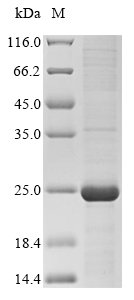
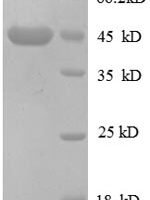
PurityGreater than 85% as determined by SDS-PAGE.
Expression SystemE.coli
Expression Region1-162aa
SpeciesHomo sapiens (Human)
Tag InfoN-terminal 10xHis-tagged and C-terminal Myc-tagged
Molecular weight25.4kDa
ActivityPlease contact us to obtain bioactivity data.
BufferIf the delivery form is liquid, the default storage buffer is Tris/PBS-based buffer, 5%-50% glycerol. If the delivery form is lyophilized powder, the buffer before lyophilization is Tris/PBS-based buffer, 6% Trehalose.
StorageStore at -20°C/-80°C upon receipt, aliquoting is necessary for mutiple use. Avoid repeated freeze-thaw cycles.
Research AreasOthers

Function

A cytochrome P450 monooxygenase involved in the metabolism of various endogenous substrates, including fatty acids and steroids. Mechanistically, uses molecular oxygen inserting one oxygen atom into a substrate, and reducing the second into a water molecule, with two electrons provided by NADPH via cytochrome P450 reductase (NADPH–hemoprotein reductase). Catalyzes the epoxidation of double bonds of polyunsaturated fatty acids (PUFA).

Biological Context

Subcellular Location: Endoplasmic reticulum membrane (Peripheral membrane protein); Microsome membrane (Peripheral membrane protein)
Pathway: Terpene metabolism; (4R)-limonene degradation

Product Specifications

Recombinant Human Cytochrome P450 2C9 (CYP2C9) is a recombinant protein from Homo sapiens (Human), expressed in E.coli, covering amino acids 1-162aa, with N-terminal 10xHis-tagged and C-terminal Myc-tagged tag, molecular weight 25.4kDa, purity Greater than 85% as determined by SDS-PAGE.. Suitable for ELISA and Western Blot applications.
Recommended applications depend on the target, product format, and product-specific validation data. Refer to the product datasheet or Certificate of Analysis (CoA), or contact BioCrest Sci for application guidance.

Biological Activity: Please contact us to obtain bioactivity data.

Storage: Store at -20°C/-80°C upon receipt, aliquoting is necessary for mutiple use. Avoid repeated freeze-thaw cycles.

Shipping & Lead Time: Availability, shipping conditions, and estimated lead time are confirmed in the formal quotation or order confirmation based on the product format, destination, and order requirements.

Protein Biology

Function

A cytochrome P450 monooxygenase involved in the metabolism of various endogenous substrates, including fatty acids and steroids (PubMed:12865317, PubMed:15766564, PubMed:19965576, PubMed:21576599, PubMed:7574697, PubMed:9435160, PubMed:9866708). Mechanistically, uses molecular oxygen inserting one oxygen atom into a substrate, and reducing the second into a water molecule, with two electrons provided by NADPH via cytochrome P450 reductase (NADPH--hemoprotein reductase) (PubMed:12865317, PubMed:15766564, PubMed:19965576, PubMed:21576599, PubMed:7574697, PubMed:9435160, PubMed:9866708). Catalyzes the epoxidation of double bonds of polyunsaturated fatty acids (PUFA) (PubMed:15766564, PubMed:19965576, PubMed:7574697, PubMed:9866708). Catalyzes the hydroxylation of carbon-hydrogen bonds. Metabolizes cholesterol toward 25-hydroxycholesterol, a physiological regulator of cellular cholesterol homeostasis (PubMed:21576599). Exhibits low catalytic activity for the formation of catechol estrogens from 17beta-estradiol (E2) and estrone (E1), namely 2-hydroxy E1 and E2 (PubMed:12865317). Catalyzes bisallylic hydroxylation and hydroxylation with double-bond migration of polyunsaturated fatty acids (PUFA) (PubMed:9435160, PubMed:9866708). Also metabolizes plant monoterpenes such as limonene. Oxygenates (R)- and (S)-limonene to produce carveol and perillyl alcohol (PubMed:11950794). Contributes to the wide pharmacokinetics variability of the metabolism of drugs such as S-warfarin, diclofenac, phenytoin, tolbutamide and losartan (PubMed:25994031)

Subcellular Location

Endoplasmic reticulum membrane (Peripheral membrane protein); Microsome membrane (Peripheral membrane protein)

Pathway

Terpene metabolism; (4R)-limonene degradation

Gene: CYP2C9  |  Organism: Homo sapiens  |  Synonyms: (R)-limonene 6-monooxygenase; (S)-limonene 6-monooxygenase; (S)-limonene 7-monooxygenase; CYPIIC9; Cholesterol 25-hydroxylase; Cytochrome P-450MP; Cytochrome P450 MP-4; Cytochrome P450 MP-8; Cytochrome P450 PB-1; S-mephenytoin 4-hydroxylase
Key Publications

Frequently Asked Questions

How do I order or inquire about this product?

Submit the Online Inquiry form with your required quantity and specifications, or email sales@biocrestsci.com. Available sizes, pricing, stock status, documentation, and estimated lead time are confirmed in the formal quotation.

What is the shipping and delivery time?

Availability, dispatch timing, shipping conditions, and delivery estimates depend on the product format, destination, and order requirements. These details are confirmed in the formal quotation or order confirmation.

How should this product be stored?

Follow the storage and handling instructions in the product-specific datasheet and Certificate of Analysis (CoA). Requirements may vary by product form and formulation; contact BioCrest Sci if product-specific guidance is needed.

What quality controls are performed on your products?

Quality-control data such as identity, purity, endotoxin level, or biological activity are provided only when specified on this product page, the datasheet, or Certificate of Analysis (CoA). Biological activity is not implied unless explicitly stated.

Shopping Cart
Scroll to Top