Recombinant Human Forkhead box protein P3 (FOXP3), partial

Recombinant Human Forkhead box protein P3 (FOXP3), partial — Transcriptional regulator which is crucial for the development and inhibitory function of regulatory T-cells (Treg). Purity >90%.

SKU: BCRECP-000695 Category:

Product Specifications

Product SkuBCRECP-000695
Product DescriptionRecombinant Human Forkhead box protein P3 (FOXP3) Protein is expressed from E.coli with N-terminal 6xHis-tagged. It contains 1-260aa. [Accession | Q9BZS1].
Uniprot No.Q9BZS1
Gene NamesFOXP3
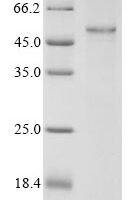
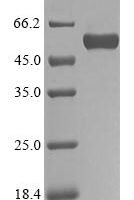
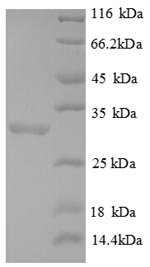
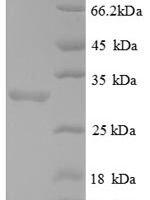
PurityGreater than 90% as determined by SDS-PAGE.
Expression SystemE.coli
Expression Region1-260aa
SpeciesHomo sapiens (Human)
Tag InfoN-terminal 6xHis-tagged
Molecular weight31.7kDa
ActivityPlease contact us to obtain bioactivity data.
BufferIf the delivery form is liquid, the default storage buffer is Tris/PBS-based buffer, 5%-50% glycerol. If the delivery form is lyophilized powder, the buffer before lyophilization is Tris/PBS-based buffer, 6% Trehalose.
StorageStore at -20°C/-80°C upon receipt, aliquoting is necessary for mutiple use. Avoid repeated freeze-thaw cycles.
Research AreasTranscription

Function

Transcriptional regulator which is crucial for the development and inhibitory function of regulatory T-cells (Treg). Plays an essential role in maintaining homeostasis of the immune system by allowing the acquisition of full suppressive function and stability of the Treg lineage, and by directly modulating the expansion and function of conventional T-cells. Can act either as a transcriptional repressor or a transcriptional activator depending on its interactions with other transcription factors, histone acetylases and deacetylases.

Biological Context

Subcellular Location: Nucleus; Cytoplasm
Disease Association: Immunodeficiency polyendocrinopathy, enteropathy, X-linked syndrome (IPEX) : Characterized by neonatal onset insulin-dependent diabetes mellitus, infections, secretory diarrhea, thrombocytopenia, anemia and eczema. It is usually lethal in infancy. [The disease is caused by variants affecting the gene represented in this entry]

Product Specifications

Recombinant Human Forkhead box protein P3 (FOXP3), partial is a recombinant protein from Homo sapiens (Human), expressed in E.coli, covering amino acids 1-260aa, with N-terminal 6xHis-tagged tag, molecular weight 31.7kDa, purity Greater than 90% as determined by SDS-PAGE.. Suitable for ELISA and Western Blot applications.
Recommended applications depend on the target, product format, and product-specific validation data. Refer to the product datasheet or Certificate of Analysis (CoA), or contact BioCrest Sci for application guidance.

Biological Activity: Please contact us to obtain bioactivity data.

Storage: Store at -20°C/-80°C upon receipt, aliquoting is necessary for mutiple use. Avoid repeated freeze-thaw cycles.

Shipping & Lead Time: Availability, shipping conditions, and estimated lead time are confirmed in the formal quotation or order confirmation based on the product format, destination, and order requirements.

Protein Biology

Function

Transcriptional regulator which is crucial for the development and inhibitory function of regulatory T-cells (Treg) (PubMed:17377532, PubMed:21458306, PubMed:23947341, PubMed:24354325, PubMed:24722479, PubMed:24835996, PubMed:30513302, PubMed:32644293). Plays an essential role in maintaining homeostasis of the immune system by allowing the acquisition of full suppressive function and stability of the Treg lineage, and by directly modulating the expansion and function of conventional T-cells (PubMed:23169781). Can act either as a transcriptional repressor or a transcriptional activator depending on its interactions with other transcription factors, histone acetylases and deacetylases (PubMed:17377532, PubMed:21458306, PubMed:23947341, PubMed:24354325, PubMed:24722479). The suppressive activity of Treg involves the coordinate activation of many genes, including CTLA4 and TNFRSF18 by FOXP3 along with repression of genes encoding cytokines such as interleukin-2 (IL2) and interferon-gamma (IFNG) (PubMed:17377532, PubMed:21458306, PubMed:23947341, PubMed:24354325, PubMed:24722479). Inhibits cytokine production and T-cell effector function by repressing the activity of two key transcription factors, RELA and NFATC2 (PubMed:15790681). Mediates transcriptional repression of IL2 via its association with histone acetylase KAT5 and histone deacetylase HDAC7 (PubMed:17360565). Can activate the expression of TNFRSF18, IL2RA and CTLA4 and repress the expression of IL2 and IFNG via its association with transcription factor RUNX1 (PubMed:17377532). Inhibits the differentiation of IL17 producing helper T-cells (Th17) by antagonizing RORC function, leading to down-regulation of IL17 expression, favoring Treg development (PubMed:18368049). Inhibits the transcriptional activator activity of RORA (PubMed:18354202). Can repress the expression of IL2 and IFNG via its association with transcription factor IKZF4 (By similarity)

Subcellular Location

Nucleus; Cytoplasm

Disease Association

Immunodeficiency polyendocrinopathy, enteropathy, X-linked syndrome (IPEX) : Characterized by neonatal onset insulin-dependent diabetes mellitus, infections, secretory diarrhea, thrombocytopenia, anemia and eczema. It is usually lethal in infancy. [The disease is caused by variants affecting the gene represented in this entry]

Subunit

Homodimer (PubMed:21458306, PubMed:25567984). Dimerization is essential for its transcriptional regulator activity (PubMed:21458306). Interacts with IKZF3. Isoform 1 (via LXXLL motif), but not isoform 2, interacts with isoform 4 of RORA (via AF-2 motif). Interacts with STUB1, HSPA8 and HSPA1A/B. Interacts with PPP1CA, PPP1CB and PPP1CG. Interacts with KAT5 and HDAC7. Interacts with HDAC9 in the absence of T-cell stimulation. Interacts with USP7. Interacts with isoform 2 of ZFP90 and can form a complex with TRIM28 in the presence of isoform 2 of ZFP90. Interacts with RUNX1. Interacts with RORC. Interacts with RELA and NFATC2. Interacts with RUNX2, RUNX3 and IKZF4 (By similarity)

Gene: FOXP3  |  Organism: Homo sapiens  |  Synonyms: Scurfin
Key Publications

Frequently Asked Questions

How do I order or inquire about this product?

Submit the Online Inquiry form with your required quantity and specifications, or email sales@biocrestsci.com. Available sizes, pricing, stock status, documentation, and estimated lead time are confirmed in the formal quotation.

What is the shipping and delivery time?

Availability, dispatch timing, shipping conditions, and delivery estimates depend on the product format, destination, and order requirements. These details are confirmed in the formal quotation or order confirmation.

How should this product be stored?

Follow the storage and handling instructions in the product-specific datasheet and Certificate of Analysis (CoA). Requirements may vary by product form and formulation; contact BioCrest Sci if product-specific guidance is needed.

What quality controls are performed on your products?

Quality-control data such as identity, purity, endotoxin level, or biological activity are provided only when specified on this product page, the datasheet, or Certificate of Analysis (CoA). Biological activity is not implied unless explicitly stated.

Shopping Cart
Scroll to Top