Function
Structural component of the gap junction, a specialized intercellular structure consisting of a cluster of closely packed pairs of transmembrane channels, the connexons, that allow passage of small molecules and electrical signals between neighboring cells. Forms homotypic and heterotypic channels gated by transjunctional voltage. May play a critical role in the physiology of hearing by participating in the recycling of potassium to the cochlear endolymph (Probable).
Biological Context
Subcellular Location: Cell membrane (Multi-pass membrane protein); Cell junction, gap junction; Endoplasmic reticulum; Cell junction
Tissue Specificity: Expressed at intercalated disks in the heart (at protein level). Expressed in the fetal cochlea. Expressed by keratinocytes in the skin (at protein level)
Disease Association: Oculodentodigital dysplasia (ODDD) : A disease characterized by a typical facial appearance and variable involvement of the eyes, dentition, and fingers. Characteristic facial features include a narrow, pinched nose with hypoplastic alae nasi, prominent columella and thin anteverted nares together with a narrow nasal bridge, and prominent epicanthic folds giving the impression of hypertelorism. The teeth are usually small and carious. Typical eye findings include microphthalmia and microcornea. The characteristic digital malformation is complete syndactyly of the fourth and fifth fingers (syndactyly type III) but the third finger may be involved and associated camptodactyly is a common finding. Cardiac abnormalities are observed in rare instances. [The disease is caused by variants affecting the gene represented in this entry] | Oculodentodigital dysplasia, autosomal recessive (ODDD-AR) : A disease characterized by a typical facial appearance and variable involvement of the eyes, dentition, and fingers. Characteristic facial features include a narrow, pinched nose with hypoplastic alae nasi, prominent columella and thin anteverted nares together with a narrow nasal bridge, and prominent epicanthic folds giving the impression of hypertelorism. The teeth are usually small and carious. Typical eye findings include microphthalmia and microcornea. The characteristic digital malformation is complete syndactyly of the fourth and fifth fingers (syndactyly type III) but the third finger may be involved and associated camptodactyly is a common finding. Cardiac abnormalities are observed in rare instances. [The disease is caused by variants affecting the gene represented in this entry] | Syndactyly 3 (SDTY3) : A form of syndactyly, a congenital anomaly of the hand or foot marked by persistence of the webbing between adjacent digits that are more or less completely attached. In SDTY3, there is usually complete and bilateral syndactyly between the fourth and fifth fingers. Usually it is soft tissue syndactyly but occasionally the distal phalanges are fused. The fifth finger is short with absent or rudimentary middle phalanx. The feet are not affected. [The disease may be caused by variants affecting the gene represented in this entry] | Hypoplastic left heart syndrome 1 (HLHS1) : A syndrome due to defective development of the aorta proximal to the entrance of the ductus arteriosus, and hypoplasia of the left ventricle and mitral valve. As a result of the abnormal circulation, the ductus arteriosus and foramen ovale are patent and the right atrium, right ventricle, and pulmonary artery are enlarged. [The disease may be caused by variants affecting the gene represented in this entry] | Hallermann-Streiff syndrome (HSS) : A disorder characterized by a typical skull shape (brachycephaly with frontal bossing), hypotrichosis, microphthalmia, cataracts, beaked nose, micrognathia, skin atrophy, dental anomalies and proportionate short stature. Intellectual disability is present in a minority of cases. [The disease is caused by variants affecting the gene represented in this entry] | Craniometaphyseal dysplasia, autosomal recessive (CMDR) : An osteochondrodysplasia characterized by hyperostosis and sclerosis of the craniofacial bones associated with abnormal modeling of the metaphyses. Sclerosis of the skull may lead to asymmetry of the mandible, as well as to cranial nerve compression, that may finally result in hearing loss and facial palsy. [The disease is caused by variants affecting the gene represented in this entry] | Erythrokeratodermia variabilis et progressiva 3 (EKVP3) : A form of erythrokeratodermia variabilis et progressiva, a genodermatosis characterized by the coexistence of two independent skin lesions: transient erythema and hyperkeratosis that is usually localized but occasionally occurs in its generalized form. Clinical presentation varies significantly within a family and from one family to another. Palmoplantar keratoderma is present in around 50% of cases. [The disease is caused by variants affecting the gene represented in this entry] | Palmoplantar keratoderma and congenital alopecia 1 (PPKCA1) : A rare autosomal dominant disorder characterized by severe hyperkeratosis of the palms and soles, and congenital hypotrichosis or alopecia. Dystrophic nail changes occur in some patients. [The disease is caused by variants affecting the gene represented in this entry]
Product Specifications
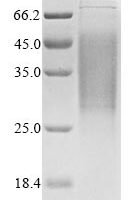
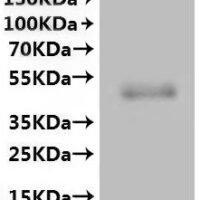
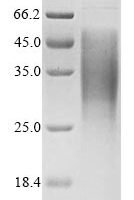
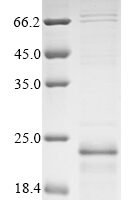
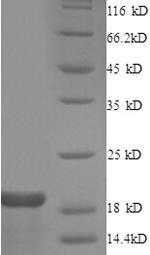
Recombinant Human Gap junction alpha-1 protein (GJA1), partial is a recombinant protein from Homo sapiens (Human), expressed in E.coli, covering amino acids 233-382aa, with N-terminal 6xHis-tagged tag, molecular weight 20.3kDa, purity Greater than 90% as determined by SDS-PAGE.. Suitable for ELISA and Western Blot applications.