Recombinant Human Girdin (CCDC88A), partial

Recombinant Human Girdin (CCDC88A), partial — Bifunctional modulator of guanine nucleotide-binding proteins (G proteins). Purity >90%.

SKU: BCRECP-000249 Category:

Product Specifications

Product SkuBCRECP-000249
Product DescriptionRecombinant Human Girdin (CCDC88A) Protein is expressed from E.coli with N-terminal 6xHis-tagged. It contains 1713-1823aa. [Accession | Q3V6T2].
Uniprot No.Q3V6T2
Gene NamesCCDC88A
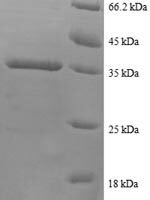
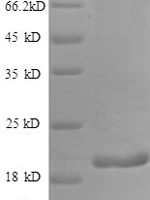
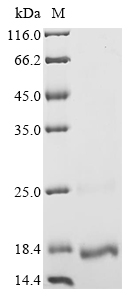
PurityGreater than 90% as determined by SDS-PAGE.
Expression SystemE.coli
Expression Region1713-1823aa
SpeciesHomo sapiens (Human)
Tag InfoN-terminal 6xHis-tagged
Molecular weight16.1kDa
ActivityPlease contact us to obtain bioactivity data.
BufferIf the delivery form is liquid, the default storage buffer is Tris/PBS-based buffer, 5%-50% glycerol. If the delivery form is lyophilized powder, the buffer before lyophilization is Tris/PBS-based buffer, 6% Trehalose.
StorageStore at -20°C/-80°C upon receipt, aliquoting is necessary for mutiple use. Avoid repeated freeze-thaw cycles.
Research AreasNeuroscience

Function

Bifunctional modulator of guanine nucleotide-binding proteins (G proteins). Acts as a non-receptor guanine nucleotide exchange factor which binds to and activates guanine nucleotide-binding protein G(i) alpha subunits. Also acts as a guanine nucleotide dissociation inhibitor for guanine nucleotide-binding protein G(s) subunit alpha GNAS.

Biological Context

Subcellular Location: Cell membrane (Peripheral membrane protein); Cytoplasm, cytosol; Cytoplasmic vesicle; Cell projection, lamellipodium; Cytoplasm, cytoskeleton, cilium basal body; Cytoplasm, cytoskeleton, microtubule organizing center, centrosome, centriole
Tissue Specificity: Expressed ubiquitously
Disease Association: PEHO-like syndrome (PEHOL) : An autosomal recessive syndrome characterized by microcephaly and moderately severe hypotonia manifesting at birth, seizures that progress into infantile spasms with hypsarrhythmia, brain atrophy with bilateral polymicrogyria and pachygyria, thin corpus callosum, and mild reduction in cerebellar vermis volume. Patients also display optic atrophy, severe cognitive delay, puffiness of the maxillary region of the face, and edema of the dorsum of the hands and feet. [The disease is caused by variants affecting the gene represented in this entry]

Product Specifications

Recombinant Human Girdin (CCDC88A), partial is a recombinant protein from Homo sapiens (Human), expressed in E.coli, covering amino acids 1713-1823aa, with N-terminal 6xHis-tagged tag, molecular weight 16.1kDa, purity Greater than 90% as determined by SDS-PAGE.. Suitable for ELISA and Western Blot applications.
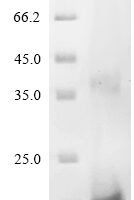
SDS-PAGE: Single band at expected molecular weight confirming purity.

ELISA: Suitable as coating antigen or detection standard.

Western Blot: Compatible with standard Western Blot protocols.

Protein Interaction: Validated for SPR (Surface Plasmon Resonance) and BLI (Bio-Layer Interferometry) studies.

Shipping: Shipped at ambient temperature. Lyophilized protein is stable during transit.

Storage: Store lyophilized protein at -20°C to -80°C. Reconstituted protein should be aliquoted and stored at -80°C. Avoid repeated freeze-thaw cycles.

Shelf Life: 12 months from date of receipt when stored as recommended.

Shipping Time: Orders placed before 2 PM EST ship same day. International orders typically deliver within 5-10 business days.

Protein Biology

Function

Bifunctional modulator of guanine nucleotide-binding proteins (G proteins) (PubMed:19211784, PubMed:27621449). Acts as a non-receptor guanine nucleotide exchange factor which binds to and activates guanine nucleotide-binding protein G(i) alpha subunits (PubMed:19211784, PubMed:21954290, PubMed:23509302, PubMed:25187647). Also acts as a guanine nucleotide dissociation inhibitor for guanine nucleotide-binding protein G(s) subunit alpha GNAS (PubMed:27621449). Essential for cell migration (PubMed:16139227, PubMed:19211784, PubMed:20462955, PubMed:21954290). Interacts in complex with G(i) alpha subunits with the EGFR receptor, retaining EGFR at the cell membrane following ligand stimulation and promoting EGFR signaling which triggers cell migration (PubMed:20462955). Binding to Gi-alpha subunits displaces the beta and gamma subunits from the heterotrimeric G protein complex which enhances phosphoinositide 3-kinase (PI3K)-dependent phosphorylation and kinase activity of AKT1/PKB (PubMed:19211784). Phosphorylation of AKT1/PKB induces the phosphorylation of downstream effectors GSK3 and FOXO1/FKHR, and regulates DNA replication and cell proliferation (By similarity). Binds in its tyrosine-phosphorylated form to the phosphatidylinositol 3-kinase (PI3K) regulatory subunit PIK3R1 which enables recruitment of PIK3R1 to the EGFR receptor, enhancing PI3K activity and cell migration (PubMed:21954290). Plays a role as a key modulator of the AKT-mTOR signaling pathway, controlling the tempo of the process of newborn neuron integration during adult neurogenesis, including correct neuron positioning, dendritic development and synapse formation (By similarity). Inhibition of G(s) subunit alpha GNAS leads to reduced cellular levels of cAMP and suppression of cell proliferation (PubMed:27621449). Essential for the integrity of the actin cytoskeleton (PubMed:16139227, PubMed:19211784). Required for formation of actin stress fibers and lamellipodia (PubMed:15882442). May be involved in membrane sorting in the early endosome (PubMed:15882442). Plays a role in ciliogenesis and cilium morphology and positioning and this may partly be through regulation of the localization of scaffolding protein CROCC/Rootletin (PubMed:27623382)

Subcellular Location

Cell membrane (Peripheral membrane protein); Cytoplasm, cytosol; Cytoplasmic vesicle; Cell projection, lamellipodium; Cytoplasm, cytoskeleton, cilium basal body; Cytoplasm, cytoskeleton, microtubule organizing center, centrosome, centriole

Disease Association

PEHO-like syndrome (PEHOL) : An autosomal recessive syndrome characterized by microcephaly and moderately severe hypotonia manifesting at birth, seizures that progress into infantile spasms with hypsarrhythmia, brain atrophy with bilateral polymicrogyria and pachygyria, thin corpus callosum, and mild reduction in cerebellar vermis volume. Patients also display optic atrophy, severe cognitive delay, puffiness of the maxillary region of the face, and edema of the dorsum of the hands and feet. [The disease is caused by variants affecting the gene represented in this entry]

Tissue Specificity

Expressed ubiquitously

Subunit

Homodimer (PubMed:16139227). Interacts (via GBA motif) with guanine nucleotide-binding protein G(i) alpha subunits GNAI1, GNAI2 and GNAI3 (PubMed:19211784, PubMed:21954290, PubMed:23509302, PubMed:27621449, PubMed:31363053). Also interacts (via GNA motif) with guanine nucleotide-binding protein G(s) alpha subunit GNAS (PubMed:27621449). Interaction with G(i) alpha subunits occurs before interaction with GNAS and is regulated by phosphorylation; phosphorylation at Ser-1675 enhances binding to G(i) alpha subunits while phosphorylation at Ser-1690 abolishes G(i) alpha subunit binding, promoting binding to GNAS (PubMed:27621449). Interacts (via C-terminal SH2-like region) with growth factor receptors EGFR, INSR and KDR/VEGFR2 (via their autophosphorylated cytoplasmic tails) (PubMed:25187647). Forms a complex with EGFR and GNAI3 which leads to enhanced EGFR signaling and triggering of cell migration; ligand stimulation is required for recruitment of GNAI3 to the complex (PubMed:20462955, PubMed:25187647). Interacts (tyrosine-phosphorylated form) with phosphatidylinositol 3-kinase (PI3K) regulatory subunit PIK3R1/p85a (via SH2 domains); the interaction enables recruitment of PIK3R1 to the EGFR receptor, enhancing PI3K activity and cell migration (PubMed:21954290). Interacts with serine/threonine-protein kinase PRKCQ; the interaction leads to phosphorylation of CCDC88A and inhibition of its guanine nucleotide exchange factor activity (PubMed:23509302). Interacts (via C-terminus) with DISC1; the interaction is direct (By similarity). Interacts with AKT proteins; the interaction is inhibited in the presence of DISC1 (By similarity). Interacts with AKT1/PKB (via C-terminus) (PubMed:16139227). The non-phosphorylated form interacts with phosphatidylinositol 4-phosphate [PI(4)P] and weakly with phosphatidylinositol 3-phosphate [PI(3)P] (PubMed:16139227). Interacts with microtubules (By similarity). Interacts with actin (PubMed:16139227)

Gene: CCDC88A  |  Organism: Homo sapiens  |  Synonyms: Akt phosphorylation enhancer; Coiled-coil domain-containing protein 88A; G alpha-interacting vesicle-associated protein; Girders of actin filament; Hook-related protein 1
Key Publications

Frequently Asked Questions

How do I order or inquire about this product?

Fill out the Online Inquiry form with your required quantity and specifications. You can also email sales@biocrestsci.com. Our team typically responds within 4 business hours with a quote and availability confirmation.

What is the shipping and delivery time?

Orders placed before 2 PM EST ship the same day. Domestic (US) delivery typically takes 2-3 business days. International orders deliver within 5-10 business days. All products are shipped at ambient temperature with appropriate packaging to ensure stability.

How should I store this recombinant protein?

Lyophilized proteins should be stored at -20°C to -80°C upon receipt. After reconstitution, aliquot and store at -80°C. Avoid repeated freeze-thaw cycles. Shelf life is 12 months from date of receipt when stored as recommended.

What quality controls are performed on your products?

Each product undergoes SDS-PAGE purity analysis (typically >85-95%), endotoxin testing, and bioactivity validation. Products are validated for ELISA, Western Blot, and SPR/BLI applications as specified on this product page. A Certificate of Analysis (CoA) is available upon request.

Shopping Cart
Scroll to Top