Function
Receptor for granulocyte colony-stimulating factor (CSF3), essential for granulocytic maturation. Plays a crucial role in the proliferation, differentiation and survival of cells along the neutrophilic lineage. In addition it may function in some adhesion or recognition events at the cell surface.
Biological Context
Subcellular Location: Cell membrane (Single-pass type I membrane protein)
Tissue Specificity: One or several isoforms have been found in myelogenous leukemia cell line KG-1, leukemia U-937 cell line, in bone marrow cells, placenta, and peripheral blood granulocytes. Isoform GCSFR-2 is found only in leukemia U-937 cells. Isoform GCSFR-3 is highly expressed in placenta
Disease Association: Hereditary neutrophilia (NEUTROPHILIA) : A form of lifelong, persistent neutrophilia, a condition characterized by an increase in the number of neutrophils in the blood. [The disease is caused by variants affecting the gene represented in this entry] | Neutropenia, severe congenital 7, autosomal recessive (SCN7) : A form of severe congenital neutropenia, a disorder of hematopoiesis characterized by maturation arrest of granulopoiesis at the level of promyelocytes with peripheral blood absolute neutrophil counts below 0.5 x 10(9)/l and early onset of severe bacterial infections. [The disease is caused by variants affecting the gene represented in this entry]
Product Specifications
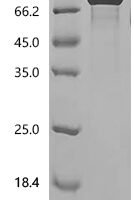
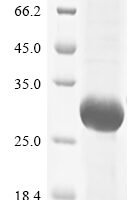
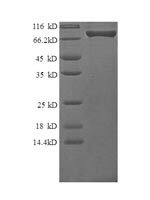
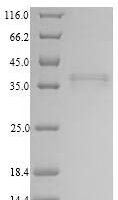
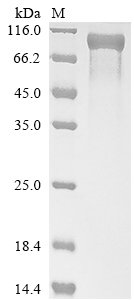
Recombinant Human Granulocyte colony-stimulating factor receptor (CSF3R), partial is a recombinant protein from Homo sapiens (Human), expressed in Mammalian cell, covering amino acids 25-621aa, with C-terminal 6xHis-Flag-tagged tag, molecular weight 69.8kDa, purity Greater than 90% as determined by SDS-PAGE.. Suitable for ELISA and Western Blot applications. Explore more Colony-Stimulating Factor proteins →