Function
(Microbial infection) Acts as a receptor for Epstein-Barr virus on lymphocytes.
Biological Context
Subcellular Location: Cell membrane (Single-pass type I membrane protein); Endoplasmic reticulum membrane (Single-pass type I membrane protein); Lysosome membrane (Single-pass type I membrane protein); Late endosome membrane (Single-pass type I membrane protein); Autolysosome membrane
Tissue Specificity: Expressed in professional APCs: monocyte/macrophages, dendritic cells and B cells (at protein level). Expressed in thymic epithelial cells (at protein level)
Disease Association: [In populations of European descent, allele DRB1*01:03 is associated with increased susceptibility to Crohn disease and colonic ulcerative colitis. Decreased heterozygosity in individuals with colonic ulcerative colitis suggests that it acts as a recessive risk allele] | Sarcoidosis 1 (SS1) : An idiopathic, systemic, inflammatory disease characterized by the formation of immune granulomas in involved organs. Granulomas predominantly invade the lungs and the lymphatic system, but also skin, liver, spleen, eyes and other organs may be involved. [Disease susceptibility is associated with variants affecting the gene represented in this entry. Alleles DRB1*04:02, DRB1*11:01 and DRB1*12:01 are associated with sarcoidosis. Allele DRB1*04:02 is significantly associated with specific sarcodosis phenotypes such as eye, parotid and salivary gland involvement] | Multiple sclerosis (MS) : A multifactorial, inflammatory, demyelinating disease of the central nervous system. Sclerotic lesions are characterized by perivascular infiltration of monocytes and lymphocytes and appear as indurated areas in pathologic specimens (sclerosis in plaques). The pathological mechanism is regarded as an autoimmune attack of the myelin sheath, mediated by both cellular and humoral immunity. Clinical manifestations include visual loss, extra-ocular movement disorders, paresthesias, loss of sensation, weakness, dysarthria, spasticity, ataxia and bladder dysfunction. Genetic and environmental factors influence susceptibility to the disease. [Disease susceptibility is associated with variants affecting the gene represented in this entry. In populations of European descent, allele DRB1*15:01 has the strongest association with multiple sclerosis among all HLA class II alleles. Additional risk is associated with the strongly linked alleles DRB1*03:01 and DQB1*02:01 as well as with allele DRB1*13:03. It is postulated that bacterial or viral infection triggers the autoimmune MS. Microbial peptides having low affinity crossreactivity to MBP autoantigen, may stimulate autoreactive T cells via molecular mimicry and initiate the autoimmune inflammation ] | [Allele DRB1*15:01 is associated with increased susceptibility to Goodpasture syndrome. Can present a self-peptide derived from COL4A3 (GWISLWKGFSF) on TCR (TRAV19 biased) in pathogenic CD4-positive T-helper 1 and T-helper 17 cells, triggering autoimmune inflammation] | Rheumatoid arthritis (RA) : An inflammatory disease with autoimmune features and a complex genetic component. It primarily affects the joints and is characterized by inflammatory changes in the synovial membranes and articular structures, widespread fibrinoid degeneration of the collagen fibers in mesenchymal tissues, and by atrophy and rarefaction of bony structures. [Disease susceptibility is associated with variants affecting the gene represented in this entry. Alleles DRB1*04:01; DRB1*04:04; DRB1*04:05; DRB1*04:08; DRB1*10:01; DRB1*01:01 and DRB1*01:02 are associated with increased susceptibility to rheumatoid arthritis, where affected individuals have antibodies to cyclic citrullinated peptide (anti-CCP-positive rheumatoid arthritis). Variations at position 40 in the peptide-binding cleft of these alleles explain most of the association to rheumatoid arthritis risk]
Product Specifications
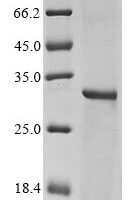
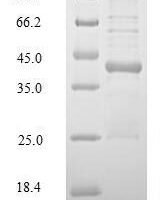
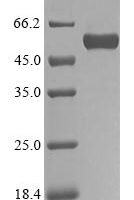
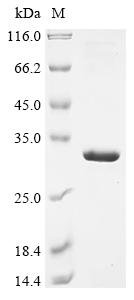
Recombinant Human HLA class II histocompatibility antigen, DRB1 beta chain (HLA-DRB1), partial is a recombinant protein from Homo sapiens (Human), expressed in E.coli, covering amino acids 30-227aa, with N-terminal 10xHis-tagged and C-terminal Myc-tagged tag, molecular weight 30.4kDa, purity Greater than 90% as determined by SDS-PAGE.. Suitable for ELISA and Western Blot applications.