,

Recombinant Human Interleukin-36 gamma protein (IL36G)

Recombinant Human Interleukin-36 gamma protein (IL36G) — Cytokine that binds to and signals through the IL1RL2/IL-36R receptor which in turn activates NF-kappa-B and MAPK signaling pathways in target cells. Purity >95%.

SKU: BCACP-000699 Categories: ,
Product SKUBCACP-000699
Product DescriptionRecombinant Human Interleukin-36 gamma protein (IL36G) protein is expressed from E.Coli with Tag-Free. It contains 1-169aa. [Accession | Q9NZH8].
Uniprot No.Q9NZH8
Gene NamesIL36G
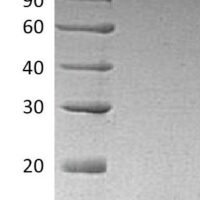
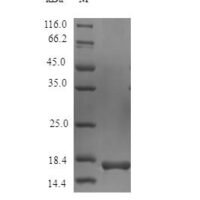
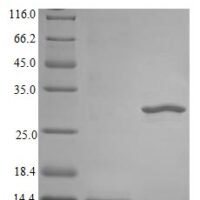
Purity>95% as determined by SDS-PAGE.
Expression SystemE.Coli
Expression Region1-169aa
SpeciesHomo sapiens (Human)
Tag InfoTag-Free
Molecular weight18.7 kDa
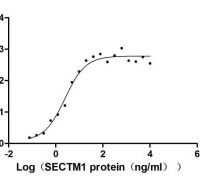
ActivityFully biologically active when compared to standard. The ED50 as determined by a cell proliferation assay using murine D10S cells is less than 10 pg/ml, corresponding to a specific activity of >1.0x10⁸ IU/mg.
BufferLyophilized from a 0.2 μm filtered 20 mM Tris-HCl, 0.5 M NaCl, 6% Trehalose, pH 8.0
StorageStore at -20°C/-80°C upon receipt, aliquoting is necessary for mutiple use. Avoid repeated freeze-thaw cycles.
Alternative NamesIL 1 epsilon; IL 1 related protein 2; IL 1(EPSILON); IL 1F9; IL 1H1; IL 1RP2; IL-1 epsilon; IL-1-related protein 2; IL-1F9; IL-1H1; IL-1RP2; IL1E; Il1f9; IL1F9_HUMAN; IL1H1; IL1RP2; IL36 gamma; IL36G; Interleukin 1 epsilon; Interleukin 1 family member 9; Interleukin 1 homolog 1; Interleukin 1 related protein 2; Interleukin 36 gamma; Interleukin-1 epsilon; Interleukin-1 family member 9; Interleukin-1 homolog 1

Function

Cytokine that binds to and signals through the IL1RL2/IL-36R receptor which in turn activates NF-kappa-B and MAPK signaling pathways in target cells. Part of the IL-36 signaling system that is thought to be present in epithelial barriers and to take part in local inflammatory response; similar to the IL-1 system with which it shares the coreceptor IL1RAP. Seems to be involved in skin inflammatory response by acting on keratinocytes, dendritic cells and indirectly on T-cells to drive tissue infiltration, cell maturation and cell proliferation.

Biological Context

Subcellular Location: Cytoplasm; Secreted
Tissue Specificity: Highly expressed in tissues containing epithelial cells: skin, lung, stomach and esophagus. Expressed in bronchial epithelial. In skin is expressed only in keratinocytes but not in fibroblasts, endothelial cells or melanocytes. Up-regulated in lesional psoriasis skin. Expressed in monocyte-derived dendritic cells and M1 macrophages

Product Specifications

Recombinant Human Interleukin-36 gamma protein (IL36G) is a recombinant protein from Homo sapiens (Human), expressed in E.Coli, covering amino acids 1-169aa, with Tag-Free tag, molecular weight 18.7 kDa, purity >95% as determined by SDS-PAGE.. Suitable for ELISA and Western Blot applications.

Recommended applications depend on the target, product format, and product-specific validation data. Refer to the product datasheet or Certificate of Analysis (CoA), or contact BioCrest Sci for application guidance.

Biological Activity: Fully biologically active when compared to standard. The ED50 as determined by a cell proliferation assay using murine D10S cells is less than 10 pg/ml, corresponding to a specific activity of >1.0x10⁸ IU/mg.

Storage: Store at -20°C/-80°C upon receipt, aliquoting is necessary for mutiple use. Avoid repeated freeze-thaw cycles.

Shipping & Lead Time: Availability, shipping conditions, and estimated lead time are confirmed in the formal quotation or order confirmation based on the product format, destination, and order requirements.

Protein Biology

Function

Cytokine that binds to and signals through the IL1RL2/IL-36R receptor which in turn activates NF-kappa-B and MAPK signaling pathways in target cells. Part of the IL-36 signaling system that is thought to be present in epithelial barriers and to take part in local inflammatory response; similar to the IL-1 system with which it shares the coreceptor IL1RAP. Seems to be involved in skin inflammatory response by acting on keratinocytes, dendritic cells and indirectly on T-cells to drive tissue infiltration, cell maturation and cell proliferation. In cultured keratinocytes induces the expression of macrophage, T-cell, and neutrophil chemokines, such as CCL3, CCL4, CCL5, CCL2, CCL17, CCL22, CL20, CCL5, CCL2, CCL17, CCL22, CXCL8, CCL20 and CXCL1; also stimulates its own expression and that of the prototypic cutaneous pro-inflammatory parameters TNF, S100A7/psoriasin and inducible NOS. May play a role in pro-inflammatory responses during particular neutrophilic airway inflammation: activates mitogen-activated protein kinases and NF-kappa B in primary lung fibroblasts, and stimulates the expression of IL-8 and CXCL3 and Th17 chemokine CCL20 in lung fibroblasts. May be involved in the innate immune response to fungal pathogens, such as Aspergillus fumigatus

Subcellular Location

Cytoplasm; Secreted

Tissue Specificity

Highly expressed in tissues containing epithelial cells: skin, lung, stomach and esophagus. Expressed in bronchial epithelial. In skin is expressed only in keratinocytes but not in fibroblasts, endothelial cells or melanocytes. Up-regulated in lesional psoriasis skin. Expressed in monocyte-derived dendritic cells and M1 macrophages

Subunit

Interacts with cargo receptor TMED10; the interaction mediates the translocation from the cytoplasm into the ERGIC (endoplasmic reticulum-Golgi intermediate compartment) and thereby secretion

Gene: IL36G  |  Organism: Homo sapiens  |  Synonyms: IL-1-related protein 2; Interleukin-1 epsilon; Interleukin-1 family member 9; Interleukin-1 homolog 1
Key Publications

Frequently Asked Questions

How do I order or inquire about this product?

Submit the Online Inquiry form with your required quantity and specifications, or email sales@biocrestsci.com. Available sizes, pricing, stock status, documentation, and estimated lead time are confirmed in the formal quotation.

What is the shipping and delivery time?

Availability, dispatch timing, shipping conditions, and delivery estimates depend on the product format, destination, and order requirements. These details are confirmed in the formal quotation or order confirmation.

How should this product be stored?

Follow the storage and handling instructions in the product-specific datasheet and Certificate of Analysis (CoA). Requirements may vary by product form and formulation; contact BioCrest Sci if product-specific guidance is needed.

What quality controls are performed on your products?

Quality-control data such as identity, purity, endotoxin level, or biological activity are provided only when specified on this product page, the datasheet, or Certificate of Analysis (CoA). Biological activity is not implied unless explicitly stated.

Shopping Cart
Scroll to Top