Function
Substrate-specific adapter of a BCR (BTB-CUL3-RBX1) E3 ubiquitin ligase complex that regulates the response to oxidative stress by targeting NFE2L2/NRF2 for ubiquitination. KEAP1 acts as a key sensor of oxidative and electrophilic stress: in normal conditions, the BCR(KEAP1) complex mediates ubiquitination and degradation of NFE2L2/NRF2, a transcription factor regulating expression of many cytoprotective genes. In response to oxidative stress, different electrophile metabolites trigger non-enzymatic covalent modifications of highly reactive cysteine residues in KEAP1, leading to inactivate the ubiquitin ligase activity of the BCR(KEAP1) complex, promoting NFE2L2/NRF2 nuclear accumulation and expression of phase II detoxifying enzymes.
Biological Context
Subcellular Location: Cytoplasm; Nucleus
Tissue Specificity: Broadly expressed, with highest levels in skeletal muscle
Pathway: Protein modification; protein ubiquitination
Product Specifications
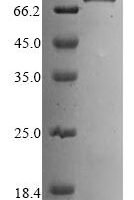
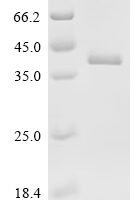
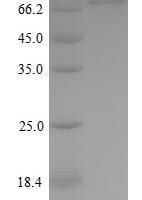
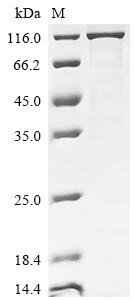
Recombinant Human Kelch-like ECH-associated protein 1 (KEAP1), Biotinylated is a recombinant protein from Homo sapiens (Human), expressed in E.coli, covering amino acids 1-624aa, with N-terminal MBP-tagged and C-terminal 6xHis-Avi-tagged tag, molecular weight 117.4kDa, purity Greater than 85% as determined by SDS-PAGE.. Suitable for ELISA and Western Blot applications. Explore more Biotinylated proteins →