Recombinant Human Low-density lipoprotein receptor-related protein 2 (LRP2), partial

Recombinant Human Low-density lipoprotein receptor-related protein 2 (LRP2), partial — Multiligand endocytic receptor. Purity >90%.

SKU: BCRECP-001084 Category:

Product Specifications

Product SkuBCRECP-001084
Product DescriptionRecombinant Human Low-density lipoprotein receptor-related protein 2 (LRP2) Protein is expressed from Yeast with N-terminal 6xHis-tagged. It contains 1186-1389aa. [Accession | P98164].
Uniprot No.P98164
Gene NamesLRP2
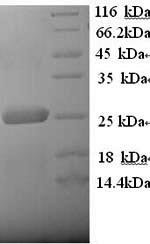
PurityGreater than 90% as determined by SDS-PAGE.
Expression SystemYeast
Expression Region1186-1389aa
SpeciesHomo sapiens (Human)
Tag InfoN-terminal 6xHis-tagged
Molecular weight24.2kDa
ActivityPlease contact us to obtain bioactivity data.
BufferIf the delivery form is liquid, the default storage buffer is Tris/PBS-based buffer, 5%-50% glycerol. If the delivery form is lyophilized powder, the buffer before lyophilization is Tris/PBS-based buffer, 6% Trehalose.
StorageStore at -20°C/-80°C upon receipt, aliquoting is necessary for mutiple use. Avoid repeated freeze-thaw cycles.
Research AreasImmunology

Function

Multiligand endocytic receptor. Acts together with CUBN to mediate endocytosis of high-density lipoproteins. Mediates receptor-mediated uptake of polybasic drugs such as aprotinin, aminoglycosides and polymyxin B.

Biological Context

Subcellular Location: Apical cell membrane (Single-pass type I membrane protein); Endosome lumen; Membrane, coated pit; Cell projection, dendrite; Cell projection, axon
Tissue Specificity: Expressed in first and third trimester cytotrophoblasts in the placenta (at protein level). Absorptive epithelia, including renal proximal tubules
Disease Association: Donnai-Barrow syndrome (DBS) : An autosomal recessive syndrome characterized by complete or partial agenesis of the corpus callosum, congenital diaphragmatic hernia, facial dysmorphology, ocular anomalies, sensorineural hearing loss, developmental delay, and proteinuria. There is variability in the expression of some features, such as diaphragmatic hernia, corpus callosum anomalies and proteinuria. [The disease is caused by variants affecting the gene represented in this entry]

Product Specifications

Recombinant Human Low-density lipoprotein receptor-related protein 2 (LRP2), partial is a recombinant protein from Homo sapiens (Human), expressed in Yeast, covering amino acids 1186-1389aa, with N-terminal 6xHis-tagged tag, molecular weight 24.2kDa, purity Greater than 90% as determined by SDS-PAGE.. Suitable for ELISA and Western Blot applications.
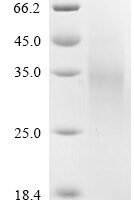
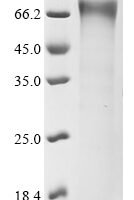
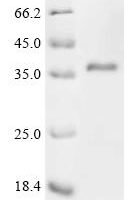
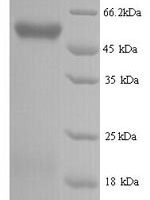
SDS-PAGE: Single band at expected molecular weight confirming purity.

ELISA: Suitable as coating antigen or detection standard.

Western Blot: Compatible with standard Western Blot protocols.

Protein Interaction: Validated for SPR (Surface Plasmon Resonance) and BLI (Bio-Layer Interferometry) studies.

Shipping: Shipped at ambient temperature. Lyophilized protein is stable during transit.

Storage: Store lyophilized protein at -20°C to -80°C. Reconstituted protein should be aliquoted and stored at -80°C. Avoid repeated freeze-thaw cycles.

Shelf Life: 12 months from date of receipt when stored as recommended.

Shipping Time: Orders placed before 2 PM EST ship same day. International orders typically deliver within 5-10 business days.

Protein Biology

Function

Multiligand endocytic receptor (By similarity). Acts together with CUBN to mediate endocytosis of high-density lipoproteins (By similarity). Mediates receptor-mediated uptake of polybasic drugs such as aprotinin, aminoglycosides and polymyxin B (By similarity). In the kidney, mediates the tubular uptake and clearance of leptin (By similarity). Also mediates transport of leptin across the blood-brain barrier through endocytosis at the choroid plexus epithelium (By similarity). Endocytosis of leptin in neuronal cells is required for hypothalamic leptin signaling and leptin-mediated regulation of feeding and body weight (By similarity). Mediates endocytosis and subsequent lysosomal degradation of CST3 in kidney proximal tubule cells (By similarity). Mediates renal uptake of 25-hydroxyvitamin D3 in complex with the vitamin D3 transporter GC/DBP (By similarity). Mediates renal uptake of metallothionein-bound heavy metals (PubMed:15126248). Together with CUBN, mediates renal reabsorption of myoglobin (By similarity). Mediates renal uptake and subsequent lysosomal degradation of APOM (By similarity). Plays a role in kidney selenium homeostasis by mediating renal endocytosis of selenoprotein SEPP1 (By similarity). Mediates renal uptake of the antiapoptotic protein BIRC5/survivin which may be important for functional integrity of the kidney (PubMed:23825075). Mediates renal uptake of matrix metalloproteinase MMP2 in complex with metalloproteinase inhibitor TIMP1 (By similarity). Mediates endocytosis of Sonic hedgehog protein N-product (ShhN), the active product of SHH (By similarity). Also mediates ShhN transcytosis (By similarity). In the embryonic neuroepithelium, mediates endocytic uptake and degradation of BMP4, is required for correct SHH localization in the ventral neural tube and plays a role in patterning of the ventral telencephalon (By similarity). Required at the onset of neurulation to sequester SHH on the apical surface of neuroepithelial cells of the rostral diencephalon ventral midline and to control PTCH1-dependent uptake and intracellular trafficking of SHH (By similarity). During neurulation, required in neuroepithelial cells for uptake of folate bound to the folate receptor FOLR1 which is necessary for neural tube closure (By similarity). In the adult brain, negatively regulates BMP signaling in the subependymal zone which enables neurogenesis to proceed (By similarity). In astrocytes, mediates endocytosis of ALB which is required for the synthesis of the neurotrophic factor oleic acid (By similarity). Involved in neurite branching (By similarity). During optic nerve development, required for SHH-mediated migration and proliferation of oligodendrocyte precursor cells (By similarity). Mediates endocytic uptake and clearance of SHH in the retinal margin which protects retinal progenitor cells from mitogenic stimuli and keeps them quiescent (By similarity). Plays a role in reproductive organ development by mediating uptake in reproductive tissues of androgen and estrogen bound to the sex hormone binding protein SHBG (By similarity). Mediates endocytosis of angiotensin-2 (By similarity). Also mediates endocytosis of angiotensis 1-7 (By similarity). Binds to the complex composed of beta-amyloid protein 40 and CLU/APOJ and mediates its endocytosis and lysosomal degradation (By similarity). Required for embryonic heart development (By similarity). Required for normal hearing, possibly through interaction with estrogen in the inner ear (By similarity)

Subcellular Location

Apical cell membrane (Single-pass type I membrane protein); Endosome lumen; Membrane, coated pit; Cell projection, dendrite; Cell projection, axon

Disease Association

Donnai-Barrow syndrome (DBS) : An autosomal recessive syndrome characterized by complete or partial agenesis of the corpus callosum, congenital diaphragmatic hernia, facial dysmorphology, ocular anomalies, sensorineural hearing loss, developmental delay, and proteinuria. There is variability in the expression of some features, such as diaphragmatic hernia, corpus callosum anomalies and proteinuria. [The disease is caused by variants affecting the gene represented in this entry]

Tissue Specificity

Expressed in first and third trimester cytotrophoblasts in the placenta (at protein level) (PubMed:27798286). Absorptive epithelia, including renal proximal tubules

Subunit

Binds plasminogen, extracellular matrix components, plasminogen activator-plasminogen activator inhibitor type I complex, apolipoprotein E-enriched beta-VLDL, lipoprotein lipase, lactoferrin, CLU/clusterin and calcium (PubMed:7768901). Forms a multimeric complex together with LRPAP1 (PubMed:1400426). Interacts (via PxLPxI/L motif) with ANKRA2 (via ankyrin repeats) (By similarity). Interacts with LRP2BP (PubMed:12508107). Interacts (via NPXY motif) with DAB2; the interaction is not affected by tyrosine phosphorylation of the NPXY motif (PubMed:10769163, PubMed:15134832). Interacts with MB (By similarity). Interacts with BMP4 (By similarity). Interacts with the Sonic hedgehog protein N-product which is the active product of SHH (By similarity). Interacts with CST3 in a calcium-dependent manner (PubMed:17462596). Interacts with the vitamin-D binding protein GC/DBP (By similarity). Interacts with sex hormone-binding protein SHBG (PubMed:16143106). Interacts with angiotensin-2 (By similarity). Also interacts with angiotensin 1-7 (By similarity). Interacts with APOM (By similarity). Interacts with selenoprotein SEPP1 (By similarity). Interacts with LEP (By similarity). Interacts with ALB (By similarity). Interacts with the antiapoptotic protein BIRC5/survivin (PubMed:23825075). Interacts with matrix metalloproteinase MMP2 in complex with metalloproteinase inhibitor TIMP1 (By similarity). In neurons, forms a trimeric complex with APP and APPB1/FE65 (By similarity). Interacts with LDLRAP1/ARH; mediates trafficking of LRP2 to the endocytic recycling compartment (By similarity). Does not interact with beta-amyloid protein 40 alone but interacts with the complex composed of beta-amyloid protein 40 and CLU/APOJ (By similarity). Interacts with MDK (By similarity)

Gene: LRP2  |  Organism: Homo sapiens  |  Synonyms: Glycoprotein 330; Megalin
Key Publications

Frequently Asked Questions

How do I order or inquire about this product?

Fill out the Online Inquiry form with your required quantity and specifications. You can also email sales@biocrestsci.com. Our team typically responds within 4 business hours with a quote and availability confirmation.

What is the shipping and delivery time?

Orders placed before 2 PM EST ship the same day. Domestic (US) delivery typically takes 2-3 business days. International orders deliver within 5-10 business days. All products are shipped at ambient temperature with appropriate packaging to ensure stability.

How should I store this recombinant protein?

Lyophilized proteins should be stored at -20°C to -80°C upon receipt. After reconstitution, aliquot and store at -80°C. Avoid repeated freeze-thaw cycles. Shelf life is 12 months from date of receipt when stored as recommended.

What quality controls are performed on your products?

Each product undergoes SDS-PAGE purity analysis (typically >85-95%), endotoxin testing, and bioactivity validation. Products are validated for ELISA, Western Blot, and SPR/BLI applications as specified on this product page. A Certificate of Analysis (CoA) is available upon request.

Shopping Cart
Scroll to Top