Recombinant Human Matrilin-3 (MATN3)

Recombinant Human Matrilin-3 (MATN3) — recombinant protein from Homo sapiens (Human), expressed in E.coli. Purity >90%.

SKU: BCRECP-001135 Category:

Product Specifications

Product SkuBCRECP-001135
Product DescriptionRecombinant Human Matrilin-3 (MATN3) Protein is expressed from E.coli with N-terminal 10xHis-tagged and C-terminal Myc-tagged. It contains 29-486aa. [Accession | O15232].
Uniprot No.O15232
Gene NamesMATN3
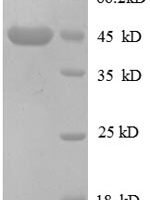
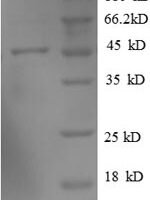
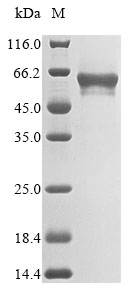
PurityGreater than 90% as determined by SDS-PAGE.
Expression SystemE.coli
Expression Region29-486aa
SpeciesHomo sapiens (Human)
Tag InfoN-terminal 10xHis-tagged and C-terminal Myc-tagged
Molecular weight57.2kDa
ActivityPlease contact us to obtain bioactivity data.
BufferIf the delivery form is liquid, the default storage buffer is Tris/PBS-based buffer, 5%-50% glycerol. If the delivery form is lyophilized powder, the buffer before lyophilization is Tris/PBS-based buffer, 6% Trehalose.
StorageStore at -20°C/-80°C upon receipt, aliquoting is necessary for mutiple use. Avoid repeated freeze-thaw cycles.
Research AreasOthers

Function

Major component of the extracellular matrix of cartilage and may play a role in the formation of extracellular filamentous networks.

Biological Context

Subcellular Location: Secreted
Tissue Specificity: Expressed only in cartilaginous tissues, such as vertebrae, ribs and shoulders
Disease Association: Multiple epiphyseal dysplasia 5 (EDM5) : A generalized skeletal dysplasia associated with significant morbidity. Joint pain, joint deformity, waddling gait, and short stature are the main clinical signs and symptoms. Radiological examination of the skeleton shows delayed, irregular mineralization of the epiphyseal ossification centers and of the centers of the carpal and tarsal bones. Multiple epiphyseal dysplasia is broadly categorized into the more severe Fairbank and the milder Ribbing types. The Fairbank type is characterized by shortness of stature, short and stubby fingers, small epiphyses in several joints, including the knee, ankle, hand, and hip. The Ribbing type is confined predominantly to the hip joints and is characterized by hands that are normal and stature that is normal or near-normal. Multiple epiphyseal dysplasia type 5 is relatively mild and clinically variable. It is primarily characterized by delayed and irregular ossification of the epiphyses and early-onset osteoarthritis. [The disease is caused by variants affecting the gene represented in this entry] | Spondyloepimetaphyseal dysplasia, Borochowitz-Cormier-Daire type (SEMDBCD) : An autosomal recessive bone disease characterized by disproportionate early-onset dwarfism, bowing of the lower limbs, lumbar lordosis and normal hands. Skeletal abnormalities include short, wide and stocky long bones with severe epiphyseal and metaphyseal changes, hypoplastic iliac bones and flat, ovoid vertebral bodies. [The disease is caused by variants affecting the gene represented in this entry] | Osteoarthritis 2 (OS2) : A degenerative disease of the joints characterized by degradation of the hyaline articular cartilage and remodeling of the subchondral bone with sclerosis. Clinical symptoms include pain and joint stiffness often leading to significant disability and joint replacement. In the hand, osteoarthritis can develop in the distal interphalangeal and the first carpometacarpal (base of thumb) and proximal interphalangeal joints. Patients with osteoarthritis may have one, a few, or all of these sites affected. [Disease susceptibility is associated with variants affecting the gene represented in this entry]

Product Specifications

Recombinant Human Matrilin-3 (MATN3) is a recombinant protein from Homo sapiens (Human), expressed in E.coli, covering amino acids 29-486aa, with N-terminal 10xHis-tagged and C-terminal Myc-tagged tag, molecular weight 57.2kDa, purity Greater than 90% as determined by SDS-PAGE.. Suitable for ELISA and Western Blot applications.
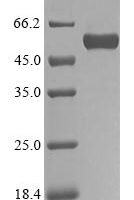
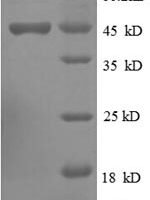
SDS-PAGE: Single band at expected molecular weight confirming purity.

ELISA: Suitable as coating antigen or detection standard.

Western Blot: Compatible with standard Western Blot protocols.

Protein Interaction: Validated for SPR (Surface Plasmon Resonance) and BLI (Bio-Layer Interferometry) studies.

Shipping: Shipped at ambient temperature. Lyophilized protein is stable during transit.

Storage: Store lyophilized protein at -20°C to -80°C. Reconstituted protein should be aliquoted and stored at -80°C. Avoid repeated freeze-thaw cycles.

Shelf Life: 12 months from date of receipt when stored as recommended.

Shipping Time: Orders placed before 2 PM EST ship same day. International orders typically deliver within 5-10 business days.

Protein Biology

Function

Major component of the extracellular matrix of cartilage and may play a role in the formation of extracellular filamentous networks

Subcellular Location

Secreted

Disease Association

Multiple epiphyseal dysplasia 5 (EDM5) : A generalized skeletal dysplasia associated with significant morbidity. Joint pain, joint deformity, waddling gait, and short stature are the main clinical signs and symptoms. Radiological examination of the skeleton shows delayed, irregular mineralization of the epiphyseal ossification centers and of the centers of the carpal and tarsal bones. Multiple epiphyseal dysplasia is broadly categorized into the more severe Fairbank and the milder Ribbing types. The Fairbank type is characterized by shortness of stature, short and stubby fingers, small epiphyses in several joints, including the knee, ankle, hand, and hip. The Ribbing type is confined predominantly to the hip joints and is characterized by hands that are normal and stature that is normal or near-normal. Multiple epiphyseal dysplasia type 5 is relatively mild and clinically variable. It is primarily characterized by delayed and irregular ossification of the epiphyses and early-onset osteoarthritis. [The disease is caused by variants affecting the gene represented in this entry] | Spondyloepimetaphyseal dysplasia, Borochowitz-Cormier-Daire type (SEMDBCD) : An autosomal recessive bone disease characterized by disproportionate early-onset dwarfism, bowing of the lower limbs, lumbar lordosis and normal hands. Skeletal abnormalities include short, wide and stocky long bones with severe epiphyseal and metaphyseal changes, hypoplastic iliac bones and flat, ovoid vertebral bodies. [The disease is caused by variants affecting the gene represented in this entry] | Osteoarthritis 2 (OS2) : A degenerative disease of the joints characterized by degradation of the hyaline articular cartilage and remodeling of the subchondral bone with sclerosis. Clinical symptoms include pain and joint stiffness often leading to significant disability and joint replacement. In the hand, osteoarthritis can develop in the distal interphalangeal and the first carpometacarpal (base of thumb) and proximal interphalangeal joints. Patients with osteoarthritis may have one, a few, or all of these sites affected. [Disease susceptibility is associated with variants affecting the gene represented in this entry]

Tissue Specificity

Expressed only in cartilaginous tissues, such as vertebrae, ribs and shoulders

Subunit

Can form homooligomers (monomers, dimers, trimers and tetramers) and heterooligomers with matrilin-1 (By similarity). Interacts with COMP. Component of a complex containing at least CRELD2, MANF, MATN3 and PDIA4 (By similarity)

Gene: MATN3  |  Organism: Homo sapiens
Key Publications

Frequently Asked Questions

How do I order or inquire about this product?

Fill out the Online Inquiry form with your required quantity and specifications. You can also email sales@biocrestsci.com. Our team typically responds within 4 business hours with a quote and availability confirmation.

What is the shipping and delivery time?

Orders placed before 2 PM EST ship the same day. Domestic (US) delivery typically takes 2-3 business days. International orders deliver within 5-10 business days. All products are shipped at ambient temperature with appropriate packaging to ensure stability.

How should I store this recombinant protein?

Lyophilized proteins should be stored at -20°C to -80°C upon receipt. After reconstitution, aliquot and store at -80°C. Avoid repeated freeze-thaw cycles. Shelf life is 12 months from date of receipt when stored as recommended.

What quality controls are performed on your products?

Each product undergoes SDS-PAGE purity analysis (typically >85-95%), endotoxin testing, and bioactivity validation. Products are validated for ELISA, Western Blot, and SPR/BLI applications as specified on this product page. A Certificate of Analysis (CoA) is available upon request.

Shopping Cart
Scroll to Top