Recombinant Human Mesencephalic astrocyte-derived neurotrophic factor protein (MANF)

Recombinant Human Mesencephalic astrocyte-derived neurotrophic factor protein (MANF) — Selectively promotes the survival of dopaminergic neurons of the ventral mid-brain. Purity >95%.

SKU: BCACP-000885 Category:
Product SKUBCACP-000885
Product DescriptionRecombinant Human Mesencephalic astrocyte-derived neurotrophic factor protein (MANF) protein is expressed from E.Coli with Tag-Free. It contains 25-182aa. [Accession | P55145].
Uniprot No.P55145
Gene NamesMANF
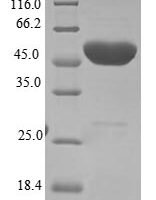
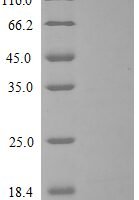
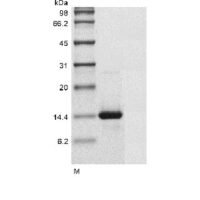
Purity>95% as determined by SDS-PAGE.
Expression SystemE.Coli
Expression Region25-182aa
SpeciesHomo sapiens (Human)
Tag InfoTag-Free
Molecular weight18.2 kDa
ActivityFully biologically active when compared to standard. The biological activity determined by a chemotaxis bioassay using immature human dendritic cells is in a concentration range of 10-100 ng/ml.
BufferLyophilized from a 0.2 μm filtered 20 mM Tris-HCl, 0.5 M NaCl, 6% Trehalose, pH 8.0
StorageStore at -20°C/-80°C upon receipt, aliquoting is necessary for mutiple use. Avoid repeated freeze-thaw cycles.
Alternative NamesArginine rich mutated in early stage tumors; Arginine rich protein; Arginine-rich protein; ARMET; ARMET protein; ARP; Manf; MANF_HUMAN; Mesencephalic astrocyte derived neurotrophic factor; Mesencephalic astrocyte-derived neurotrophic factor; MGC142148; MGC142150; Protein ARMET

Function

Selectively promotes the survival of dopaminergic neurons of the ventral mid-brain. Modulates GABAergic transmission to the dopaminergic neurons of the substantia nigra. Enhances spontaneous, as well as evoked, GABAergic inhibitory postsynaptic currents in dopaminergic neurons.

Biological Context

Subcellular Location: Secreted; Endoplasmic reticulum lumen; Sarcoplasmic reticulum lumen
Disease Association: Diabetes, deafness, developmental delay, and short stature syndrome (DDDS) : An autosomal recessive, multisystem disorder characterized by childhood-onset non-autoimmune diabetes mellitus, short stature, bilateral sensorineural deafness, developmental delay, mildly impaired intellectual development, and microcephaly. [The disease is caused by variants affecting the gene represented in this entry]

Product Specifications

Recombinant Human Mesencephalic astrocyte-derived neurotrophic factor protein (MANF) is a recombinant protein from Homo sapiens (Human), expressed in E.Coli, covering amino acids 25-182aa, with Tag-Free tag, molecular weight 18.2 kDa, purity >95% as determined by SDS-PAGE.. Suitable for ELISA and Western Blot applications.
Recommended applications depend on the target, product format, and product-specific validation data. Refer to the product datasheet or Certificate of Analysis (CoA), or contact BioCrest Sci for application guidance.

Biological Activity: Fully biologically active when compared to standard. The biological activity determined by a chemotaxis bioassay using immature human dendritic cells is in a concentration range of 10-100 ng/ml.

Storage: Store at -20°C/-80°C upon receipt, aliquoting is necessary for mutiple use. Avoid repeated freeze-thaw cycles.

Shipping & Lead Time: Availability, shipping conditions, and estimated lead time are confirmed in the formal quotation or order confirmation based on the product format, destination, and order requirements.

Protein Biology

Function

Selectively promotes the survival of dopaminergic neurons of the ventral mid-brain (PubMed:12794311). Modulates GABAergic transmission to the dopaminergic neurons of the substantia nigra (By similarity). Enhances spontaneous, as well as evoked, GABAergic inhibitory postsynaptic currents in dopaminergic neurons (By similarity). Inhibits cell proliferation and endoplasmic reticulum (ER) stress-induced cell death (PubMed:18561914, PubMed:22637475, PubMed:29497057, PubMed:36739529). Retained in the ER/sarcoplasmic reticulum (SR) through association with the endoplasmic reticulum chaperone protein HSPA5 under normal conditions (PubMed:22637475). Stabilizes HSPA5/BiP in its substrate-bound ADP state, which facilitates HSPA5/BiP incorporation into chaperone-client complexes during endoplasmic reticulum stress, its interaction with HSPA5/BiP inhibits ATP binding to HSPA5/BiP and subsequent nucleotide exchange (By similarity). As a result acts as a repressor of the unfolded protein response (UPR) pathway (By similarity). Up-regulated and secreted by the ER/SR in response to ER stress and hypoxia (PubMed:22637475). Following secretion by the ER/SR, directly binds to 3-O-sulfogalactosylceramide, a lipid sulfatide in the outer cell membrane of target cells (PubMed:29497057). Sulfatide binding promotes its cellular uptake by endocytosis, and is required for its role in alleviating ER stress and cell toxicity under hypoxic and ER stress conditions (PubMed:29497057). Essential for embryonic lung development (By similarity). Required for the correct postnatal temporal and structural development of splenic white pulp (By similarity). Required for the repair-associated myeloid response in skeletal muscle, acts as a regulator of phenotypic transition towards prorepair macrophages in response to muscle injury and as a result limits excessive proinflammatory signaling (By similarity). Represses RELA expression and therefore NF-kB signaling in the myocardium, as a result limits macrophage infiltration of injured tissue and M1 macrophage differentiation in response to myocardial injury (By similarity). Required for endochondral ossification in long bones and the skull during postnatal development (By similarity)

Subcellular Location

Secreted; Endoplasmic reticulum lumen; Sarcoplasmic reticulum lumen

Disease Association

Diabetes, deafness, developmental delay, and short stature syndrome (DDDS) : An autosomal recessive, multisystem disorder characterized by childhood-onset non-autoimmune diabetes mellitus, short stature, bilateral sensorineural deafness, developmental delay, mildly impaired intellectual development, and microcephaly. [The disease is caused by variants affecting the gene represented in this entry]

Subunit

Interacts directly (via SAP domain) with HSPA5/BiP; the interaction inhibits ATP binding to HSPA5/BiP and subsequent nucleotide exchange (PubMed:22637475). Component of a complex containing at least CRELD2, MANF, MATN3 and PDIA4 (By similarity). Interacts (via C-terminus) with ERN1 (via luminal domain); the interaction is decreased in the presence of increasing concentrations of Ca(2+) (PubMed:36739529)

Gene: MANF  |  Organism: Homo sapiens  |  Synonyms: Arginine-rich protein; Protein ARMET
Key Publications

Frequently Asked Questions

How do I order or inquire about this product?

Submit the Online Inquiry form with your required quantity and specifications, or email sales@biocrestsci.com. Available sizes, pricing, stock status, documentation, and estimated lead time are confirmed in the formal quotation.

What is the shipping and delivery time?

Availability, dispatch timing, shipping conditions, and delivery estimates depend on the product format, destination, and order requirements. These details are confirmed in the formal quotation or order confirmation.

How should this product be stored?

Follow the storage and handling instructions in the product-specific datasheet and Certificate of Analysis (CoA). Requirements may vary by product form and formulation; contact BioCrest Sci if product-specific guidance is needed.

What quality controls are performed on your products?

Quality-control data such as identity, purity, endotoxin level, or biological activity are provided only when specified on this product page, the datasheet, or Certificate of Analysis (CoA). Biological activity is not implied unless explicitly stated.

Shopping Cart
Scroll to Top