Recombinant Human Metal cation symporter ZIP14 (SLC39A14), partial

Recombinant Human Metal cation symporter ZIP14 (SLC39A14), partial — Electroneutral transporter of the plasma membrane mediating the cellular uptake of the divalent metal cations zinc, manganese and iron that are important for tissue homeostasis, metabolism, develop… Purity >90%.

SKU: BCRECP-001652 Category:

Product Specifications

Product SkuBCRECP-001652
Product DescriptionRecombinant Human Metal cation symporter ZIP14 (SLC39A14) Protein is expressed from E.coli with C-terminal 6xHis-tagged. It contains 31-157aa. [Accession | Q15043].
Uniprot No.Q15043
Gene NamesSLC39A14
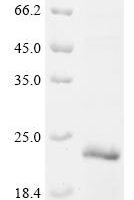
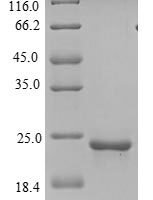
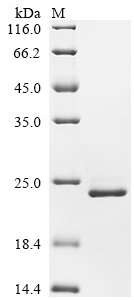
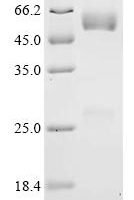
PurityGreater than 90% as determined by SDS-PAGE.
Expression SystemE.coli
Expression Region31-157aa
SpeciesHomo sapiens (Human)
Tag InfoC-terminal 6xHis-tagged
Molecular weight20.8kDa
ActivityPlease contact us to obtain bioactivity data.
BufferIf the delivery form is liquid, the default storage buffer is Tris/PBS-based buffer, 5%-50% glycerol. If the delivery form is lyophilized powder, the buffer before lyophilization is Tris/PBS-based buffer, 6% Trehalose.
StorageStore at -20°C/-80°C upon receipt, aliquoting is necessary for mutiple use. Avoid repeated freeze-thaw cycles.
Research AreasMetabolism

Function

Electroneutral transporter of the plasma membrane mediating the cellular uptake of the divalent metal cations zinc, manganese and iron that are important for tissue homeostasis, metabolism, development and immunity. Functions as an energy-dependent symporter, transporting through the membranes an electroneutral complex composed of a divalent metal cation and two bicarbonate anions. Beside these endogenous cellular substrates, can also import cadmium a non-essential metal which is cytotoxic and carcinogenic.

Biological Context

Subcellular Location: Cell membrane (Multi-pass membrane protein); Apical cell membrane (Multi-pass membrane protein); Basolateral cell membrane (Multi-pass membrane protein); Early endosome membrane (Multi-pass membrane protein); Late endosome membrane (Multi-pass membrane protein); Lysosome membrane (Multi-pass membrane protein)
Tissue Specificity: Widely expressed but not detected in brain, heart, skeletal muscle, placenta and fetal skin
Disease Association: Hypermanganesemia with dystonia 2 (HMNDYT2) : A metabolic autosomal recessive disorder characterized by increased blood manganese levels, neurodegeneration, and rapidly progressive parkinsonism and dystonia. Affected individuals present with loss of developmental milestones, progressive dystonia and bulbar dysfunction in infancy or early childhood. Towards the end of the first decade, they manifest severe generalized pharmacoresistant dystonia, spasticity, limb contractures and scoliosis, and loss of independent ambulation. Cognition may be impaired, but is better preserved than motor function. [The disease is caused by variants affecting the gene represented in this entry] | Hyperostosis cranialis interna (HCIN) : An autosomal dominant bone disorder characterized by endosteal hyperostosis and osteosclerosis of the calvaria and the skull base. The progressive bone overgrowth causes entrapment and dysfunction of cranial nerves I, II, V, VII, and VIII, its first symptoms often presenting during the second decade of life. [The disease is caused by variants affecting the gene represented in this entry. Conditional knockin mice overexpressing Arg-438 variant, which is the mouse equivalent of human variant Leu-441, in osteoblasts have a severe skeletal phenotype marked by a drastic increase in cortical thickness due to an enhanced endosteal bone formation, resembling the underlying pathology in HCI patients]

Product Specifications

Recombinant Human Metal cation symporter ZIP14 (SLC39A14), partial is a recombinant protein from Homo sapiens (Human), expressed in E.coli, covering amino acids 31-157aa, with C-terminal 6xHis-tagged tag, molecular weight 20.8kDa, purity Greater than 90% as determined by SDS-PAGE.. Suitable for ELISA and Western Blot applications.
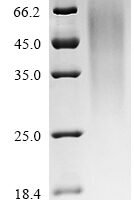
Recommended applications depend on the target, product format, and product-specific validation data. Refer to the product datasheet or Certificate of Analysis (CoA), or contact BioCrest Sci for application guidance.

Biological Activity: Please contact us to obtain bioactivity data.

Storage: Store at -20°C/-80°C upon receipt, aliquoting is necessary for mutiple use. Avoid repeated freeze-thaw cycles.

Shipping & Lead Time: Availability, shipping conditions, and estimated lead time are confirmed in the formal quotation or order confirmation based on the product format, destination, and order requirements.

Protein Biology

Function

Electroneutral transporter of the plasma membrane mediating the cellular uptake of the divalent metal cations zinc, manganese and iron that are important for tissue homeostasis, metabolism, development and immunity (PubMed:15642354, PubMed:27231142, PubMed:29621230). Functions as an energy-dependent symporter, transporting through the membranes an electroneutral complex composed of a divalent metal cation and two bicarbonate anions (By similarity). Beside these endogenous cellular substrates, can also import cadmium a non-essential metal which is cytotoxic and carcinogenic (By similarity). Controls the cellular uptake by the intestinal epithelium of systemic zinc, which is in turn required to maintain tight junctions and the intestinal permeability (By similarity). Modifies the activity of zinc-dependent phosphodiesterases, thereby indirectly regulating G protein-coupled receptor signaling pathways important for gluconeogenesis and chondrocyte differentiation (By similarity). Regulates insulin receptor signaling, glucose uptake, glycogen synthesis and gluconeogenesis in hepatocytes through the zinc-dependent intracellular catabolism of insulin (PubMed:27703010). Through zinc cellular uptake also plays a role in the adaptation of cells to endoplasmic reticulum stress (By similarity). Major manganese transporter of the basolateral membrane of intestinal epithelial cells, it plays a central role in manganese systemic homeostasis through intestinal manganese uptake (PubMed:31028174). Also involved in manganese extracellular uptake by cells of the blood-brain barrier (PubMed:31699897). May also play a role in manganese and zinc homeostasis participating in their elimination from the blood through the hepatobiliary excretion (By similarity). Also functions in the extracellular uptake of free iron. May also function intracellularly and mediate the transport from endosomes to cytosol of iron endocytosed by transferrin (PubMed:20682781). Plays a role in innate immunity by regulating the expression of cytokines by activated macrophages (PubMed:23052185)

Subcellular Location

Cell membrane (Multi-pass membrane protein); Apical cell membrane (Multi-pass membrane protein); Basolateral cell membrane (Multi-pass membrane protein); Early endosome membrane (Multi-pass membrane protein); Late endosome membrane (Multi-pass membrane protein); Lysosome membrane (Multi-pass membrane protein)

Disease Association

Hypermanganesemia with dystonia 2 (HMNDYT2) : A metabolic autosomal recessive disorder characterized by increased blood manganese levels, neurodegeneration, and rapidly progressive parkinsonism and dystonia. Affected individuals present with loss of developmental milestones, progressive dystonia and bulbar dysfunction in infancy or early childhood. Towards the end of the first decade, they manifest severe generalized pharmacoresistant dystonia, spasticity, limb contractures and scoliosis, and loss of independent ambulation. Cognition may be impaired, but is better preserved than motor function. [The disease is caused by variants affecting the gene represented in this entry] | Hyperostosis cranialis interna (HCIN) : An autosomal dominant bone disorder characterized by endosteal hyperostosis and osteosclerosis of the calvaria and the skull base. The progressive bone overgrowth causes entrapment and dysfunction of cranial nerves I, II, V, VII, and VIII, its first symptoms often presenting during the second decade of life. [The disease is caused by variants affecting the gene represented in this entry. Conditional knockin mice overexpressing Arg-438 variant, which is the mouse equivalent of human variant Leu-441, in osteoblasts have a severe skeletal phenotype marked by a drastic increase in cortical thickness due to an enhanced endosteal bone formation, resembling the underlying pathology in HCI patients]

Tissue Specificity

Widely expressed but not detected in brain, heart, skeletal muscle, placenta and fetal skin

Subunit

Homotrimer

Gene: SLC39A14  |  Organism: Homo sapiens  |  Synonyms: LIV-1 subfamily of ZIP zinc transporter 4; Solute carrier family 39 member 14; Zrt- and Irt-like protein 14
Key Publications

Frequently Asked Questions

How do I order or inquire about this product?

Submit the Online Inquiry form with your required quantity and specifications, or email sales@biocrestsci.com. Available sizes, pricing, stock status, documentation, and estimated lead time are confirmed in the formal quotation.

What is the shipping and delivery time?

Availability, dispatch timing, shipping conditions, and delivery estimates depend on the product format, destination, and order requirements. These details are confirmed in the formal quotation or order confirmation.

How should this product be stored?

Follow the storage and handling instructions in the product-specific datasheet and Certificate of Analysis (CoA). Requirements may vary by product form and formulation; contact BioCrest Sci if product-specific guidance is needed.

What quality controls are performed on your products?

Quality-control data such as identity, purity, endotoxin level, or biological activity are provided only when specified on this product page, the datasheet, or Certificate of Analysis (CoA). Biological activity is not implied unless explicitly stated.

Shopping Cart
Scroll to Top