,

Recombinant Human Nacetylglucosamine1phosphotransferase subunit gamma (GNPTG)

Recombinant Human Nacetylglucosamine1phosphotransferase subunit gamma (GNPTG) — Non-catalytic subunit of the N-acetylglucosamine-1-phosphotransferase complex, an enzyme that catalyzes the formation of mannose 6-phosphate (M6P) markers on high mannose type oligosaccharides in t… Purity >95%.

SKU: BCRECP-000766 Categories: ,

Product Specifications

Product SkuBCRECP-000766
Product DescriptionRecombinant Human Nacetylglucosamine1phosphotransferase subunit gamma (GNPTG) Protein is expressed from E.coli with C-terminal 6xHis-tagged. It contains 25-305aa. [Accession | Q9UJJ9].
Uniprot No.Q9UJJ9
Gene NamesGNPTG
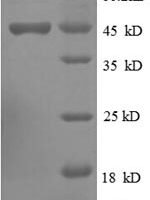
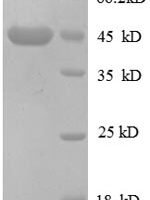
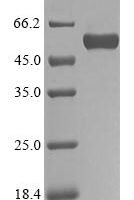
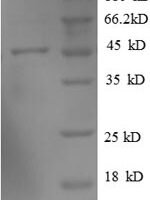
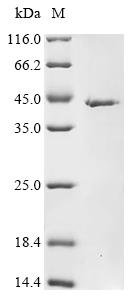
PurityGreater than 95% as determined by SDS-PAGE.
Expression SystemE.coli
Expression Region25-305aa
SpeciesHomo sapiens (Human)
Tag InfoC-terminal 6xHis-tagged
Molecular weight38.7kDa
ActivityPlease contact us to obtain bioactivity data.
BufferIf the delivery form is liquid, the default storage buffer is Tris/PBS-based buffer, 5%-50% glycerol. If the delivery form is lyophilized powder, the buffer before lyophilization is Tris/PBS-based buffer, 6% Trehalose.
StorageStore at -20°C/-80°C upon receipt, aliquoting is necessary for mutiple use. Avoid repeated freeze-thaw cycles.
Research AreasCardiovascular

Function

Non-catalytic subunit of the N-acetylglucosamine-1-phosphotransferase complex, an enzyme that catalyzes the formation of mannose 6-phosphate (M6P) markers on high mannose type oligosaccharides in the Golgi apparatus. Binds and presents the high mannose glycans of the acceptor to the catalytic alpha and beta subunits (GNPTAB). Enhances the rate of N-acetylglucosamine-1-phosphate transfer to the oligosaccharides of acid hydrolase acceptors.

Biological Context

Subcellular Location: Secreted; Golgi apparatus
Tissue Specificity: Widely expressed
Disease Association: Mucolipidosis type III complementation group C (MLIIIC) : Autosomal recessive disease of lysosomal hydrolase trafficking. Unlike the related diseases, mucolipidosis II and IIIA, the enzyme affected in mucolipidosis IIIC (GlcNAc-phosphotransferase) retains full transferase activity on synthetic substrates but lacks activity on lysosomal hydrolases. Typical clinical findings include stiffness of the hands and shoulders, claw-hand deformity, scoliosis, short stature, coarse facies, and mild intellectual disability. Radiographically, severe dysostosis multiplex of the hip is characteristic and frequently disabling. The clinical diagnosis can be confirmed by finding elevated serum lysosomal enzyme levels and/or decreased lysosomal enzyme levels in cultured fibroblasts. [The disease is caused by variants affecting the gene represented in this entry] | [Defects in GNPTG have been suggested to play a role in susceptibility to persistent stuttering. Stuttering is a common speech disorder characterized by repetitions, prolongations, and interruptions in the flow of speech]

Product Specifications

Recombinant Human Nacetylglucosamine1phosphotransferase subunit gamma (GNPTG) is a recombinant protein from Homo sapiens (Human), expressed in E.coli, covering amino acids 25-305aa, with C-terminal 6xHis-tagged tag, molecular weight 38.7kDa, purity Greater than 95% as determined by SDS-PAGE.. Suitable for ELISA and Western Blot applications.

Recommended applications depend on the target, product format, and product-specific validation data. Refer to the product datasheet or Certificate of Analysis (CoA), or contact BioCrest Sci for application guidance.

Biological Activity: Please contact us to obtain bioactivity data.

Storage: Store at -20°C/-80°C upon receipt, aliquoting is necessary for mutiple use. Avoid repeated freeze-thaw cycles.

Shipping & Lead Time: Availability, shipping conditions, and estimated lead time are confirmed in the formal quotation or order confirmation based on the product format, destination, and order requirements.

Protein Biology

Function

Non-catalytic subunit of the N-acetylglucosamine-1-phosphotransferase complex, an enzyme that catalyzes the formation of mannose 6-phosphate (M6P) markers on high mannose type oligosaccharides in the Golgi apparatus. Binds and presents the high mannose glycans of the acceptor to the catalytic alpha and beta subunits (GNPTAB). Enhances the rate of N-acetylglucosamine-1-phosphate transfer to the oligosaccharides of acid hydrolase acceptors

Subcellular Location

Secreted; Golgi apparatus

Disease Association

Mucolipidosis type III complementation group C (MLIIIC) : Autosomal recessive disease of lysosomal hydrolase trafficking. Unlike the related diseases, mucolipidosis II and IIIA, the enzyme affected in mucolipidosis IIIC (GlcNAc-phosphotransferase) retains full transferase activity on synthetic substrates but lacks activity on lysosomal hydrolases. Typical clinical findings include stiffness of the hands and shoulders, claw-hand deformity, scoliosis, short stature, coarse facies, and mild intellectual disability. Radiographically, severe dysostosis multiplex of the hip is characteristic and frequently disabling. The clinical diagnosis can be confirmed by finding elevated serum lysosomal enzyme levels and/or decreased lysosomal enzyme levels in cultured fibroblasts. [The disease is caused by variants affecting the gene represented in this entry] | [Defects in GNPTG have been suggested to play a role in susceptibility to persistent stuttering. Stuttering is a common speech disorder characterized by repetitions, prolongations, and interruptions in the flow of speech]

Tissue Specificity

Widely expressed

Subunit

Homodimer; disulfide-linked. Hexamer of two alpha (GNPTAB), two beta (GNPTAB) and two gamma (GNPTG) subunits; disulfide-linked. The alpha and/or the beta subunits of the enzyme constitute the catalytic subunits

Gene: GNPTG  |  Organism: Homo sapiens  |  Synonyms: GlcNAc-1-phosphotransferase subunit gamma; UDP-N-acetylglucosamine-1-phosphotransferase subunit gamma
Key Publications

Frequently Asked Questions

How do I order or inquire about this product?

Submit the Online Inquiry form with your required quantity and specifications, or email sales@biocrestsci.com. Available sizes, pricing, stock status, documentation, and estimated lead time are confirmed in the formal quotation.

What is the shipping and delivery time?

Availability, dispatch timing, shipping conditions, and delivery estimates depend on the product format, destination, and order requirements. These details are confirmed in the formal quotation or order confirmation.

How should this product be stored?

Follow the storage and handling instructions in the product-specific datasheet and Certificate of Analysis (CoA). Requirements may vary by product form and formulation; contact BioCrest Sci if product-specific guidance is needed.

What quality controls are performed on your products?

Quality-control data such as identity, purity, endotoxin level, or biological activity are provided only when specified on this product page, the datasheet, or Certificate of Analysis (CoA). Biological activity is not implied unless explicitly stated.

Shopping Cart
Scroll to Top