Function
Nuclear receptor that binds DNA as a monomer to ROR response elements (RORE) containing a single core motif half-site 5'-AGGTCA-3' preceded by a short A-T-rich sequence. Key regulator of embryonic development, cellular differentiation, immunity, circadian rhythm as well as lipid, steroid, xenobiotics and glucose metabolism. Considered to have intrinsic transcriptional activity, have some natural ligands like oxysterols that act as agonists (25-hydroxycholesterol) or inverse agonists (7-oxygenated sterols), enhancing or repressing the transcriptional activity, respectively.
Biological Context
Subcellular Location: Nucleus
Tissue Specificity: Widely expressed in a number of tissues. Expressed in both regulatory T-cells (Treg) and effector T-cells (Teff). Isoform 4: Highly expressed in the central nervous system, including in the cerebellum
Disease Association: Intellectual developmental disorder with or without epilepsy or cerebellar ataxia (IDDECA) : An autosomal dominant neurodevelopmental disorder that manifests with variable features of mild-to-severe intellectual disability, developmental delay, autism spectrum disorder, cerebellar ataxia and epilepsy. [The disease is caused by variants affecting the gene represented in this entry]
Product Specifications
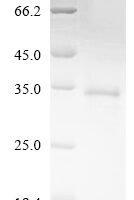
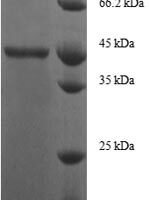
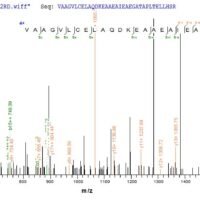
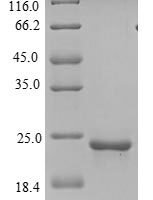
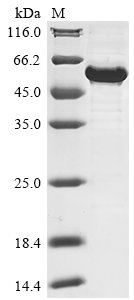
Recombinant Human Nuclear receptor ROR-alpha (RORA) is a recombinant protein from Homo sapiens (Human), expressed in E.coli, covering amino acids 1-468aa, with N-terminal 6xHis-tagged tag, molecular weight 57.6kDa, purity Greater than 85% as determined by SDS-PAGE.. Suitable for ELISA and Western Blot applications.