Function
(Microbial infection) Involved in HIV-1 virus budding. Can replace TSG101 it its role of supporting HIV-1 release; this function requires the interaction with CHMP4B. The ESCRT machinery also functions in topologically equivalent membrane fission events, such as enveloped virus budding (HIV-1 and other lentiviruses).
Biological Context
Subcellular Location: Cytoplasm, cytosol; Melanosome; Cytoplasm, cytoskeleton, microtubule organizing center, centrosome; Secreted, extracellular exosome; Cell junction, tight junction; Midbody, Midbody ring
Disease Association: Microcephaly 29, primary, autosomal recessive (MCPH29) : A form of microcephaly, a disease defined as a head circumference more than 3 standard deviations below the age, sex and ethnically matched mean. Brain weight is markedly reduced and the cerebral cortex is disproportionately small. MCPH29 is characterized by small head circumference apparent at birth and associated with global developmental delay, impaired intellectual development, speech delay, and behavioral abnormalities. Affected individuals also have poor overall growth with short stature, mild dysmorphic facial features, and seizures. [The disease may be caused by variants affecting the gene represented in this entry]
Product Specifications
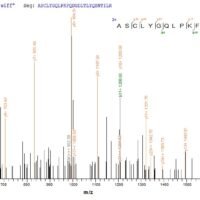
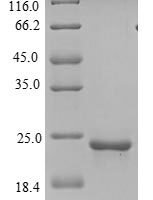
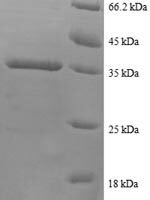
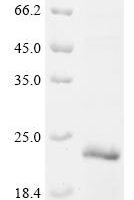
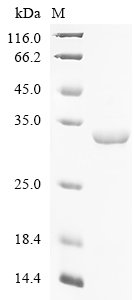
Recombinant Human Programmed cell death 6-interacting protein (PDCD6IP), partial is a recombinant protein from Homo sapiens (Human), expressed in E.coli, covering amino acids 402-652aa, with N-terminal 6xHis-tagged tag, molecular weight 32.3kDa, purity Greater than 90% as determined by SDS-PAGE.. Suitable for ELISA and Western Blot applications. Explore more CD proteins →