Function
Crucial player in the regulation of plasma cholesterol homeostasis. Binds to low-density lipid receptor family members: low density lipoprotein receptor (LDLR), very low density lipoprotein receptor (VLDLR), apolipoprotein E receptor (LRP1/APOER) and apolipoprotein receptor 2 (LRP8/APOER2), and promotes their degradation in intracellular acidic compartments. Acts via a non-proteolytic mechanism to enhance the degradation of the hepatic LDLR through a clathrin LDLRAP1/ARH-mediated pathway.
Biological Context
Subcellular Location: Cytoplasm; Secreted; Endosome; Lysosome; Cell surface; Endoplasmic reticulum; Golgi apparatus
Tissue Specificity: Expressed in neuro-epithelioma, colon carcinoma, hepatic and pancreatic cell lines, and in Schwann cells
Disease Association: Hypercholesterolemia, familial, 3 (FHCL3) : A form of hypercholesterolemia, a disorder of lipoprotein metabolism characterized by elevated serum low-density lipoprotein (LDL) cholesterol levels, which result in excess deposition of cholesterol in tissues and leads to xanthelasma, xanthomas, accelerated atherosclerosis and increased risk of premature coronary heart disease. FHCL3 inheritance is autosomal dominant. [The disease is caused by variants affecting the gene represented in this entry]
Product Specifications
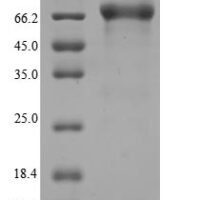
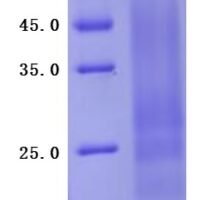
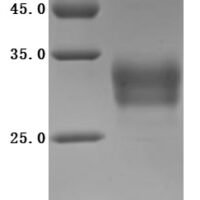
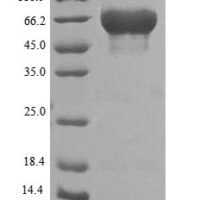
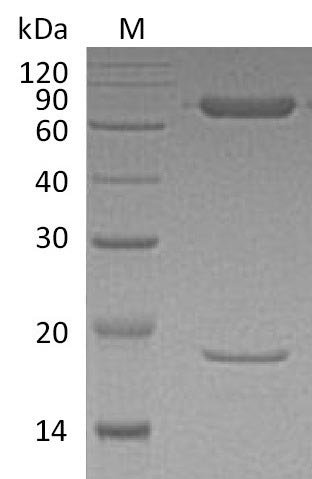
Recombinant Human Proprotein convertase subtilisin/kexin type 9 (PCSK9) (Active) is a recombinant protein from Homo sapiens (Human), expressed in Mammalian cell, covering amino acids 31-152aa & 153-692aa(V474I,G670E), with C-terminal Avi-tagged tag, molecular weight 14 & 59 kDa, purity Greater than 95% as determined by SDS-PAGE.. Suitable for ELISA and Western Blot applications.