Recombinant Human Prosaposin (PSAP), partial

Recombinant Human Prosaposin (PSAP), partial — Acts as a lysosomal activator protein that stimulates acid ceramidase (EC 3. Purity >90%.

SKU: BCRECP-001458 Category:

Product Specifications

Product SkuBCRECP-001458
Product DescriptionRecombinant Human Prosaposin (PSAP) Protein is expressed from Yeast with N-terminal 6xHis-tagged. It contains 311-391aa. [Accession | P07602].
Uniprot No.P07602
Gene NamesPSAP
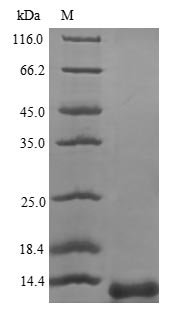
PurityGreater than 90% as determined by SDS-PAGE.
Expression SystemYeast
Expression Region311-391aa
SpeciesHomo sapiens (Human)
Tag InfoN-terminal 6xHis-tagged
Molecular weight11.1kDa
ActivityPlease contact us to obtain bioactivity data.
BufferIf the delivery form is liquid, the default storage buffer is Tris/PBS-based buffer, 5%-50% glycerol. If the delivery form is lyophilized powder, the buffer before lyophilization is Tris/PBS-based buffer, 6% Trehalose.
StorageStore at -20°C/-80°C upon receipt, aliquoting is necessary for mutiple use. Avoid repeated freeze-thaw cycles.
Research AreasSignal Transduction

Function

Acts as a lysosomal activator protein that stimulates acid ceramidase (EC 3.5.1.23) by solubilizing and presenting ceramide substrates at the lipid-water interface, facilitating their hydrolysis into sphingosine and fatty acids. It also activates acid sphingomyelinase (EC 3.1.4.12), though ceramide catabolism represents its primary physiological role.

Biological Context

Subcellular Location: Secreted
Disease Association: Combined saposin deficiency (PSAPD) : An autosomal recessive storage disorder characterized by hepatosplenomegaly and severe neurologic disease, due to absence of all saposins. PSAPD has a fatal outcome in infancy. [The disease is caused by variants affecting the gene represented in this entry] | Metachromatic leukodystrophy due to saposin B deficiency (MLDSAPB) : A form of metachromatic leukodystrophy biochemically characterized by tissue accumulation of cerebroside-3-sulfate, saposin B deficiency, and normal arylsulfatase A activity. Clinical manifestations include periventricular white matter abnormalities, demyelination, and peripheral neuropathy. Additional neurological features include dysarthria, ataxic gait, psychomotor regression, seizures, cognitive decline and spastic quadriparesis. [The disease is caused by variants affecting the gene represented in this entry] | Gaucher disease, atypical, due to saposin C deficiency (GDSAPC) : A disease characterized by marked glucosylceramide accumulation in the spleen without having a deficiency of glucosylceramide-beta glucosidase characteristic of classic Gaucher disease. Gaucher disease is a lysosomal storage disorder characterized by skeletal deterioration, hepatosplenomegaly, and organ dysfunction. There are several subtypes based on the presence and severity of neurological involvement. [The disease is caused by variants affecting the gene represented in this entry] | Krabbe disease, atypical, due to saposin A deficiency (KRBSAPA) : An autosomal recessive disorder of galactosylceramide metabolism. Clinical features include neurologic regression around age 3 months, loss of spontaneous movements, hyporeflexia, generalized brain atrophy, and diffuse white matter dysmyelination. [The disease is caused by variants affecting the gene represented in this entry] | [Defects in PSAP saposin-D region are found in a variant of Tay-Sachs disease (GM2-gangliosidosis)] | Parkinson disease 24, autosomal dominant (PARK24) : An autosomal dominant form of Parkinson disease, a complex neurodegenerative disorder characterized by bradykinesia, resting tremor, muscular rigidity and postural instability, as well as by a clinically significant response to treatment with levodopa. The pathology involves the loss of dopaminergic neurons in the substantia nigra and the presence of Lewy bodies (intraneuronal accumulations of aggregated proteins), in surviving neurons in various areas of the brain. PARK24 shows incomplete penetrance. [Disease susceptibility is associated with variants affecting the gene represented in this entry]

Product Specifications

Recombinant Human Prosaposin (PSAP), partial is a recombinant protein from Homo sapiens (Human), expressed in Yeast, covering amino acids 311-391aa, with N-terminal 6xHis-tagged tag, molecular weight 11.1kDa, purity Greater than 90% as determined by SDS-PAGE.. Suitable for ELISA and Western Blot applications.
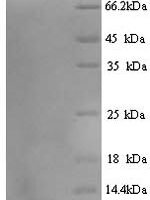
SDS-PAGE: Single band at expected molecular weight confirming purity.

ELISA: Suitable as coating antigen or detection standard.

Western Blot: Compatible with standard Western Blot protocols.

Protein Interaction: Validated for SPR (Surface Plasmon Resonance) and BLI (Bio-Layer Interferometry) studies.

Shipping: Shipped at ambient temperature. Lyophilized protein is stable during transit.

Storage: Store lyophilized protein at -20°C to -80°C. Reconstituted protein should be aliquoted and stored at -80°C. Avoid repeated freeze-thaw cycles.

Shelf Life: 12 months from date of receipt when stored as recommended.

Shipping Time: Orders placed before 2 PM EST ship same day. International orders typically deliver within 5-10 business days.

Protein Biology

Function

Acts as a lysosomal activator protein that stimulates acid ceramidase (EC 3.5.1.23) by solubilizing and presenting ceramide substrates at the lipid-water interface, facilitating their hydrolysis into sphingosine and fatty acids. It also activates acid sphingomyelinase (EC 3.1.4.12), though ceramide catabolism represents its primary physiological role

Subcellular Location

Secreted

Disease Association

Combined saposin deficiency (PSAPD) : An autosomal recessive storage disorder characterized by hepatosplenomegaly and severe neurologic disease, due to absence of all saposins. PSAPD has a fatal outcome in infancy. [The disease is caused by variants affecting the gene represented in this entry] | Metachromatic leukodystrophy due to saposin B deficiency (MLDSAPB) : A form of metachromatic leukodystrophy biochemically characterized by tissue accumulation of cerebroside-3-sulfate, saposin B deficiency, and normal arylsulfatase A activity. Clinical manifestations include periventricular white matter abnormalities, demyelination, and peripheral neuropathy. Additional neurological features include dysarthria, ataxic gait, psychomotor regression, seizures, cognitive decline and spastic quadriparesis. [The disease is caused by variants affecting the gene represented in this entry] | Gaucher disease, atypical, due to saposin C deficiency (GDSAPC) : A disease characterized by marked glucosylceramide accumulation in the spleen without having a deficiency of glucosylceramide-beta glucosidase characteristic of classic Gaucher disease. Gaucher disease is a lysosomal storage disorder characterized by skeletal deterioration, hepatosplenomegaly, and organ dysfunction. There are several subtypes based on the presence and severity of neurological involvement. [The disease is caused by variants affecting the gene represented in this entry] | Krabbe disease, atypical, due to saposin A deficiency (KRBSAPA) : An autosomal recessive disorder of galactosylceramide metabolism. Clinical features include neurologic regression around age 3 months, loss of spontaneous movements, hyporeflexia, generalized brain atrophy, and diffuse white matter dysmyelination. [The disease is caused by variants affecting the gene represented in this entry] | [Defects in PSAP saposin-D region are found in a variant of Tay-Sachs disease (GM2-gangliosidosis)] | Parkinson disease 24, autosomal dominant (PARK24) : An autosomal dominant form of Parkinson disease, a complex neurodegenerative disorder characterized by bradykinesia, resting tremor, muscular rigidity and postural instability, as well as by a clinically significant response to treatment with levodopa. The pathology involves the loss of dopaminergic neurons in the substantia nigra and the presence of Lewy bodies (intraneuronal accumulations of aggregated proteins), in surviving neurons in various areas of the brain. PARK24 shows incomplete penetrance. [Disease susceptibility is associated with variants affecting the gene represented in this entry]

Subunit

Homodimer

Gene: PSAP  |  Organism: Homo sapiens  |  Synonyms: Proactivator polypeptide
Key Publications

Frequently Asked Questions

How do I order or inquire about this product?

Fill out the Online Inquiry form with your required quantity and specifications. You can also email sales@biocrestsci.com. Our team typically responds within 4 business hours with a quote and availability confirmation.

What is the shipping and delivery time?

Orders placed before 2 PM EST ship the same day. Domestic (US) delivery typically takes 2-3 business days. International orders deliver within 5-10 business days. All products are shipped at ambient temperature with appropriate packaging to ensure stability.

How should I store this recombinant protein?

Lyophilized proteins should be stored at -20°C to -80°C upon receipt. After reconstitution, aliquot and store at -80°C. Avoid repeated freeze-thaw cycles. Shelf life is 12 months from date of receipt when stored as recommended.

What quality controls are performed on your products?

Each product undergoes SDS-PAGE purity analysis (typically >85-95%), endotoxin testing, and bioactivity validation. Products are validated for ELISA, Western Blot, and SPR/BLI applications as specified on this product page. A Certificate of Analysis (CoA) is available upon request.

Shopping Cart
Scroll to Top