,

Recombinant Human Prostaglandin-H2 D-isomerase (PTGDS)

Recombinant Human Prostaglandin-H2 D-isomerase (PTGDS) — Catalyzes the conversion of PGH2 to PGD2, a prostaglandin involved in smooth muscle contraction/relaxation and a potent inhibitor of platelet aggregation. Purity >90%.

SKU: BCRECP-001468 Categories: ,

Product Specifications

Product SkuBCRECP-001468
Product DescriptionRecombinant Human Prostaglandin-H2 D-isomerase (PTGDS) Protein is expressed from E.coli with N-terminal 6xHis-SUMO-tagged. It contains 23-190aa. [Accession | P41222].
Uniprot No.P41222
Gene NamesPTGDS
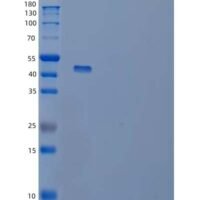
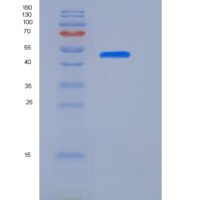
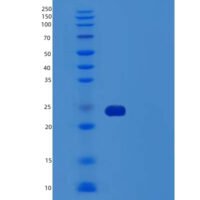
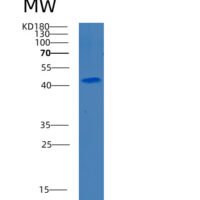
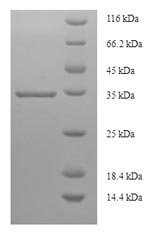
PurityGreater than 90% as determined by SDS-PAGE.
Expression SystemE.coli
Expression Region23-190aa
SpeciesHomo sapiens (Human)
Tag InfoN-terminal 6xHis-SUMO-tagged
Molecular weight34.7kDa
ActivityPlease contact us to obtain bioactivity data.
BufferIf the delivery form is liquid, the default storage buffer is Tris/PBS-based buffer, 5%-50% glycerol. If the delivery form is lyophilized powder, the buffer before lyophilization is Tris/PBS-based buffer, 6% Trehalose.
StorageStore at -20°C/-80°C upon receipt, aliquoting is necessary for mutiple use. Avoid repeated freeze-thaw cycles.
Research AreasMetabolism

Function

Catalyzes the conversion of PGH2 to PGD2, a prostaglandin involved in smooth muscle contraction/relaxation and a potent inhibitor of platelet aggregation. Involved in a variety of CNS functions, such as sedation, NREM sleep and PGE2-induced allodynia, and may have an anti-apoptotic role in oligodendrocytes. Binds small non-substrate lipophilic molecules, including biliverdin, bilirubin, retinal, retinoic acid and thyroid hormone, and may act as a scavenger for harmful hydrophobic molecules and as a secretory retinoid and thyroid hormone transporter.

Biological Context

Subcellular Location: Rough endoplasmic reticulum; Nucleus membrane; Golgi apparatus; Cytoplasm, perinuclear region; Secreted
Tissue Specificity: Abundant in the brain and CNS, where it is expressed in tissues of the blood-brain barrier and secreted into the cerebro-spinal fluid. Abundantly expressed in the heart. In the male reproductive system, it is expressed in the testis, epididymis and prostate, and is secreted into the seminal fluid. Expressed in the eye and secreted into the aqueous humor. Lower levels detected in various tissue fluids such as serum, normal urine, ascitic fluid and tear fluid. Also found in a number of other organs including ovary, fimbriae of the fallopian tubes, kidney, leukocytes

Product Specifications

Recombinant Human Prostaglandin-H2 D-isomerase (PTGDS) is a recombinant protein from Homo sapiens (Human), expressed in E.coli, covering amino acids 23-190aa, with N-terminal 6xHis-SUMO-tagged tag, molecular weight 34.7kDa, purity Greater than 90% as determined by SDS-PAGE.. Suitable for ELISA and Western Blot applications.

SDS-PAGE: Single band at expected molecular weight confirming purity.

ELISA: Suitable as coating antigen or detection standard.

Western Blot: Compatible with standard Western Blot protocols.

Protein Interaction: Validated for SPR (Surface Plasmon Resonance) and BLI (Bio-Layer Interferometry) studies.

Shipping: Shipped at ambient temperature. Lyophilized protein is stable during transit.

Storage: Store lyophilized protein at -20°C to -80°C. Reconstituted protein should be aliquoted and stored at -80°C. Avoid repeated freeze-thaw cycles.

Shelf Life: 12 months from date of receipt when stored as recommended.

Shipping Time: Orders placed before 2 PM EST ship same day. International orders typically deliver within 5-10 business days.

Protein Biology

Function

Catalyzes the conversion of PGH2 to PGD2, a prostaglandin involved in smooth muscle contraction/relaxation and a potent inhibitor of platelet aggregation (PubMed:20667974). Involved in a variety of CNS functions, such as sedation, NREM sleep and PGE2-induced allodynia, and may have an anti-apoptotic role in oligodendrocytes. Binds small non-substrate lipophilic molecules, including biliverdin, bilirubin, retinal, retinoic acid and thyroid hormone, and may act as a scavenger for harmful hydrophobic molecules and as a secretory retinoid and thyroid hormone transporter. Possibly involved in development and maintenance of the blood-brain, blood-retina, blood-aqueous humor and blood-testis barrier. It is likely to play important roles in both maturation and maintenance of the central nervous system and male reproductive system (PubMed:20667974, PubMed:9475419). Involved in PLA2G3-dependent maturation of mast cells. PLA2G3 is secreted by immature mast cells and acts on nearby fibroblasts upstream to PTDGS to synthesize PGD2, which in turn promotes mast cell maturation and degranulation via PTGDR (By similarity)

Subcellular Location

Rough endoplasmic reticulum; Nucleus membrane; Golgi apparatus; Cytoplasm, perinuclear region; Secreted

Tissue Specificity

Abundant in the brain and CNS, where it is expressed in tissues of the blood-brain barrier and secreted into the cerebro-spinal fluid. Abundantly expressed in the heart. In the male reproductive system, it is expressed in the testis, epididymis and prostate, and is secreted into the seminal fluid. Expressed in the eye and secreted into the aqueous humor. Lower levels detected in various tissue fluids such as serum, normal urine, ascitic fluid and tear fluid. Also found in a number of other organs including ovary, fimbriae of the fallopian tubes, kidney, leukocytes

Subunit

Monomer

Gene: PTGDS  |  Organism: Homo sapiens  |  Synonyms: Beta-trace protein; Cerebrin-28; Glutathione-independent PGD synthase; Lipocalin-type prostaglandin-D synthase; Prostaglandin-D2 synthase
Key Publications

Frequently Asked Questions

How do I order or inquire about this product?

Fill out the Online Inquiry form with your required quantity and specifications. You can also email sales@biocrestsci.com. Our team typically responds within 4 business hours with a quote and availability confirmation.

What is the shipping and delivery time?

Orders placed before 2 PM EST ship the same day. Domestic (US) delivery typically takes 2-3 business days. International orders deliver within 5-10 business days. All products are shipped at ambient temperature with appropriate packaging to ensure stability.

How should I store this recombinant protein?

Lyophilized proteins should be stored at -20°C to -80°C upon receipt. After reconstitution, aliquot and store at -80°C. Avoid repeated freeze-thaw cycles. Shelf life is 12 months from date of receipt when stored as recommended.

What quality controls are performed on your products?

Each product undergoes SDS-PAGE purity analysis (typically >85-95%), endotoxin testing, and bioactivity validation. Products are validated for ELISA, Western Blot, and SPR/BLI applications as specified on this product page. A Certificate of Analysis (CoA) is available upon request.

Shopping Cart
Scroll to Top