Recombinant Human Pulmonary surfactant-associated protein B (SFTPB) Protein

Recombinant Human Pulmonary surfactant-associated protein B (SFTPB) Protein — Pulmonary surfactant-associated proteins promote alveolar stability by lowering the surface tension at the air-liquid interface in the peripheral air spaces. Purity >90%.

SKU: BCRECP-00652TM Category:

Product Specifications

Uniprot No.P07988
Gene NamesSFTPB
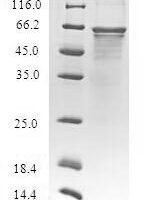
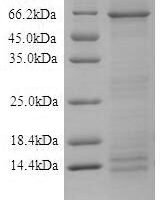
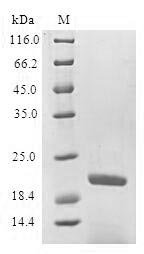
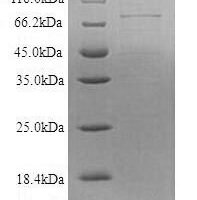
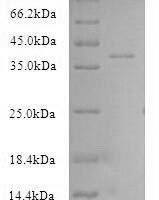
PurityGreater than 90% as determined by SDS-PAGE.Greater than 90% as determined by SEC-HPLC.
Expression Systemin vitro E.coli expression system
Expression Region201-279aa
SpeciesHomo sapiens(Human)
Tag InfoN-terminal 6xHis-SUMO-tagged
Molecular weight24.7kDa
BufferIf the delivery form is liquid, the default storage buffer is Tris/PBS-based buffer, 5%-50% glycerol.If the delivery form is lyophilized powder, the buffer before lyophilization is Tris/PBS-based buffer, 6% Trehalose.
StorageStore at -20°C/-80°C upon receipt, aliquoting is necessary for mutiple use. Avoid repeated freeze-thaw cycles.

Function

Pulmonary surfactant-associated proteins promote alveolar stability by lowering the surface tension at the air-liquid interface in the peripheral air spaces. SP-B increases the collapse pressure of palmitic acid to nearly 70 millinewtons per meter.

Biological Context

Subcellular Location: Secreted, extracellular space, surface film
Disease Association: Pulmonary surfactant metabolism dysfunction 1 (SMDP1) : A rare lung disorder due to impaired surfactant homeostasis. It is characterized by alveolar filling with floccular material that stains positive using the periodic acid-Schiff method and is derived from surfactant phospholipids and protein components. Excessive lipoproteins accumulation in the alveoli results in severe respiratory distress. [The disease is caused by variants affecting the gene represented in this entry] | Respiratory distress syndrome in premature infants (RDS) : A lung disease affecting usually premature newborn infants. It is characterized by deficient gas exchange, diffuse atelectasis, high-permeability lung edema and fibrin-rich alveolar deposits called 'hyaline membranes'. [Disease susceptibility may be associated with variants affecting the gene represented in this entry. A variation Ile to Thr at position 131 influences the association between specific alleles of SFTPA1 and respiratory distress syndrome in premature infants]

Product Specifications

Recombinant Human Pulmonary surfactant-associated protein B (SFTPB) Protein is a recombinant protein from Homo sapiens(Human), expressed in in vitro E.coli expression system, covering amino acids 201-279aa, with N-terminal 6xHis-SUMO-tagged tag, molecular weight 24.7kDa, purity Greater than 90% as determined by SDS-PAGE.Greater than 90% as determined by SEC-HPLC.. Suitable for ELISA and Western Blot applications.
Recommended applications depend on the target, product format, and product-specific validation data. Refer to the product datasheet or Certificate of Analysis (CoA), or contact BioCrest Sci for application guidance.

Biological Activity: Not implied unless activity data are explicitly listed on this product page, the datasheet, or the CoA.

Storage: Store at -20°C/-80°C upon receipt, aliquoting is necessary for mutiple use. Avoid repeated freeze-thaw cycles.

Shipping & Lead Time: Availability, shipping conditions, and estimated lead time are confirmed in the formal quotation or order confirmation based on the product format, destination, and order requirements.

Protein Biology

Function

Pulmonary surfactant-associated proteins promote alveolar stability by lowering the surface tension at the air-liquid interface in the peripheral air spaces. SP-B increases the collapse pressure of palmitic acid to nearly 70 millinewtons per meter

Subcellular Location

Secreted, extracellular space, surface film

Disease Association

Pulmonary surfactant metabolism dysfunction 1 (SMDP1) : A rare lung disorder due to impaired surfactant homeostasis. It is characterized by alveolar filling with floccular material that stains positive using the periodic acid-Schiff method and is derived from surfactant phospholipids and protein components. Excessive lipoproteins accumulation in the alveoli results in severe respiratory distress. [The disease is caused by variants affecting the gene represented in this entry] | Respiratory distress syndrome in premature infants (RDS) : A lung disease affecting usually premature newborn infants. It is characterized by deficient gas exchange, diffuse atelectasis, high-permeability lung edema and fibrin-rich alveolar deposits called 'hyaline membranes'. [Disease susceptibility may be associated with variants affecting the gene represented in this entry. A variation Ile to Thr at position 131 influences the association between specific alleles of SFTPA1 and respiratory distress syndrome in premature infants]

Subunit

Homodimer; disulfide-linked

Gene: SFTPB  |  Organism: Homo sapiens  |  Synonyms: 18 kDa pulmonary-surfactant protein; 6 kDa protein; Pulmonary surfactant-associated proteolipid SPL(Phe)
Key Publications

Frequently Asked Questions

How do I order or inquire about this product?

Submit the Online Inquiry form with your required quantity and specifications, or email sales@biocrestsci.com. Available sizes, pricing, stock status, documentation, and estimated lead time are confirmed in the formal quotation.

What is the shipping and delivery time?

Availability, dispatch timing, shipping conditions, and delivery estimates depend on the product format, destination, and order requirements. These details are confirmed in the formal quotation or order confirmation.

How should this product be stored?

Follow the storage and handling instructions in the product-specific datasheet and Certificate of Analysis (CoA). Requirements may vary by product form and formulation; contact BioCrest Sci if product-specific guidance is needed.

What quality controls are performed on your products?

Quality-control data such as identity, purity, endotoxin level, or biological activity are provided only when specified on this product page, the datasheet, or Certificate of Analysis (CoA). Biological activity is not implied unless explicitly stated.

Shopping Cart
Scroll to Top