, ,

Recombinant Human Serine protease HTRA1 (HTRA1)

Recombinant Human Serine protease HTRA1 (HTRA1) — Serine protease with a variety of targets, including extracellular matrix proteins such as fibronectin. Purity >90%.

SKU: BCRECP-000871 Categories: , ,

Product Specifications

Product SkuBCRECP-000871
Product DescriptionRecombinant Human Serine protease HTRA1 (HTRA1) Protein is expressed from E.coli with N-terminal 6xHis-SUMO-tagged. It contains 23-480aa. [Accession | Q92743].
Uniprot No.Q92743
Gene NamesHTRA1
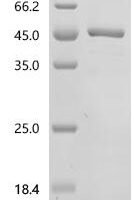
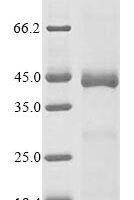
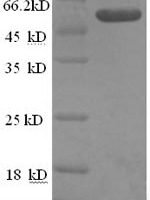
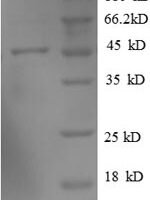
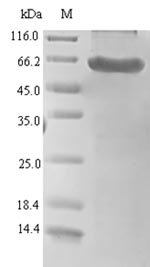
PurityGreater than 90% as determined by SDS-PAGE.
Expression SystemE.coli
Expression Region23-480aa
SpeciesHomo sapiens (Human)
Tag InfoN-terminal 6xHis-SUMO-tagged
Molecular weight62.0kDa
ActivityPlease contact us to obtain bioactivity data.
BufferIf the delivery form is liquid, the default storage buffer is Tris/PBS-based buffer, 5%-50% glycerol. If the delivery form is lyophilized powder, the buffer before lyophilization is Tris/PBS-based buffer, 6% Trehalose.
StorageStore at -20°C/-80°C upon receipt, aliquoting is necessary for mutiple use. Avoid repeated freeze-thaw cycles.
Research AreasSignal Transduction

Function

Serine protease with a variety of targets, including extracellular matrix proteins such as fibronectin. HTRA1-generated fibronectin fragments further induce synovial cells to up-regulate MMP1 and MMP3 production. May also degrade proteoglycans, such as aggrecan, decorin and fibromodulin.

Biological Context

Subcellular Location: Cell membrane; Secreted; Cytoplasm, cytosol
Tissue Specificity: Widely expressed, with strongest expression in placenta (at protein level). Secreted by synovial fibroblasts. Up-regulated in osteoarthritis and rheumatoid arthritis synovial fluids and cartilage as compared with non-arthritic (at protein level)
Disease Association: [A variant in the HTRA1 promoter may be associated with increased risk for developing age-related macular degeneration (ARMD), a multifactorial eye disease and common cause of vision loss] | Cerebral arteriopathy, autosomal recessive, with subcortical infarcts and leukoencephalopathy 2 (CARASIL2) : A cerebrovascular disease characterized by non-hypertensive arteriopathy of cerebral small vessels with subcortical infarcts, alopecia, and spondylosis. Small cerebral arteries show arteriosclerotic changes, fibrous intimal proliferation, and hyaline degeneration with splitting of the intima and/or the internal elastic membrane. Neurologic features include progressive dementia, gait disturbances, extrapyramidal and pyramidal signs, and demyelination of the cerebral white matter with sparing of U fibers. [The disease is caused by variants affecting the gene represented in this entry] | Cerebral arteriopathy, autosomal dominant, with subcortical infarcts and leukoencephalopathy, 2 (CADASIL2) : A cerebrovascular disease characterized by multiple subcortical infarcts, pseudobulbar palsy, dementia, and the presence of granular deposits in small cerebral arteries producing ischemic stroke. [The disease is caused by variants affecting the gene represented in this entry]

Product Specifications

Recombinant Human Serine protease HTRA1 (HTRA1) is a recombinant protein from Homo sapiens (Human), expressed in E.coli, covering amino acids 23-480aa, with N-terminal 6xHis-SUMO-tagged tag, molecular weight 62.0kDa, purity Greater than 90% as determined by SDS-PAGE.. Suitable for ELISA and Western Blot applications.

SDS-PAGE: Single band at expected molecular weight confirming purity.

ELISA: Suitable as coating antigen or detection standard.

Western Blot: Compatible with standard Western Blot protocols.

Protein Interaction: Validated for SPR (Surface Plasmon Resonance) and BLI (Bio-Layer Interferometry) studies.

Shipping: Shipped at ambient temperature. Lyophilized protein is stable during transit.

Storage: Store lyophilized protein at -20°C to -80°C. Reconstituted protein should be aliquoted and stored at -80°C. Avoid repeated freeze-thaw cycles.

Shelf Life: 12 months from date of receipt when stored as recommended.

Shipping Time: Orders placed before 2 PM EST ship same day. International orders typically deliver within 5-10 business days.

Protein Biology

Function

Serine protease with a variety of targets, including extracellular matrix proteins such as fibronectin. HTRA1-generated fibronectin fragments further induce synovial cells to up-regulate MMP1 and MMP3 production. May also degrade proteoglycans, such as aggrecan, decorin and fibromodulin. Through cleavage of proteoglycans, may release soluble FGF-glycosaminoglycan complexes that promote the range and intensity of FGF signals in the extracellular space. Regulates the availability of insulin-like growth factors (IGFs) by cleaving IGF-binding proteins. Inhibits signaling mediated by TGF-beta family members. This activity requires the integrity of the catalytic site, although it is unclear whether TGF-beta proteins are themselves degraded. By acting on TGF-beta signaling, may regulate many physiological processes, including retinal angiogenesis and neuronal survival and maturation during development. Intracellularly, degrades TSC2, leading to the activation of TSC2 downstream targets

Subcellular Location

Cell membrane; Secreted; Cytoplasm, cytosol

Disease Association

[A variant in the HTRA1 promoter may be associated with increased risk for developing age-related macular degeneration (ARMD), a multifactorial eye disease and common cause of vision loss] | Cerebral arteriopathy, autosomal recessive, with subcortical infarcts and leukoencephalopathy 2 (CARASIL2) : A cerebrovascular disease characterized by non-hypertensive arteriopathy of cerebral small vessels with subcortical infarcts, alopecia, and spondylosis. Small cerebral arteries show arteriosclerotic changes, fibrous intimal proliferation, and hyaline degeneration with splitting of the intima and/or the internal elastic membrane. Neurologic features include progressive dementia, gait disturbances, extrapyramidal and pyramidal signs, and demyelination of the cerebral white matter with sparing of U fibers. [The disease is caused by variants affecting the gene represented in this entry] | Cerebral arteriopathy, autosomal dominant, with subcortical infarcts and leukoencephalopathy, 2 (CADASIL2) : A cerebrovascular disease characterized by multiple subcortical infarcts, pseudobulbar palsy, dementia, and the presence of granular deposits in small cerebral arteries producing ischemic stroke. [The disease is caused by variants affecting the gene represented in this entry]

Tissue Specificity

Widely expressed, with strongest expression in placenta (at protein level). Secreted by synovial fibroblasts. Up-regulated in osteoarthritis and rheumatoid arthritis synovial fluids and cartilage as compared with non-arthritic (at protein level)

Subunit

Forms homotrimers. In the presence of substrate, may form higher-order multimers in a PDZ-independent manner. Interacts with TGF-beta family members, including BMP4, TGFB1, TGFB2, activin A and GDF5 (By similarity)

Gene: HTRA1  |  Organism: Homo sapiens  |  Synonyms: High-temperature requirement A serine peptidase 1; L56; Serine protease 11
Key Publications

Frequently Asked Questions

How do I order or inquire about this product?

Fill out the Online Inquiry form with your required quantity and specifications. You can also email sales@biocrestsci.com. Our team typically responds within 4 business hours with a quote and availability confirmation.

What is the shipping and delivery time?

Orders placed before 2 PM EST ship the same day. Domestic (US) delivery typically takes 2-3 business days. International orders deliver within 5-10 business days. All products are shipped at ambient temperature with appropriate packaging to ensure stability.

How should I store this recombinant protein?

Lyophilized proteins should be stored at -20°C to -80°C upon receipt. After reconstitution, aliquot and store at -80°C. Avoid repeated freeze-thaw cycles. Shelf life is 12 months from date of receipt when stored as recommended.

What quality controls are performed on your products?

Each product undergoes SDS-PAGE purity analysis (typically >85-95%), endotoxin testing, and bioactivity validation. Products are validated for ELISA, Western Blot, and SPR/BLI applications as specified on this product page. A Certificate of Analysis (CoA) is available upon request.

Shopping Cart
Scroll to Top