Function
Serine/threonine kinase that plays an essential role in regulating inflammatory responses to foreign agents. Following activation of toll-like receptors by viral or bacterial components, associates with TRAF3 and TANK and phosphorylates interferon regulatory factors (IRFs) IRF3 and IRF7 as well as DDX3X. This activity allows subsequent homodimerization and nuclear translocation of the IRFs leading to transcriptional activation of pro-inflammatory and antiviral genes including IFNA and IFNB.
Biological Context
Subcellular Location: Cytoplasm
Tissue Specificity: Ubiquitous with higher expression in testis. Expressed in the ganglion cells, nerve fiber layer and microvasculature of the retina
Disease Association: Glaucoma 1, open angle, P (GLC1P) : A form of primary open angle glaucoma (POAG). POAG is characterized by a specific pattern of optic nerve and visual field defects. The angle of the anterior chamber of the eye is open, and usually the intraocular pressure is increased. However, glaucoma can occur at any intraocular pressure. The disease is generally asymptomatic until the late stages, by which time significant and irreversible optic nerve damage has already taken place. GLC1P is characterized by early onset, thin central corneas and low intraocular pressure. [The disease may be caused by variants affecting the gene represented in this entry. A copy number variation on chromosome 12q14 consisting of a 300 kb duplication that includes TBK1, XPOT, RASSF3 and GNS has been found in individuals affected by glaucoma. TBK1 is the most likely candidate for the disorder ] | Frontotemporal dementia and/or amyotrophic lateral sclerosis 4 (FTDALS4) : A neurodegenerative disorder characterized by frontotemporal dementia and/or amyotrophic lateral sclerosis in affected individuals. There is high intrafamilial variation. Frontotemporal dementia is characterized by frontal and temporal lobe atrophy associated with neuronal loss, gliosis, and dementia. Patients exhibit progressive changes in social, behavioral, and/or language function. Amyotrophic lateral sclerosis is characterized by the death of motor neurons in the brain, brainstem, and spinal cord, resulting in fatal paralysis. [The disease is caused by variants affecting the gene represented in this entry] | Encephalopathy, acute, infection-induced, 8, herpes-specific (IIAE8) : A rare, often fatal complication of herpes simplex infection, caused by virus spreading in the central nervous system. Disease manifestations include low-grade fever, severe headache, nausea, vomiting, and lethargy. Neurological features include confusion, acute memory disturbances, disorientation, behavioral changes, hemiparesis and seizures. [Disease susceptibility is associated with variants affecting the gene represented in this entry] | Autoinflammation with arthritis and vasculitis (AIARV) : An autosomal recessive disorder characterized by onset of chronic and systemic autoinflammation in infancy or early childhood. Affected individuals have recurrent fever, erythematous skin rashes, vasculitis, oral aphthous lesions, and polyarthritis. Additional variable features are poor overall growth, microcytic anemia, mild intellectual disability, and seizures. [The disease is caused by variants affecting the gene represented in this entry]
Product Specifications
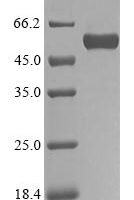
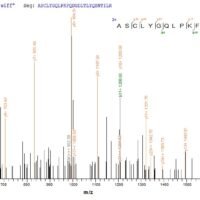
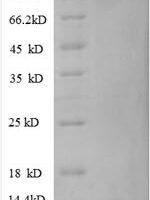
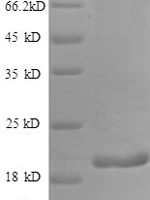
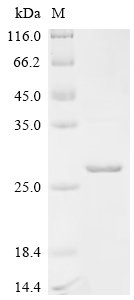
Recombinant Human Serine/threonine-protein kinase TBK1 (TBK1), partial is a recombinant protein from Homo sapiens (Human), expressed in E.coli, covering amino acids 590-729aa, with C-terminal 6xHis-tagged tag, molecular weight 23.2kDa, purity Greater than 90% as determined by SDS-PAGE.. Suitable for ELISA and Western Blot applications. Explore more Kinase proteins →