Recombinant Human SPARC protein (SPARC), partial (Active)

Recombinant Human SPARC protein (SPARC), partial (Active) — Appears to regulate cell growth through interactions with the extracellular matrix and cytokines. Purity >98%.

SKU: BCACP-000892 Category:
Product SKUBCACP-000892
Product DescriptionRecombinant Human SPARC protein (SPARC) protein is expressed from E.Coli with Tag-Free. It contains 18-303aa. [Accession | P09486].
Uniprot No.P09486
Gene NamesSPARC
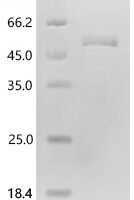
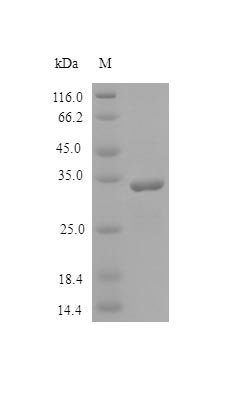
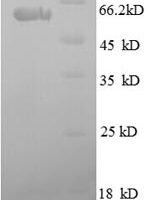
Purity>98% as determined by SDS-PAGE.
Expression SystemE.Coli
Expression Region18-303aa
SpeciesHomo sapiens (Human)
Tag InfoTag-Free
Molecular weight32.7 kDa
ActivityFully biologically active when compared to standard. The ED50 as determined by a cell proliferation assay using human TF-1 cells is less than 0.1 ng/ml, corresponding to a specific activity of >1.0x10⁷ IU/mg.
BufferLyophilized from a 0.2 μm filtered 20 mM Tris-HCl, 0.5 M NaCl, 6% Trehalose, pH 8.0
StorageStore at -20°C/-80°C upon receipt, aliquoting is necessary for mutiple use. Avoid repeated freeze-thaw cycles.
Alternative NamesAA517111; Basement membrane protein 40; Basement-membrane protein 40; BM 40; BM-40; BM40; Cysteine rich protein; hm:zeh0062; MGC128090; OI17; ON; Osteonectin; Secreted acidic cystein rich glycoprotein; Secreted protein acidic and cysteine rich; Secreted protein acidic and rich in cysteine; Secreted protein acidic cysteine rich (osteonectin); Secreted protein acidic cysteine rich; SPARC; SPRC; SPRC_HUMAN

Function

Appears to regulate cell growth through interactions with the extracellular matrix and cytokines. Binds calcium and copper, several types of collagen, albumin, thrombospondin, PDGF and cell membranes. There are two calcium binding sites; an acidic domain that binds 5 to 8 Ca(2+) with a low affinity and an EF-hand loop that binds a Ca(2+) ion with a high affinity.

Biological Context

Subcellular Location: Secreted, extracellular space, extracellular matrix, basement membrane
Disease Association: Osteogenesis imperfecta 17 (OI17) : An autosomal recessive form of osteogenesis imperfecta, a disorder of bone formation characterized by low bone mass, bone fragility and susceptibility to fractures after minimal trauma. Disease severity ranges from very mild forms without fractures to intrauterine fractures and perinatal lethality. Extraskeletal manifestations, which affect a variable number of patients, are dentinogenesis imperfecta, hearing loss, and blue sclerae. [The disease is caused by variants affecting the gene represented in this entry]

Product Specifications

Recombinant Human SPARC protein (SPARC), partial (Active) is a recombinant protein from Homo sapiens (Human), expressed in E.Coli, covering amino acids 18-303aa, with Tag-Free tag, molecular weight 32.7 kDa, purity >98% as determined by SDS-PAGE.. Suitable for ELISA and Western Blot applications.

Recommended applications depend on the target, product format, and product-specific validation data. Refer to the product datasheet or Certificate of Analysis (CoA), or contact BioCrest Sci for application guidance.

Biological Activity: Fully biologically active when compared to standard. The ED50 as determined by a cell proliferation assay using human TF-1 cells is less than 0.1 ng/ml, corresponding to a specific activity of >1.0x10⁷ IU/mg.

Storage: Store at -20°C/-80°C upon receipt, aliquoting is necessary for mutiple use. Avoid repeated freeze-thaw cycles.

Shipping & Lead Time: Availability, shipping conditions, and estimated lead time are confirmed in the formal quotation or order confirmation based on the product format, destination, and order requirements.

Protein Biology

Function

Appears to regulate cell growth through interactions with the extracellular matrix and cytokines. Binds calcium and copper, several types of collagen, albumin, thrombospondin, PDGF and cell membranes. There are two calcium binding sites; an acidic domain that binds 5 to 8 Ca(2+) with a low affinity and an EF-hand loop that binds a Ca(2+) ion with a high affinity

Subcellular Location

Secreted, extracellular space, extracellular matrix, basement membrane

Disease Association

Osteogenesis imperfecta 17 (OI17) : An autosomal recessive form of osteogenesis imperfecta, a disorder of bone formation characterized by low bone mass, bone fragility and susceptibility to fractures after minimal trauma. Disease severity ranges from very mild forms without fractures to intrauterine fractures and perinatal lethality. Extraskeletal manifestations, which affect a variable number of patients, are dentinogenesis imperfecta, hearing loss, and blue sclerae. [The disease is caused by variants affecting the gene represented in this entry]

Gene: SPARC  |  Organism: Homo sapiens  |  Synonyms: Basement-membrane protein 40; Osteonectin; Secreted protein acidic and rich in cysteine
Key Publications

Frequently Asked Questions

How do I order or inquire about this product?

Submit the Online Inquiry form with your required quantity and specifications, or email sales@biocrestsci.com. Available sizes, pricing, stock status, documentation, and estimated lead time are confirmed in the formal quotation.

What is the shipping and delivery time?

Availability, dispatch timing, shipping conditions, and delivery estimates depend on the product format, destination, and order requirements. These details are confirmed in the formal quotation or order confirmation.

How should this product be stored?

Follow the storage and handling instructions in the product-specific datasheet and Certificate of Analysis (CoA). Requirements may vary by product form and formulation; contact BioCrest Sci if product-specific guidance is needed.

What quality controls are performed on your products?

Quality-control data such as identity, purity, endotoxin level, or biological activity are provided only when specified on this product page, the datasheet, or Certificate of Analysis (CoA). Biological activity is not implied unless explicitly stated.

Shopping Cart
Scroll to Top